
-
 November 20, 2026, 12:19 pm
Last Updated on November 20, 2026 12:19 pm by Paul Williamson | Published: November 20, 2026
One might wonder how it is even possible to write an all-encompassing head-to-head fantasy baseball draft guide, given the endless permutations of points systems, playoff brackets, roster stipulations and more. Yes, the “one” who is wondering is me, which is why I’ve laid it all out below: basic principles that all owners can follow, plus ways to exploit the nooks and crannies in your league rules to gain an extra edge.
Step One: Identify the Format
Does your league have playoffs? If not, every week matters just as much as the next, and you’ll want to prioritize the here and now every single week. There isn’t much more to it than that. If you do have a playoff system, ask yourself:
- Is it hard to get in?
- Is there home-field advantage (and is it significant)?
- Are there bye weeks?
- Are you less experienced than your league mates?
If you answered “no” to three or even all four of those questions, you’ll want to be preparing for the playoffs from day one. Of course, the most important thing is to buy a ticket to the dance, but not all tickets are created equal, and if you can feel comfortable about your playoff standing before the year starts, the flexibility down the line is paramount.
If you answered “yes” to more questions than not, don’t put the cart before the horse. You can always make midseason trades and adjustments to gear yourself up for a playoff run, but it’s not worth seriously jeopardizing your chances of getting in and then trying to fix things once it’s too late.
In either category, there’s a balance to be struck, and how to strike it is what I’m here for.
Draft for the Playoffs
Certain types of players are generally more desirable in leagues with playoffs, since your roster will functionally consolidate once the end of the season arrives. Injury-prone players, streaky hitters, prospects, players who are hurt coming into the season, high-variance pitchers, and really any high-variance players who can offer star-level upside are worth chasing, especially in the middle rounds of the draft.
The thinking behind this is that depth matters far less once the playoffs start. Two solid but unspectacular 18th/19th-round backup outfielders are far less valuable than one star prospect and one total draft bust. You can only start as many players as your lineup allows, which frees you to trade away lower-priority depth pieces, and that is exactly what you should do if you find yourself in a strong playoff position by the deadline.
But this is about the draft, and balancing that ambition to chase upside with the need to give yourself enough juice to make the playoffs is crucial. Injuries can happen to anyone, and that is just an accepted fact, but it is worth ensuring that every position on your roster has either:
- A nailed-on, everyday player with a high floor (Matt Olson, Francisco Lindor or better), or
- Multiple suitable players capable of starting for a couple of weeks at a time without sandbagging your lineup.
The players in category one will almost always go in the first three to five rounds of every draft. Category two is where you can stretch the boundaries a bit to potentially draft another star or two. This will always come with risk, but it’s never a bad idea to dedicate at least three or four positions (more if you have bigger rosters) to tandems of players who both carry massive risk and offer huge upside.
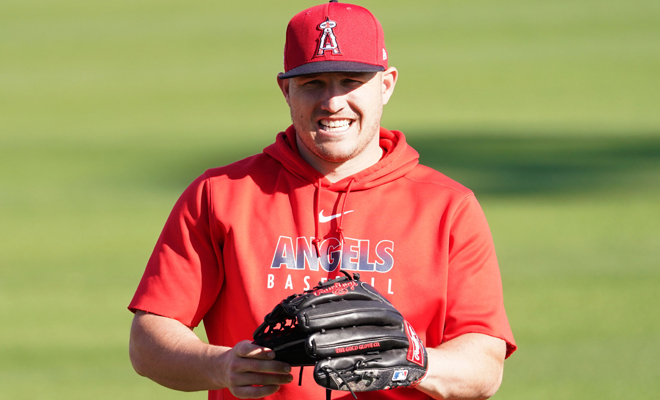
For example, say you are in a five-outfielder league and you’ve already drafted three nailed-on starters. Instead of spending pick 175 on Bryan Reynolds, roll the dice on Mike Trout at 207 and Emmanuel Rodriguez with the last pick of your draft. You don’t guarantee yourself the steady floor of Reynolds, but by acquiring two potential stars for comparable value, you give yourself two shots at a league winner instead of none.
Do this at three or four positions and you’ll naturally end up with at least a couple of extra star-caliber players you wouldn’t otherwise have, though you’ll also suffer from a depth perspective as some of those gambles fail.
This is where the waiver wire comes in. Drafting high-variance players in the mid and late rounds lets you cycle through more high-upside players early in the season, targeting players with staying power instead of just streaming the hot hand. Hit on a couple of extra stars in the draft, add a few star-potential players from the waiver wire, and you’ll have the most firepower in your starting lineup in August and September.
Prioritize Your Shots
In head-to-head drafts, it’s crucial to draft on pure value for the first few rounds, with particular attention to a player’s floor, so that you can take these chances later on. It might be exciting to take a shot on the sky-high upside of Jackson Chourio (ranked 8th), but with the much higher floor of Juan Soto (7th) right next to him, taking Soto is the no-brainer.
The same applies over the next few rounds: taking Pete Alonso over Sal Stewart falls into the same line of thinking. Even if Chourio, Griffin and Stewart could all be stars, Soto, Yamamoto and Alonso give you three guarantees at the same draft cost, allowing you to take your gambles later in the draft. And by the way, don’t take the big relievers at ADP in head-to-head leagues. It’s far too much risk for far too little upside.
I’ll address the many permutations of league-rule exploits in another article, in the interest of not letting this one ramble. But (one of) the most common and important one is crucial to draft strategy, and it virtually guarantees a championship.
The Guaranteed League Win?
Want to get access to the rest of Nathan’s article? You’ll need to have a FANTASYPASS membership. Click here to learn more and sign up! Premium Access Required
Come join us at SportsEthos by filling out an application by clicking here
Click here to join us on Discord!
Follow us on X by clicking her- About the Author
- Latest Posts

 2025 MLB Draft Guide
 Go To NBA FantasyPass
 Go To NFL FantasyPass
 Go To MLB FantasyPass
 Go To WagerPass
 Go To DFS Pass
Blurb feed
Williamson 300
AK Dynasty 300
SE MLB Draft Tracker
Tools and Projections
Sleepers and Busts
ADP Reports
Rookies
Special Features
Catcher
Middle infield
Corner infield
Outfield
Utility
Starting pitcher
Relief pitcher
Head to Head
Roto
Points
Draft and Hold
Auction
Mock Drafts
Dynasty & Keeper
Season Preview
Beginner's Guide