
The past two weeks have made one thing clear for the Atlanta Hawks. Kristaps Porziņģis is vital to their defensive success. His absence not only altered lineups but reshaped how opponents attack Atlanta on a possession-by-possession basis.
The Hawks dropped seven straight games without Porziņģis in the lineup. Those losses followed a consistent pattern. Opponents comfortably attacked the paint, guards turned the corner with less resistance, and backline rotations arrived a step too slow. The effort level remained competitive, but Atlanta lacked the structural support behind its defense.
Porziņģis’ defensive value starts at the rim. At 7-foot-3-inches tall, his presence alone deters drives and forces offenses to settle for pull-up jumpers rather than shots at the basket. Without him, Atlanta’s defensive margin for error narrowed significantly. Onyeka Okongwu was forced to cover more ground, switching onto perimeter players while still anchoring the paint. That workload stretched the defense thin, especially late in games.
The Hawks’ seven-game losing streak without Porziņģis highlighted that strain. Defensive possessions became longer. Second-chance opportunities increased. Teams generated cleaner looks late in the shot clock because Atlanta lacked a backline eraser waiting at the rim. Those small breakdowns compounded, turning manageable stretches into decisive runs for opponents.
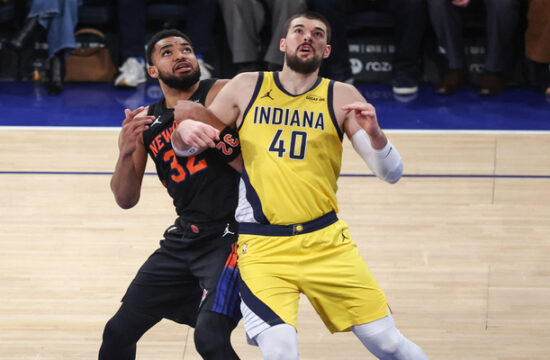
The contrast was immediate when Porziņģis returned on Dec. 31. Atlanta won both games he played against the Minnesota Timberwolves and New York Knicks, and they held New York to a season low 99 points. The defensive tone changed quickly. Ball handlers hesitated at the free-throw line, and help defenders stayed home on shooters. Okongwu was freed to play more aggressive defense away from the rim, knowing there was size behind him in the lineup.
Those two wins reinforced how the Hawks are built. This roster is designed to defend in layers. Okongwu provides mobility, switching, and physicality, while Porziņģis gives length, rim protection, and vertical deterrence. Together, they allow Atlanta to pressure the ball without overcommitting and protect the paint without collapsing the perimeter.
That balance was missing against the Toronto Raptors on Jan. 3. With Porziņģis sidelined, the Hawks fell once more. The loss was not about effort or execution alone. It was about defensive sustainability. Toronto attacked downhill, forced rotations, and capitalized on Atlanta’s lack of rim protection, scoring 60 points in the paint.
Defensive possessions define winning basketball late in the season. Over the last two weeks, Atlanta’s defense has shown it can survive without Porziņģis for short stretches, but survival is not the same as consistency. The seven-game losing streak exposed how quickly the defense slips when one piece is missing. The two wins with Porziņģis back underscored how much cleaner everything looks when the frontcourt is intact.
This stretch has clarified the Hawks’ formula. Okongwu raises the defensive floor with effort and versatility. Porziņģis raises the ceiling by eliminating entire sections of the floor. When both are healthy, Atlanta can defend with confidence rather than caution.