
Last Updated on September 23, 2026 3:23 am by André Lemos | Published: September 23, 2026
EuroLeague 2026-27 Power Rankings: Ranking All 20 Teams
Twenty teams. Thirty-eight regular-season games. A EuroLeague field that somehow seems to get deeper every year.
Trying to separate these teams before a ball has been tipped is difficult enough with one person doing it. So we decided to make it harder.
João Caeiro and André Lemos approached the 2026-27 season from their own perspectives, built their own rankings and then brought those ideas together for one final European Hoops Power Ranking. That means there will still be disagreements inside these entries. One of us may see a Final Four ceiling where the other sees a Play-In fight. One may trust continuity more, while the other weighs shot creation, defensive versatility or postseason translation more heavily.
That is part of the point.
These are not predictions of the exact final standings. They are a snapshot of where every team stands entering the season, considering roster quality, coaching, continuity, regular-season floor and how well each team’s strengths should translate when the games become slower, more physical and more tactical in the postseason.
At the top, the margins are tiny. In the middle, a handful of possessions across 38 rounds could separate a playoff team from one that misses the postseason entirely. At the bottom, even the teams we have ranked 18th, 19th and 20th possess enough talent to punish anyone who arrives unprepared.
Let’s get into it.
Panathinaikos
Panathinaikos missed the Final Four and immediately went back to work. Željko Obradović is back in Athens, and the roster he has to work with is superb.
The most important players from last year’s roster are still there, and they added Sylvain Francisco, Brancou Badio, probably the player who defended K-Nunn better than anyone in the EuroLeague, Isaac Bonga, Guerschon Yabusele and Moustapha Fall. These are not just talented names. They are players who can fit together, play with or without the ball and give Željko a ridiculous number of possible combinations.
Željko will have no time to lose. He needs to make this team gel quickly and avoid the weird situation Panathinaikos found itself in last season.
Panathinaikos is the biggest candidate to be crowned EuroLeague champion at the end of May.
What separates Panathinaikos from the rest of the field is not simply the amount of talent. It is how difficult it should be to force them into one specific type of basketball.
Kendrick Nunn can carry difficult late-clock possessions, Kostas Sloukas can manipulate a defense through pick-and-roll, Jerian Grant can stabilize lineups without demanding the ball and Francisco adds another creator capable of changing tempo. Around them, the size of Bonga, Nigel Hayes-Davis, Juancho Hernangómez and Yabusele gives Obradović the freedom to change defensive assignments and lineup structures without sacrificing skill.
The same applies inside. Mathias Lessort provides vertical pressure and physicality, while Fall creates a very different problem through sheer size. Panathinaikos should be able to build switching lineups, bigger lineups, shooting-heavy groups or combinations designed to dominate the glass depending on what a playoff series demands.
The early concern is health. Nunn is recovering from surgery following a medial meniscus tear, while Hayes-Davis fractured the fourth metacarpal in his left hand during preseason. That may make the opening weeks less smooth than expected.
Over the full season, however, Panathinaikos has fewer obvious weaknesses for an opponent to target than anyone else in the competition.
That is why they are No. 1.
Fenerbahçe
Fenerbahçe got to the Final Four last year and then played probably their worst game of the season. Now they’ve got reinforcements.
Shane Larkin and Trent Forrest arrive to give even more depth to the guard positions, and Forrest in particular is a tall guard who should fit extremely well in Šarūnas Jasikevičius’ switching scheme. Another player who should thrive in that environment is Braxton Key, who arrives from Valencia as one of the most versatile defenders in the competition.
Will Clyburn, Shavon Shields and Johnny Juzang strengthen the wing positions and give Fenerbahçe even more versatility offensively. All three can play with or without the ball and are positive defenders.
If you want to nitpick, we can say the group of bigs is not quite at the level of the rest of the roster. Chris Silva and Marcus Bingham Jr. are still solid defenders, though, and can do what Saras asks of them.
Fenerbahçe is one of the best teams in the competition and certainly one of the favorites to lift the trophy.
The fascinating question in Istanbul is not whether Fenerbahçe has enough answers. It is how Jasikevičius decides which answers to use.
There are multiple players capable of initiating offense, creating in isolation or defending across positions. That should make Fenerbahçe incredibly difficult to scheme against because removing one ball-handler does not necessarily change the shape of the possession. Larkin can control pick-and-roll, Wade Baldwin IV attacks with size, Talen Horton-Tucker can punish smaller defenders, while the wing group gives Saras several players comfortable both creating and finishing.
Nicolò Melli may be even more valuable surrounded by this much offensive talent. He can screen, move the ball, defend different actions and connect lineups without requiring touches of his own.
The challenge will be establishing hierarchy. There are only so many high-value possessions available, and this many accomplished players have to accept nights when their role becomes smaller.
If that happens quickly, there may not be another team in Europe with a better combination of shot creation and defensive versatility.
Olympiacos
They are the defending champions, so how are they No. 3?
Fair question, and there is an argument to have them in either of the top two spots as well.
The loss of Alec Peters hurts Olympiacos. They now lack a real alternative to Sasha Vezenkov, and Peters was a guy who could win you a game almost on his shooting alone.
For years we talked about their guard positions, and Olympiacos finally went and addressed that this offseason. Codi Miller-McIntyre is a versatile defender with more offensive creation than Thomas Walkup provided, while Jean Montero was the best young player in the EuroLeague last season. Montero is a dynamic guard who can create for himself and others and score from basically anywhere on the floor.
The way Bartzokas tends to manage some games could also be a small concern and one of the reasons for having them third.
Still, I would be very surprised if the Final Four happens without Olympiacos.
Olympiacos begins the season with something almost every other contender is still trying to build: certainty.
Georgios Bartzokas already knows how Sasha Vezenkov, Nikola Milutinov and Evan Fournier fit together, where the advantages come from and which actions can be trusted when possessions become more difficult. Vezenkov remains one of Europe’s most destructive off-ball scorers, Milutinov provides screening, rebounding and interior efficiency, while Fournier gives them a creator who can still manufacture offense when the structure breaks down.
What makes this version particularly interesting is that the backcourt now offers a different type of threat. Miller-McIntyre adds physicality and secondary creation, while Montero can inject unpredictability into an offense that has historically been at its best when everything is organized.
There are teams above Olympiacos with more new talent.
There may not be one with a more proven formula.
That matters enormously across 38 games and even more when a playoff series reaches Game 5.
Real Madrid
Once again, Real Madrid has a major change.
Sergio Scariolo is gone, and in his place is last year’s EuroLeague Coach of the Year, Pedro Martínez. He did not arrive alone from Valencia, bringing Jaime Pradilla with him.
Timothé Luwawu-Cabarrot, Mikael Jantunen and Damion Jones are the other major additions, and they are players with experience in teams that have played styles similar to what Pedro Martínez should try to implement. Theo Maledon could also see an increased role, while Facundo Campazzo may see his minutes decrease without his impact on the game taking any real hit.
Walter Tavares is a special player and not naturally built for Pedro Martínez’s usual defensive style. The two have worked together before in Gran Canaria, so expect adjustments to the scheme when the Cape Verdean big is on the floor.
Time might be the biggest enemy of this Real Madrid side. Expectations are always enormous in Madrid, and a slow start can create pressure very quickly.
Even with that, Real Madrid is one of the favorites to reach the Final Four.
Madrid’s season may depend less on learning Pedro Martínez’s basketball than on how Martínez adapts his basketball to Madrid.
Tavares is the obvious example. His presence fundamentally changes the geometry of the floor, and forcing him into a defensive scheme designed for more mobile centers would make little sense. The challenge is finding the balance between Martínez’s preferred aggression and the drop-based structures that maximize one of Europe’s most unique defenders.
Offensively, the options remain elite. Campazzo can still control an entire possession without needing to score, Maledon gives Madrid another big ball-handler and the new forwards should make the team more mobile around Tavares.
The encouraging part is that Madrid should not need months before it can win games. The talent level is simply too high.
The question is whether the best version arrives early enough to keep the usual pressure around Los Blancos from becoming part of the story.
Žalgiris Kaunas
Žalgiris is chasing another season as successful as the previous one, and if the work done in the offseason is any indication, the future is bright.
Yes, they lost Sylvain Francisco, a legitimate MVP candidate last year, but they chose to replace him with the sum of several parts. Carsen Edwards, Saben Lee, Sterling Brown and Marius Grigonis, who is a different beast when wearing this jersey, all contribute in different areas and could help minimize Francisco’s departure.
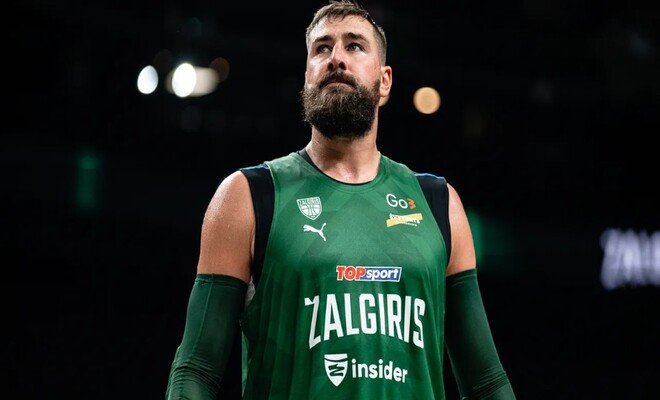
Žalgiris also signed former NBA player and one of the greatest Lithuanian players of recent years, Jonas Valančiūnas. At 34, the big man can still help a team at the highest level and gives Žalgiris a real inside force.
Tomas Masiulis was one of the best coaches in the competition last year. Expect Žalgiris to remain an extremely intelligent and well-coached team, always ready for the next opponent.
They should want to stamp their passport to the playoffs without needing the Play-In.
The appeal of this Žalgiris roster is that opponents may no longer be able to prepare for one primary source of offense.
Edwards stretches ball-screen coverage several feet beyond the arc. Lee can attack the first line of defense. Brown and Grigonis give the wings secondary creation, while Valančiūnas completely changes the punishment for teams that switch or play smaller lineups.
That gives Masiulis a much deeper offensive menu than he had last season.
The risk comes at the other end. Valančiūnas changes the type of pick-and-roll coverage Žalgiris can play, while Edwards and Lee may place more pressure on the perimeter defense. Lee’s hamstring injury also complicates the opening portion of the schedule.
Still, I trust Masiulis enough to believe those problems will be managed intelligently.
I am higher on Žalgiris than João, but that is because I think the combination of coaching and expanded half-court creation gives them a legitimate chance to avoid the Play-In entirely.
Hapoel Tel Aviv
Hapoel, now entering its second season in the EuroLeague, will want to keep building on a very successful first campaign.
They made some tweaks to the roster. Tomáš Satoranský and Amir Coffey arrived in the spots previously occupied by Chris Jones and Collin Malcolm, making the perimeter group bigger and more versatile defensively. Zach LeDay gives them an offensive threat at the four, something this team lacked the year before.
More important than the new signings, though, is that Hapoel retained several of the players responsible for last year’s success. Elijah Bryant, Dan Oturu, Antonio Blakeney and Vasilije Micić are all back.
Can this team take the extra step and reach the Final Four?
Hapoel’s postseason ceiling starts with something that becomes increasingly valuable as the games slow down: they have a player who can manufacture offense almost regardless of what the defense takes away.
Vasilije Micić changes the playoff equation. He can organize the first action, punish switches and still create something late in the clock when the possession has gone nowhere. Satoranský reduces the amount of organizational work Micić has to do, while Bryant and Blakeney give Hapoel scoring around him without every possession becoming a one-man show.
The basketball case for Hapoel being higher than sixth is strong.
The regular-season complication comes from the environment. Playing home EuroLeague games in Bulgaria removes part of the advantage teams normally rely on across a long campaign and adds another logistical variable.
That affects my ranking more than the roster does.
On pure playoff talent, Hapoel can beat almost anyone.
Dubai Basketball
Can you have too much talent?
That’s the question with this Dubai team.
Talent-wise, on paper, they are certainly among the best teams in the competition. But there is only one basketball, and there are a lot of guys here who are used to being the No. 1 option.
Dubai splashed money in the market to bring Elie Okobo, Thomas Walkup, Jaron Blossomgame, Mamadi Diakite and Tornike Shengelia to the UAE.
Head coach Xavi Pascual was also brought in to command the squad, and his challenge is not going to be only about Xs and Os. Managing roles and egos inside this group might be just as important.
Dubai should get into the postseason comfortably, but the goal is much bigger than that.
Can they achieve it?
The part of Dubai’s roster that interests me most is not the number of creators. It is how many different types of creation Pascual can choose from.
Okobo can generate advantages out of ball screens, McKinley Wright IV can push pace, Walkup can organize without demanding shots, Džanan Musa and Dwayne Bacon can create against set defenses, while Shengelia can run offense from the frontcourt.
That should make Dubai incredibly difficult to prepare for.
The uncertainty comes in the final five minutes. Which players close? Who gets the first touch? Which defensive combination survives against elite guards without sacrificing too much offense?
Pascual has enough options to answer those questions.
He just has to discover the answers before the postseason arrives.
The ceiling is Final Four level. Seventh reflects how much of that identity still has to be built.
Anadolu Efes
Anadolu Efes was one of the biggest disappointments of last season, missing the postseason entirely. With Pablo Laso now at the helm from the start of the season, things should be different.
Shane Larkin left and joined rival Fenerbahçe, but Efes got a fish just as big in the market by signing Mike James.
Matthew Strazel followed James from Monaco into a backcourt that already had P.J. Dozier, Isaïa Cordinier and Jordan Loyd. Santi Yusta and Collin Malcolm give size and strength to the wing positions, while Dario Šarić and Bruno Fernando bolster an interior where Laso already had Georgios Papagiannis and breakout candidate Kai Jones.
Efes should want more than simply getting back into the postseason.
They should be pushing for the top six.
Can they do it?
Mike James gives Pablo Laso an offensive safety net that very few coaches possess.
That matters because the rest of the roster should allow Efes to avoid asking James to solve every possession himself. Strazel can organize, Loyd can score on or off the ball, Cordinier attacks gaps and Šarić gives the offense another decision-maker from the frontcourt.
The variety is impressive.
The complication is that almost everyone has to learn a new hierarchy at the same time. How many possessions belong to James? Which guards close? How often does the offense run through Šarić? Which center gives Laso the best defensive balance?
Efes has enough talent to finish well above eighth.
Until those relationships become clear, however, the range of possible outcomes remains unusually wide.
Valencia Basket
Valencia was the surprise team of last season, getting all the way to the Final Four, but the roster now looks very different and even the coaching staff has changed.
Pedro Martínez left for Real Madrid, and former lead assistant Xavi Albert has been promoted to head coach.
Expect Valencia to maintain the identity that was so successful last year: fast-paced basketball, crashing the offensive glass and aggressive defense. The players who stayed, Josep Puerto, Omari Moore, Kameron Taylor, Nate Reuvers and Neal Sako, should be crucial in helping the newcomers adjust.
T.J. Shorts could see a revival by returning to a style closer to the one where he exploded in Paris. Mario Saint-Supéry, Dylan Osetkowski and Armoni Brooks all look like players who can really fit into the system.
The biggest question mark, and maybe the biggest X-factor, is Nikola Mirotić.
How will he fit with this identity?
Valencia may look less talented on paper than last year’s team, but they are good enough to make the postseason.
Mirotić is the player who makes this version of Valencia particularly interesting to me.
Last season, Valencia could overwhelm teams by making the game fast, attacking the offensive glass and creating repeated waves of pressure. What they did not always possess was a straightforward way to manufacture efficient half-court offense when opponents successfully slowed everything down.
Mirotić can provide that.
He does not have to change Valencia’s identity. He can become the alternative when that identity is taken away.
Shorts gives them another player built for space, Brooks adds shooting and Osetkowski can help connect possessions from the frontcourt. The roster may be less talented in total than last season’s Final Four group, but there is still logic behind how the pieces fit.
After what Valencia showed last season, I am willing to trust that structure again.
Olimpia Milano
EA7 Milano changed a lot of players from last year but might be a better-balanced team overall.
Lorenzo Brown had a negative season by his standards, and while Quinn Ellis was very good, Milano should be happy with the new faces replacing those responsibilities. Darius Thompson and Devon Hall are two guards with a lot of experience at this level, and both give Milano more complete two-way play in a backcourt where defense was a problem last season.
Alec Peters arrives in Milan after four very solid years in Piraeus and a Final Four where he genuinely could have been named MVP. That is how good he was.
Can his impact remain the same in a bigger role?
Coach Poeta had Milano playing some of the best half-court offense in the EuroLeague last season, but the defense was very poor. Improving there could be the key to a successful season capped by a postseason berth.
Milano does not need an offensive revolution.
It needs the defense to stop wasting good offensive possessions.
That is why I like the type of players brought in. Thompson and Hall should make the point of attack more stable, Moses Wright gives the frontcourt more mobility and Garrison Mathews adds shooting without requiring the offense to be reorganized around him.
Peters is the most important offensive addition because his gravity should make life easier for everyone else. Defenses cannot casually leave him to load up toward a creator, and his ability to punish slow rotations should fit naturally into the half-court system Poeta already established.
No. 10 is almost entirely a defensive bet.
If Milano becomes average on that end, it can finish higher.
If the same problems return, another talented roster may spend the spring fighting for its postseason life.
Crvena Zvezda
Ibon Navarro takes the keys to Red Star after a very successful stint in Málaga.
The Serbians lost Codi Miller-McIntyre but brought in Nick Weiler-Babb and Chris Jones. Weiler-Babb has some of the same defensive ability as Miller-McIntyre, while Jones is a dynamic guard who can really help the offense.
My concern is more about the balance in the forward positions. Jordan Nwora, Chima Moneke and Semi Ojeleye remain, with Patrick Baldwin Jr. added to another group of players who can overlap in certain areas. Nikola Kalinić has finished his playing career and is now an assistant coach.
Can Navarro get the best out of all of those pieces?
They are also a little short at the five behind Johnathan Motley and Ebuka Izundu. Will we see more small ball again this year?
This is another team that should be in the mix for a postseason berth but could very easily find itself on the outside when the time arrives.
Red Star has enough physical talent to create several matchup problems. The harder task is deciding which ones actually deserve to drive the offense.
Motley can force a defense to change coverage inside. Moneke can attack slower forwards in space. Nwora provides wing scoring, while the backcourt has multiple players capable of initiating possessions.
Having all of those options does not automatically produce a coherent offense.
Navarro has to establish the order. Who gets the first mismatch? Who becomes the connector when someone else has the advantage? Which players close when several of them are used to being central pieces?
If those roles settle, Red Star could finish several places above this.
If they do not, the talent may occasionally get in its own way.
Partizan
Partizan had a turbulent season last year. Joan Peñarroya now has a full preseason to work with the team, so things should be better.
The backcourt saw a lot of changes, with Carlik Jones the main returning creator. Luca Vildoza and Alessandro Pajola arrive from Virtus Bologna, while Kyle Allman will make his EuroLeague debut.
Kevarrius Hayes and Lamar Stevens arrive to bolster the frontcourt and give the team more defensive versatility, Derek Willis is a solid stretch-four option and Joffrey Lauvergne returns to Belgrade to add experience and leadership while still being able to contribute on the floor.
Partizan should be able to get into the mix for postseason basketball through the Play-In.
Are the improvements good enough to actually get there?
I feel better about Partizan defensively than I do offensively.
Pajola should immediately improve the ball pressure, Stevens gives Peñarroya another physical defender and the collection of centers allows Partizan to change its coverage depending on the matchup. There should be fewer possessions where the roster simply has no appropriate defensive answer.
The offensive question is more fundamental.
Carlik Jones can get downhill, Vildoza can organize and Allman adds another ball-handler, but who creates the difficult shot when an elite defense has already removed the first action?
That question becomes more important in April than it does in October.
Partizan should be harder to play against this season.
I am not yet convinced it will be hard enough to eliminate.
FC Barcelona
Barcelona had a small revolution on the roster, with several of the biggest names from last year’s squad leaving and some younger blood arriving for an aging team.
The group of bigs is completely new. Josh Nebo, Olek Balcerowski and Yoan Makoundou give Barcelona a level of defensive versatility inside that they have been lacking in recent years.
Kevin Punter and Darío Brizuela stayed and will once again be asked to create for themselves and others, but now Justin Robinson joins them in that department and should make things a little easier.
In a year with this many roster changes, Barcelona will try to attack the Play-In while potentially beginning a new project in Catalunya.
The reason I had Barcelona higher individually is simple: Punter remains one of the best late-clock scorers among the teams in this tier.
That matters in a league where a huge number of games are decided by two or three possessions.
The rest is much less certain. Robinson and Umoja Gibson have to provide enough organization that Punter is not forced to create everything himself, while a completely rebuilt frontcourt has to establish defensive chemistry quickly.
There are ingredients for a good defense here. There is athleticism on the wings, more mobility inside and enough size to build matchup-specific groups.
The issue is timing.
Barcelona may become a strong team.
The Power Rankings have to judge what we expect them to be at the beginning of the process, not only what they might become by March.
Maccabi Tel Aviv
Maccabi is always a tough team to rank.
They have a ton of talent across the roster and have been very good offensively in recent years, but their defense has struggled a lot.
Coach Oded Kattash has failed to impose a consistent defensive identity on this squad, and that limits their ceiling. The additions of Daniel Theis and Bonzie Colson could help minimize the problem, but more than individual players, Maccabi needs a collective answer defensively.
The result of Maccabi’s season could be defined on that side of the ball.
If the defense is “okay,” there is a chance Maccabi makes the Play-In.
But that is undoubtedly a big if.
The frontcourt should make Maccabi more stable than last season, but I actually think the biggest postseason question sits in the backcourt.
Yam Madar, Iffe Lundberg, Keaton Wallace and Jimmy Clark give Kattash depth and different skill sets. What they do not yet provide is an obvious elite creator who can consistently bend a set defense in the final five minutes.
That may not matter as much during high-possession regular-season games, where Hoard can run, Colson can score and Theis can create value through screening and interior play.
In a playoff environment, it matters enormously.
Maccabi’s floor should improve if the defense becomes respectable.
The ceiling will depend on whether one of those guards becomes more than a useful piece and turns into a player opponents actually have to redesign their defense around.
FC Bayern Munich
Another team with a new head coach.
Anton Gavel takes the reins of Bayern after being named BBL Coach of the Year.
The roster is fairly similar to last year’s, but there were some surgical additions. Duane Washington is a talented guard who had a breakout season with Partizan, while Miles Norris showed glimpses in Barcelona and could be a great addition in an environment with less pressure.
The biggest addition of all, though, may simply be the return of Rokas Jokubaitis. The Lithuanian guard missed the entirety of last season after his knee injury, but now he is back on the court and can be a real difference-maker.
Bayern has the roster and talent to push for the Play-In.
I still think they finish just outside it.
Bayern should be able to create good regular-season offense in multiple ways.
Andreas Obst can distort an entire defense simply by running around screens. Washington can create scoring bursts without much help. Jokubaitis and Kamar Baldwin give Gavel players capable of controlling ball-screen possessions, while the forward rotation is more athletic than it was a year ago.
What I am less convinced about is the postseason translation.
When a defense top-locks Obst, switches the first action and forces Bayern into the second or third read, is there enough elite creation to keep producing efficient offense?
That is the difference between a dangerous regular-season team and one I would trust in a playoff series.
Bayern can absolutely make the Play-In.
I just see more ways for the teams above them to survive when Plan A disappears.
Paris Basketball
Paris Basketball has a new coach, but the club identity should remain the same: fast-paced basketball with the goal of maximizing the number of possessions.
Paris kept two of its main guys from last year in Nadir Hifi and Jared Rhoden and added some intriguing names like Frank Ntilikina and T.J. Warren.
Warren in particular is extremely important because he gives this Paris team a different type of offensive weapon to counterbalance such a guard-centric approach.
The group of bigs remains the biggest question surrounding the team.
Can they contribute enough on both sides of the ball?
Paris should have enough talent to avoid the very bottom places. The bigger question is whether they can be good enough to contend for a Play-In spot.
Probably the team with the biggest gap between its floor and its ceiling.
Paris is volatility in basketball form.
A Hifi shooting explosion can change a game in five minutes. Ntilikina gives the perimeter more defensive size, and Warren offers a player who can create something when the initial pace-based attack no longer works.
That gives Paris upset potential against almost anyone.
The concern is whether those advantages survive against teams capable of slowing the game and repeatedly attacking the interior. Over one night, Paris can overwhelm an opponent with possessions and shooting variance.
Across 38 games, rebounding, rim protection and foul management become much harder to hide.
That is why João sees them as high as 16 and I had them 18th.
The ceiling is obvious.
The floor is just as easy to see.
ASVEL
ASVEL’s offseason was weird.
They went from signing players like Sylvain Francisco and Armoni Brooks to eventually letting those players join other teams. Tony Parker is the new head coach, and ASVEL ended up signing his former backup point guard in San Antonio, Patty Mills.
It is an entirely new roster and will need time to gel. This is also Parker’s first experience as a head coach at the highest level, which naturally raises questions about ASVEL’s ability to compete in such a difficult league.
The final roster is far from what ASVEL originally envisioned during the offseason.
Can they still compete and avoid the bottom places?
I am more optimistic about the final version of ASVEL than João, even if the process that created it was chaotic.
There is legitimate experience in this group. Mills and Jae Crowder have spent years making decisions at the highest level, Tremont Waters can create off the dribble, TyTy Washington gives Parker another ball-handler and Joel Bolomboy should improve the defensive rebounding and rim protection.
The problem is that none of those pieces have a shared history.
ASVEL has to build its defensive rules, offensive hierarchy and closing lineup almost completely from scratch while Parker is learning the EuroLeague coaching job himself.
That is an enormous amount to establish simultaneously.
I think the talent is enough to escape the very bottom.
Whether the collective basketball catches up quickly enough is the real question.
Beşiktaş
Beşiktaş is back in the EuroLeague after 13 years for just its second season in the top European competition.
Dušan Alimpijević’s squad has a very interesting group of bigs, with Ante Žižić, Wenyen Gabriel and Eugene Omoruyi headlining that group.
The rest of the squad is not quite on the same level, although there are interesting names. Scottie Wilbekin has had a couple of difficult seasons, but now he gets a new environment.
Could we see a return to his old self?
This is a very well-coached team, but it will have a difficult time escaping the lower positions in the standings.
Can they do it?
The reason Beşiktaş has a chance to outperform this ranking is continuity of thought rather than superior talent.
Alimpijević already has a clear idea of how he wants his teams to defend, where the offense should come from and what type of physicality his roster needs. That gives Beşiktaş a head start over several teams around them that are still building an identity.
The difficulty is what happens when good structure meets better individual talent.
EuroLeague defenses will eventually force Wilbekin, David DeJulius and the other guards to create difficult shots late in possessions. At the other end, elite offenses will repeatedly test whether the frontcourt can survive in space.
Beşiktaş should know who it is from Day 1.
The league may still ask questions this roster is not talented enough to answer consistently.
Baskonia
Paolo Galbiati’s squad was near the bottom of the standings last year, and this year it should not be dramatically different.
The roster lacks depth compared with the teams above them and is short on high-end talent outside a few important pieces.
Getting Markus Howard back to the level he showed in previous years could be decisive. The American has an uncanny ability to score points but never really found his groove last season.
The development of Stefan Joksimovic is also something to watch. The Slovenian guard is one of the most talented youngsters in the world and a very exciting prospect.
Will we see an increased role for him?
Baskonia has a very clear identity under Galbiati: play fast and score points.
Can they do it at a high enough level to escape the bottom of the table?
The offensive ceiling is not why Baskonia sits this low.
On the right night, Howard can turn a normal possession into three points before the defense has even decided how it wants to guard him. Kobi Simmons and Matteo Spagnolo add creation, Chris Duarte gives the wings another scorer and Alex Len provides a more established interior presence.
The problem is whether the defense can ever create enough margin for that offense.
Last season, too many games required Baskonia to score at an unsustainable level simply to remain competitive. Playing faster only magnifies that problem if stops never come.
Galbiati should make them dangerous.
To make them good, he needs a defensive improvement that goes beyond one signing or one coverage change.
Until that happens, 19th is difficult to argue against.
Virtus Bologna
Virtus has a new head coach in Alex Mumbrú and a roster with a lot of new faces, many of them playing their first season at this level.
We all know how hard that adjustment can be for some players.
With Mumbrú at the helm, the Italians should see a revamp in their offensive system, which was a major problem last year. Expect more movement and a team willing to play at a higher pace.
The issue is talent.
Virtus could absolutely cause problems for opponents, but this is still a team I expect to be closer to the bottom of the standings.
It could be Year 0 of a new project.
Virtus should be younger, quicker and more capable of covering ground than last year’s version.
That alone can make them more competitive.
The issue appears when a possession reaches the point where athleticism and pace are no longer enough. Marcus Carr and Trent Frazier will be asked to take on significantly larger creative responsibilities, while Kessler Edwards and Bobi Klintman provide useful physical tools without solving the fundamental need for proven high-level shot creation.
There are intriguing players here.
There are fewer players who have already demonstrated they can make the difficult read or difficult shot against an elite EuroLeague defense with eight seconds left on the clock.
That is why Virtus starts at No. 20. It does not mean the project lacks promise. It means the project still looks like a project.
This article was co-written by the European Hoops Podcast team, André Lemos and João Caeiro. Follow us at @EthosEuroLeague and subscribe to the European Hoops Podcast wherever you listen to your favorite podcasts.
- About the Author
- Latest Posts

From the cliffs of Porto Moniz to the forests of Latvia. With a degree in business and a background in finance, I traded balance sheets for projection models, following a lifelong love of the game. I’ve played it, I’ve lived it and I’ve had the privilege of working inside team front offices at both the club and national level.
For over 20 years, I’ve also been immersed in the world of Fantasy Basketball, studying trends, finding edges and living the grind season after season. That passion has brought me here, to SportsEthos, where I’m honored to be part of our management team alongside the great Aaron Bruski. My mission is simple: help SportsEthos thrive as the premier home for Fantasy Sports and sports coverage. A place where users get real value and where every member of the team can sharpen their craft, find joy in the work and build something special that feels like home.