
WORLD CUP 2026
POWER RANKINGS & TEAM SCOUTING GUIDE
How the ranking works
This is not a pure talent board and it is not a bracket-only prediction. The order balances championship-level talent, recent competitive form, lineup fit, health/roster certainty and the actual path through Berlin. The strongest weight goes to how a team’s style scales against elite opponents: can it create good shots when the first action fails, defend without hiding weak points, finish possessions and survive a bad shooting quarter? The draw matters, but it does not override basketball quality.
| Rank | TEAM | OUTLOOK |
|---|---|---|
| 1 | United States | Gold is the expectation |
| 2 | Belgium | Our strongest non-USA title pick |
| 3 | France | Gold-level talent, short integration window |
| 4 | Australia | A medal would surprise nobody |
| 5 | Italy | Our favorite dark-horse medal team |
| 6 | Spain | High floor, legitimate podium case |
| 7 | Germany | Home-court medal threat |
| 8 | China | Massive ceiling, less convincing current form |
| 9 | Japan | Volatile, dangerous and matchup-dependent |
| 10 | Hungary | A Dorka-led upset team with a workable path |
| 11 | Türkiye | Capable, but the group suppresses the upside |
| 12 | Nigeria | Physical ceiling, shaky current form |
| 13 | Korea | Shooting gives them an upset route |
| 14 | Mali | A miserable matchup if you are careless |
| 15 | Czechia | Competitive guards, brutal path |
| 16 | Puerto Rico | Needs a major offensive jump |
United States
Projected depth chart
| POS. | DEPTH |
|---|---|
| PG | Chelsea Gray / Caitlin Clark |
| SG | Jackie Young / Paige Bueckers / Sonia Citron |
| SF | Kahleah Copper / Rhyne Howard |
| PF | Napheesa Collier / Angel Reese / Kiki Iriafen |
| C | Breanna Stewart / Aliyah Boston |
Caeiro #1
This is the USA’s World Cup to lose; if they win, no one will bat an eye, and if they lose, everyone will say that it was a failure. But the American team is used to that pressure and has responded well to it, with the last defeat in major tournaments coming in 2006 – with a couple of scares along the way.
USA’s roster is absurd, bursting with talent – 2 WNBA MVPs and 10 out of the 12 players were All-WNBA at least once – and combines well-known faces of the international game like Breanna Stewart with up-and-coming stars like Paige Bueckers or Caitlin Clark.
X’s and O’s-wise, they usually use a 5-Out alignment as the base of their offense without a lot of complicated sets and tend to rely on the 1×1/2×2 talent of the players, which can cause the offense to stall and lack movement at times. On the defensive side of the ball this is a team that’s very aggressive both on the ball and off it; this aggressiveness off the ball can see them being beaten by backdoor cuts – Spain got some great looks out of it in the FIBA WWCQ game.
This is a super dangerous team that can go on a killing run at any given time and leave the opponent chasing shadows.
The USA team is the clear favourite to leave Berlin as World Champions, but by no means are they perfect, and all the other teams will try to expose their problems.
André #1
The USA are still the cleanest answer at No. 1 because every tournament question eventually runs into the same problem: there is no comparable concentration of two-way talent. Breanna Stewart and Napheesa Collier can all function as the best player in a medal game, while Chelsea Gray gives the offense an organizer who understands when to slow the game down and when to turn a small advantage into a layup. The newer layer is fascinating rather than necessary: Caitlin Clark and Paige Bueckers add shooting, transition passing and another level of pull-up gravity to a group that already has more shot creation than it can reasonably use. Their qualifying run was 5-0, every win by double digits, and the final 12 removes almost any concern about a weak link in the rotation.
The only real weaknesses are the problems created by abundance. Minutes, touches and closing combinations have to be sorted quickly, and the offense can become less elegant when several stars are waiting for the same advantage rather than creating the next one. There are also lineups in which spacing can tighten if multiple interior scorers share the floor. None of that changes the math. Defensively they can pressure the ball, switch size across four positions, protect the rim and turn live-ball mistakes into instant runs. A contender can beat them in one game, but nobody should be favored to do it.
Belgium
Projected depth chart
| POS. | DEPTH |
|---|---|
| PG | Julie Allemand / Elise Ramette |
| SG | Julie Vanloo / Alicia Courthiau |
| SF | Antonia Delaere / Maxuella Lisowa-Mbaka / Becky Massey |
| PF | Emma Meesseman / Nastja Claessens / Bethy Mununga |
| C | Kyara Linskens / Billie Massey |
Caeiro #2
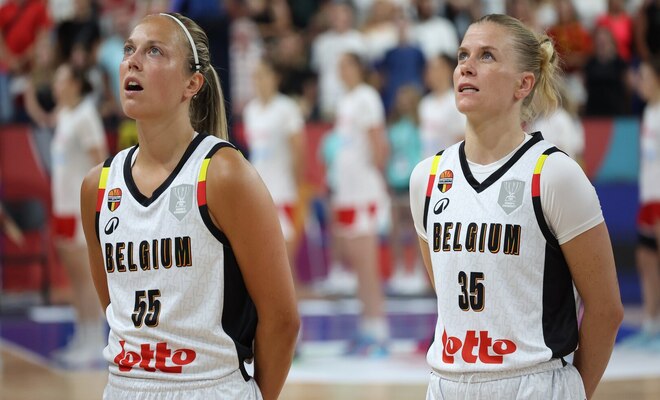
Is it too risky to say that Belgium plays the most beautiful and attractive game in the entirety of the Basketball World? It might be, but I’ll say it anyway.
The reigning European champions arrive in Berlin looking to win their first-ever World Championship, and they’ll do it playing a collective, fast-paced type of basketball – 91.2 AST% in FIBA WWCQ and 80.2 AST% in EuroBasket ‘25. However, this group is not just a one-trick pony. With a very high collective IQ and two elite guards in the duo of Julie Vanloo and Julie Allemand (can’t talk a lot about her or Lemos will kill me), the Belgian Cats know perfectly well when to play fast and get out in transition or to slow it down and hunt for advantages in the half-court.
When talking about Basketball IQ, it is impossible not to mention Emma Meesseman. The forward is as smart as they come and can do everything on the basketball court and on both sides of the ball, and she will try to lead Belgium to Gold and add World Champion to her huge list of accolades.
Can the Belgian squad be the one to break the USA’s run and be the first new World Champion since 2006? If not, can they return home with a medal in the bag? That should be the minimum for the Cats.
André #2
Belgium are No. 2 because the offense is more than a collection of good players: it is a living chain of reads. Emma Meesseman can initiate from the elbow, short roll, post or trail spot and the possession rarely dies when the first action is covered. Julie Allemand bends the defense with pace changes and pick-and-roll manipulation; Julie Vanloo stretches it in the opposite direction with deep pull-ups, quick-trigger threes and fearless early offense. Around them, Antonia Delaere cuts and connects, Kyara Linskens gives the interior a real screen-and-finish presence, and the supporting cast understands that the next pass is often more valuable than the first decent shot. At their best, the Cats do not merely move the ball – they move defenders, then attack the rotation they created.
That is why I am more bullish on Belgium than a ranking built only around athletic ceilings. They are back-to-back European champions, went 5-0 in World Cup qualifying and already own years of high-leverage continuity. Their defense has become more adaptable as well: Allemand competes at the point of attack, Delaere and Maxuella Lisowa-Mbaka give them sturdy wing matchups, and Meesseman’s anticipation lets Belgium steal possessions without having to gamble constantly. The concerns are real. Their margin shrinks if Meesseman is forced into foul trouble, the defensive glass can become vulnerable against the biggest frontcourts, and Vanloo’s aggression occasionally turns into shot volatility. The 95-67 warm-up loss to Spain is a useful reminder that their precision can be disrupted when the game becomes physical and they are knocked off their preferred timing.
Still, this is the team I most trust to make elite opponents defend for the entire possession. I would call their basketball the most beautiful in the world right now – men’s or women’s – because the beauty is functional: spacing, timing, cuts, disguise and selflessness all lead somewhere. Meesseman is the genius at the center, Allemand is the conductor who sees the possession a beat early, and Vanloo supplies the nerve that keeps defenses from ever feeling comfortable. Australia in the group is a serious test and the USA remain the tournament favorite, but Belgium have a championship language they already speak fluently. If someone ends the American run, the Cats are my first choice to do it.
France
Projected depth chart
| POS. | DEPTH |
|---|---|
| PG | Leila Lacan / Carla Leite / Romane Bernies |
| SG | Marine Johannès / Migna Toure / Pauline Astier |
| SF | Gabby Williams / Valériane Ayayi |
| PF | Janelle Salaün / Marième Badiane |
| C | Dominique Malonga / Aminata Gueye |
Caeiro #3
The 2024 Olympic silver medalists missed the podium in the 2025 EuroBasket but booked their place in Berlin with dominant showings in the FIBA Women’s World Cup Qualifying Tournament and look ready to make a statement.
A team with a lot of talent and elite bodies at their disposal makes them a contender from the start. When you take into consideration their layered offense, filled with ball and player movement, and elite ball sharing – 2nd in APG in both FIBA WWCQ and EuroBasket – things get even more interesting for Les Bleus. But those assists don’t come just in the half-court; France is one of the most dangerous teams when they are able to run in transition, with a lot of players who can just grab and go. The scoring options are plenty; 6 players averaged more than 10 points per game in the Qualifying Tournament of last May.
On defense they take advantage of their physical gifts to pressure ball handlers and passing lanes, using switches to keep the pressure high at all times and disrupt the opposition’s rhythm.
With a roster so talented and versatile – a lot of players can play different roles and positions – France will want to, at the very minimum, be one of the teams earning a medal, but dreaming of Gold is still free and after being close at the Paris 2024 Olympics they’ll be trying to be in the top spot this time around.
André #3
France may have the best collection of size, speed and switchability outside the USA. Gabby Williams is the tone-setter because she turns defense into offense without needing a play call; Janelle Salaün and Valériane Ayayi give them rangy wings; Marine Johannès supplies improvisational shotmaking; and Dominique Malonga changes the geometry around the rim on both ends. Add Pauline Astier, Leila Lacan and Carla Leite and there are multiple guards who can pressure the ball, attack a tilted floor and keep the tempo high. France went 5-0 in qualifying and the structure of Group B gives them a strong chance to win the pool and avoid an extra elimination game.
The question is not whether France have enough talent. It is whether the pieces arrive with enough time to become one offense. Eight WNBA players are joining in the final days before Berlin, so the half-court can occasionally drift from connected movement into brilliant players solving possessions one at a time. The frontcourt also looks different without Iliana Rupert, placing more responsibility on Malonga and whichever interior players win the final spots. Their best version is terrifying: switch, pressure, run, attack before the defense is organized. In a slower medal game, however, Belgium’s continuity and the USA’s sheer surplus of creators are why I have France third rather than second.
Australia
Projected depth chart
| POS. | DEPTH |
|---|---|
| PG | Jade Melbourne / Steph Reid |
| SG | Sami Whitcomb / Ally Wilson |
| SF | Steph Talbot / Isobel Borlase / Chloe Bibby |
| PF | Alanna Smith / Alex Fowler / Isabelle Bourne |
| C | Ezi Magbegor / Zitina Aokuso |
Caeiro #4
Do you know who was the last nation to be crowned World Champions before the USA’s dominance? If you answered Australia, you were right – and smart, taking into consideration we are gonna be talking about them right now. It was in the distant year of 2006 that the Australians defeated Russia in São Paulo to win their first and only world title. Heading into Berlin, they are not favorites but will be in the hunt to repeat the triumph of 20 years ago.
The Opals will arrive in Berlin with a very tall – 185 cm on average – and physical roster built perfectly to get out in transition like they love to do. In the half-court they do not overcomplicate stuff; they love to find mismatches and target them and take advantage of the ability of their bigs to screen and either roll or pop, causing doubts in their opponents. On the defensive side of the ball one thing is certain: opposing teams better take advantage of their first opportunity to score because they won’t get a second, with the Australians doing an amazing job of cleaning their glass – FIBA WWCQ: 77.3% DReb; Asia Cup: 82.1% DReb.
Facing Belgium in the Group Stage could be a huge game with two medal candidates playing head-to-head early in a game that could have big implications for the remainder of the tournament.
Can this be the year of the Opals? Will they return with a medal or leave Berlin empty-handed? Nothing is guaranteed in this World Cup, but expect them to be one of the teams at the top.
André #4
Australia have almost every trait that survives knockout basketball: physical guards, long wings, mobile bigs and a defense that can finish possessions. Ezi Magbegor and Alanna Smith give the Opals rim protection without forcing them into a static frontcourt, while Steph Talbot, Isobel Borlase and Chloe Bibby provide size across the wing. Sami Whitcomb remains the offensive pressure release – a shooter, secondary creator and veteran decision-maker who can turn a quiet possession into points without a perfect set. Australia went unbeaten in a difficult qualifying group after winning the 2025 Asia Cup, and they have already shown in recent global events that they are comfortable winning games that become ugly.
Their offense is not as naturally self-sustaining as Belgium’s and does not have the same number of elite individual creators as the USA or France, so stretches of half-court stagnation are the concern. They can become reliant on Whitcomb manufacturing a shot or on the bigs creating an advantage through screening and offensive rebounding. But the floor is extremely high because the Opals rebound, defend and play with positional size. Their group game with Belgium is one of the tournament’s best early measuring sticks, and I would be comfortable picking Australia to beat any team outside the top three in a quarterfinal.
Italy
Last Competitions: EuroBasket 2025 – 3rd FIBA WWCQ – 2nd
Projected depth chart
| POS. | DEPTH |
|---|---|
| PG | Matilde Villa / Costanza Verona / Mariella Santucci |
| SG | Francesca Pan / Francesca Pasa / Vittoria Blasigh |
| SF | Cecilia Zandalasini / Martina Fassina |
| PF | Jasmine Keys / Sara Madera |
| C | Lorela Cubaj / Olbis Andre |
Caeiro #5
After a 32-year absence from the FIBA Women’s World Cup, Italy arrives in Berlin with a chance to make some waves, even with the main star Cecilia Zandalsini only joining the group late in preparation.
Italy’s game is far from being the prettiest, but it is the game that no one wants to play. This is a team built on their defense that takes pride in making life difficult for the opposition to score, and they do that at a high level – over the last 2 competitions teams are scoring 11.5 PPG less than what they average across the tournaments – supported by a defensive scheme built to protect the paint and with disciplined and talkative players that know what to do in every situation. On offense the Azzurri have no problems grinding it out in the half-court, running their sets – searching for Cubalj on the block or Cecilia off the ball – and if that does not generate an advantage, more often than not it is Cecilia Zandalsini who is tasked with making something happen.
The Italians are not a team that’s gonna outscore another team or enter a run-and-gun type of game; they have a clear identity that got them results in the recent past, and that’s what they’ll keep doing.
Getting into the Quarter-Finals should be the main goal for the Squadra Azzurra and when/if they get there, they’ll be that team that no one wants to play. Can they make a Cinderella run and get back home with a medal in their suitcase?
André #7
Italy are the team I would least want to draw in an elimination game from this part of the ranking. They won EuroBasket bronze in 2025, went 4-1 in World Cup qualifying, beat Spain in the clincher and have followed with a productive preparation: a split in Belgium and consecutive wins over China. Andrea Capobianco’s team can press the ball, shrink the paint, switch coverages and then play a patient offense built on reads rather than volume. Matilde Villa’s arrival adds another live-dribble creator to a group that already has Costanza Verona and Francesca Pasa, while Cecilia Zandalasini remains the player who can turn a good possession into a great one when the defense has taken away the first two options. Lorela Cubaj’s screening, rebounding and interior passing are central to how the pieces fit.
The ceiling is tied to shot creation and shooting. Italy can generate long stretches of winning basketball through defense and execution, but against the USA-level athletes or a fully loaded France, they may need Zandalasini and the guards to make difficult shots late in the clock. They also have to decide which smaller guards and utility wings survive the final cut, and Laura Spreafico’s injury removes a trusted veteran shooter. I still have them seventh because the path is plausible: Czechia is a favorable opener, China is beatable – Italy just proved it twice in preparation – and a 2-1 group record could put them in a very workable knockout position. This is not a sentimental pick. Italy’s style travels.
Spain
Projected depth chart
| POS. | DEPTH |
|---|---|
| PG | Maite Cazorla / Mariona Ortiz / Iyana Martin |
| SG | Elena Buenavida / Alicia Florez |
| SF | Maria Conde / Helena Pueyo / Alba Torrens |
| PF | Awa Fam / Raquel Carrera |
| C | Megan Gustafson / Paula Ginzo |
Caeiro #6
Not the most athletically gifted team in the competition, not the most talented team in the competition, but if there is one team you absolutely always need to take into account in every competition, it is Spain. Smart basketball players with good coaching make them always a threat.
La Roja plays a traditional style of basketball using double-big lineups – Awa Fam, Raquel Carrera and Megan Gustaffson are elite players – and prefers to play in the half-court, identifying advantages and exploiting them or trusting their playbook to generate scoring opportunities. This is a team that hurts collectively, with no single player carrying the scoring load – FIBA WWCQ: 8 players >6 PPG; EuroBasket: 7 players >6 PPG. The good coaching is also seen on the defensive end, with a team that is able to show different looks and adapt to the opponent. Awa Fam’s impact is tremendous on defense; her size and length, together with her ability to move, make her a very special defender and one that Coach Miguel Méndez knows how to utilize.
Not one of the favorites to step onto the podium on September 13th, but I’m pretty sure absolutely no one in the basketball world would be surprised if Spain is able to pull it off.
André #6
Spain rarely need the best player on the floor to control the terms of the game. Their advantage is collective: clean spacing, purposeful screening, disciplined help defense and a frontcourt that can play big without becoming slow. Maria Conde gives them a wing creator who can score or connect actions, Maite Cazorla and Mariona Ortiz stabilize the ball, and Megan Gustafson supplies a dependable interior scoring base. The younger group changes the ceiling. Awa Fam can defend space and finish with force, Iyana Martin adds pace and guard aggression, and Helena Pueyo gives them another long two-way option. The 95-67 preparation win over Belgium was only a friendly, but it was still a reminder that Spain can overwhelm a good offense when their pressure, length and ball movement arrive together.
The limitation is the absence of a single perimeter superstar who can reliably create a great shot after a set has been blown up. Against the very best switching defenses, Spain can spend too much of the clock searching for the correct advantage rather than someone simply taking it. That is where Conde, Martin and the veteran instincts of Alba Torrens become important. Their Group A draw is competitive but manageable, and winning the group would materially improve their medal odds. Spain are sixth here because their floor is higher than Italy’s and their path cleaner than China’s, even if I think both teams can beat them on the right night.
Germany
Projected depth chart
| POS. | DEPTH |
|---|---|
| PG | Alexis Peterson / Clara Bielefeld |
| SG | Alexandra Wilke / Britta Daub |
| SF | Leonie Fiebich / Emma Eichmeyer |
| PF | Frieda Bühner / Emily Bessoir / Lina Sontag |
| C | Nyara Sabally / Luisa Geiselsöder / Marie Gülich |
| OUT | Satou Sabally* (officially ruled out) |
Caeiro #8
Time to talk about the hosts. Playing on their home soil and in front of their fans, the Germans are a team to keep an eye on without a doubt.
Germany plays a modern style of basketball with an emphasis on ball and player movement and smart cutting, playing fast both in transition and in the half-court and relying on a deep rotation to make this possible. Coach Olaf Lange has shown some good sets in the build-up for this World Cup, and with a team with a basketball IQ as high as this one, he might have some tricks up his sleeve for when the real deal starts. Leonie Fiebich is the perfect example of everything I said before; the lengthy forward does a bit of everything on the floor, but her biggest weapon is her intelligence when playing the game. The Sabally sisters can give this team a physical dimension they otherwise lack while allowing the team to keep switching at a high level on the defensive side of the ball. Talking about defense, don’t be surprised if Germany throws out some different zone looks during the competition.
Can Germany be a real contender for the medals, or even at home, is that too much to ask for?
André #5
Germany would have been even higher with a healthy Sabally pairing, but I am still buying the host nation. They went 4-1 in qualifying, and the core that remains is unusually well suited to tournament basketball. Alexis Peterson organizes the first action and can punish drop coverage; Leonie Fiebich gives them a 1.92-meter wing who can shoot, pass, rebound and defend across matchups; Frieda Bühner has made a major leap as an attacking forward; and Luisa Geiselsöder plus Marie Gülich give them real size at center. Germany can play through the post, space with skilled forwards or use Fiebich as a connective piece in motion. At home, that versatility matters because it gives Olaf Lange ways to change the shape of a game without changing the identity of the team.
Satou Sabally is officially out, and Nyara Sabally’s calf injury puts another high-end frontcourt weapon in doubt. That is a substantial loss of downhill creation and athletic margin, and the recent warm-up defeats to Hungary and Türkiye show how much pressure can fall on Peterson when the backcourt is crowded. Germany’s weakness is not talent in the front line; it is initiation behind their starting point guard. Spain and Japan can both force that issue in Group A. Even so, I have Germany fifth because Fiebich’s two-way impact, Buhner’s rise, the center depth and the home environment give them a believable route to a quarterfinal they can win.
China
Projected depth chart
| POS. | DEPTH |
|---|---|
| PG | Wang Siyu / Li Yuan / Zhang Manman |
| SG | Yang Shuyu / Chen Yujie |
| SF | Luo Xinyu / Sun Yu / Jia Saiqi |
| PF | Han Xu / Tang Ziting |
| C | Zhang Ziyu / Chen Mingling |
Caeiro #7
The runner-up at the 2022 FIBA Women’s World Cup arrives in Berlin hoping to replicate their last showing, even though that should be a very hard task. Honestly, getting into the Quarter-Finals should be a realistic goal for the Chinese and, from there, they can see what happens.
China, unlike their Asian counterparts Japan and Korea – yes, Australia plays in the Asia Cup but geographically is in Oceania – prefers the 2-point shot over the 3-point shot. With 2 players over 2 meters tall, finding them in the block is the main goal of the offense more often than not. PnRs are another huge weapon of the Chinese offense, with their guards showing no problem getting amongst the trees and attacking the paint. But this is not just a half-court team; they run in transition when the chance presents itself, with even the bigs running the floor – the lone exception is the 220 cm tall, 19-year-old Ziyu Zhang. A player with such unique characteristics needs some special rules. When you see Zhang on the floor, expect China to be in a zone on the defensive end. On the offensive end, getting her the ball near the rim is a must, with some clever sets to help facilitate that, and with that the pace tends to slow down as well.
A roster with unique characteristics and with no shortage of talent can for sure be a nightmare to play against and can undoubtedly be amongst the medal mix; the big question is, can they take one home?
André #8
China’s roster construction begins with a problem no other team can reproduce: Han Xu and 2.26-meter Zhang Ziyu can force opponents to redesign normal defensive rules. Han stretches the floor and sees over pressure, Li can establish deep seals and punish switches, and Zhang creates a target so large that ordinary help positioning stops making sense. Around them, Wang Siyu and Yang Shuyu provide the guard play needed to enter the ball, attack gaps and keep the giants from turning into stationary pieces. When the ball gets inside early, China can control both shot quality and foul pressure for entire quarters.
The reason they are eighth rather than in the top five is what happens before and after those post touches. Their guards can be sped up, transition defense becomes vulnerable when multiple bigs are on the floor, and mobile opponents can drag the centers into repeated screening actions. The preparation results have been uneven: close losses to Australia were encouraging, but Italy beat China twice in August and exposed some of those pace and perimeter-defense issues. The 2022 silver medal pedigree still matters, but this version is in transition. They can absolutely medal; they can also finish third in Group D and find themselves in an uncomfortable qualification game.
Japan
Projected depth chart
| POS. | DEPTH |
|---|---|
| PG | Rui Machida / Mai Yamamoto |
| SG | Kokoro Tanaka / Norika Konno / Otoha Goto |
| SF | Saki Hayashi / Nanako Todo |
| PF | Yuki Miyazawa / Stephanie Mawuli / Azusa Asahina |
| C | Maki Takada / Ramu Tokashiki |
Caeiro #9
Japan loves to play fast and shoot 3s, if this is the style for you, missing a Japan game is unthinkable.
Yes, they for sure lack physicality – the tallest player on the roster is 193 cm tall – and with that they traditionally suffer inside the paint. Opponents have won the Points in Paint battle by over 12 points in the last 2 competitions, and cleaning their glass is also a problem – FIBA WWCQ: 57.8% DReb; Asia Cup: 61.9% DReb – but the way they shoot 3s helps to minimize those problems. Coach Corey Gaines has no problem going deep into the rotation; the ultimate goal is to always impose a very fast pace and make teams uncomfortable.
The guard duo of Kokoro Tanaka and May Yamamoto are responsible for a lot, maybe too much, of the creation in this Japan offense. The talent is there in this duo, but with a lack of creation from other positions, a game plan can be put together to limit them.
Getting out of the group stage seems like the minimum for Japan even with a trap game versus Mali. The big question is can they make a run and maybe get themselves in the fight for a podium spot?
André #9
Japan are the tournament’s purest style bet. They want to accelerate the game before size becomes decisive: sprint into early actions, move the defense side to side, fire threes without hesitation and make every big defend more space than she wants to cover. Mai Yamamoto can score at all three levels and create for others, Kokoro Tanaka adds another aggressive guard, and Rui Machida remains an elite organizer who can make a possession feel faster without actually rushing it. Maki Takada and Ramu Tokashiki bring experience and interior craft, while Saki Hayashi and Yuki Miyazawa give the spacing credibility. Their two August wins over Korea suggest the offensive rhythm is arriving at the right time.
Everything flips when Japan cannot control tempo. They are giving away size in almost every matchup, so defensive rebounding and protecting the restricted area are permanent stress points. A cold three-point night can erase the value of all that movement, and Group A offers two teams – Germany and Spain – that can punish them with length while still moving well enough to survive in space. Japan can make a semifinal if the shooting catches fire and the bracket cooperates, but their path contains more ways to lose than the teams above them.
Hungary
Projected depth chart
| POS. | DEPTH |
|---|---|
| PG | Agnes Studer / Yvonne Turner / Nina Aho |
| SG | Reka Lelik / Veronika Kanyasi / Panka Dul |
| SF | Agnes Torok / Kinga Josepovits |
| PF | Dorka Juhasz / Eszter Ratkai |
| C | Virag Takacs-Kiss / Judit Szeki-Barnai |
Caeiro #10
After failing to qualify to the 2025 EuroBasket, the Magyars went to Istanbul for the FIBA Women’s World Cup Qualifying Tournament and convincingly booked their trip to Berlin after finishing just below Australia.
Dorka Juhasz is clearly the star in this Hungarian side and everything revolves around her. Whether attacking from the block, as a roll or pop threat – where she can shoot or attack close-outs – or even as a DHO hub, it is very rare to see a possession with Dorka on the floor where she is not heavily involved. It makes total sense that Dorka Juhasz is a EuroLeague MVP – the youngest in history – and she was the biggest reason behind Hungary’s World Cup presence. Virag Takacks-Kiss is a very good Robin for Dorka’s Batman; the Perfumerias Avenidas Baloncesto big is a very intelligent player and the duo has a very good connection playing the 4 and the 5.
Where this team might struggle a bit is in guard play; the guards are decent but not at the level of the frontcourt and have shown some problems when heavily pressed, committing mistakes and turnovers that could end up really hurting the team.
Led by one of the best players in the world, Hungary has everything to get through the group stage. However, in a tricky group – France, Korea and Nigeria – all it takes is a misstep to throw it all away.
André #10
Hungary’s case begins with Dorka Juhasz, because few teams outside the top tier have a frontcourt player who can dictate as many possessions. She can score on the block, pop into space, facilitate from the elbow and clean the glass; that flexibility lets Hungary play through her rather than simply feed her. Reka Lelik and Yvonne Turner give them perimeter scoring and pick-and-roll craft, while Virag Takacs-Kiss supplies a smart interior partner who keeps the ball moving. Hungary survived a brutal qualifying group by beating Japan, Argentina and Türkiye, and even without Juhasz in their recent warm-up they beat host Germany 68-62. That is real evidence of competitive depth.
The concern is still guard pressure and health. Juhasz has been working back from an injury, and if she is limited, Hungary lose the player who makes their half-court offense coherent. The supporting guards are good, but France can overwhelm them physically and Korea can force a pace-and-shooting game that drags the bigs away from their comfort zone. I like Hungary’s draw more than Japan’s, though: France should win the group, but second place is genuinely available. Get there healthy and a quarterfinal is not a fantasy.
Türkiye
Projected depth chart
| POS. | DEPTH |
|---|---|
| PG | Olcay Cakir Turgut / Derin Erdogan |
| SG | Sevgi Uzun / Ayse Cora Yamaner / Sinem Atas |
| SF | Kennedy Burke / Goksen Fitik / Melek Uzunoglu |
| PF | Elif Bayram / Elif Istanbulluoglu |
| C | Esra Ural / Tilbe Senyurek Arslan |
Caeiro #11
Turkiye took advantage of the home-court advantage in the Qualifying Tournament to book a place in the World Cup, but the real work starts now.
The Turkish side brings an old-school vibe to the competition. It is a team that likes to play at a slow pace and meticulously run their sets in the half-court, but at the same time uses quite innovative actions; a lot of PnRs, including 4-5 PnRs with Kennedy Burke as the ball handler, are part of the playbook. Head Coach Andrea Mazzon also likes to leave his fingerprints on the defensive end; the matchup 3-2 zone that he likes to employ could be a problem for their opponents.
The draw was not very kind for Turkiye, placing them in the same group as two continental champions and medal candidates – Australia and Belgium – but Puerto Rico looks like a very accessible opponent and one that they should handle easily.
While they are clear favorites to get through the group stage, most certainly in 3rd place, going further than that looks like a hard task. Can they surprise the world and do it?
André #11
Türkiye have enough guard talent to make a favorite uncomfortable. Sevgi Uzun can score, pass and defend the ball, Olcay Cakir Turgut brings veteran control, and Kennedy Burke gives them the bigger scoring wing they lacked in previous cycles. Elif Bayram has been productive in preparation and the frontcourt can screen, roll and punish mismatches without needing a huge volume of touches. Their best offensive possessions mix deliberate half-court execution with sudden attacks once Burke or Uzun sees a tilted floor. They already beat Japan in qualifying and recently edged Germany in a warm-up, so this is not a team I would dismiss on talent.
The ranking is mostly about the path and the offense’s volatility. Belgium and Australia occupy the same group, making third place the realistic target, and that likely means an additional elimination game before the quarterfinals. Türkiye can also become overly dependent on Burke and Uzun creating late in the clock, while their three-point shooting is streaky enough to turn a close game into a long scoring drought. They are better than a No. 13 label sounds; I simply see fewer plausible medal routes than for the teams above them.
Nigeria
Projected depth chart
| POS. | DEPTH |
|---|---|
| PG | Ezinne Kalu / Promise Amukamara |
| SG | Elizabeth Balogun / Grace Efosa-Aguebor |
| SF | Amy Okonkwo / Jordan Obi |
| PF | Murjanatu Musa / Nicole Enabosi / Maryam Dauda |
| C | Victoria Macaulay / Pallas Kunaiyi-Akpanah / Rita Igbokwe |
Caeiro #13
Nigeria arrives in Berlin as the defending African Champions, and getting through the group stage should be the primary goal. Doing it will not be a walk in the park, with Hungary and two teams that defeated them in the Qualifying Tournament – France and Korea.
“D’Tigress” are a very athletic team that has some problems in the shooting department – 28.2% 3FG in FIBA WWCQ and 27.8% in Afrobasket – showing a clear preference for shots inside the paint. Their size and athleticism are also on full display in the way that they crash the offensive board – FIBA WWCQ: 37.5% OReb; AfroBasket: 34.3% OReb – making them a very annoying team to play against.
On the defensive end, the Nigerians are very aggressive on and off the ball, but the defensive rotations aren’t always on point, leading to some breakdowns. Don’t be surprised by their ability to mix it up defensively with some zone and press looks that are able to disrupt the opposition’s rhythm.
Victoria Macaulay will be very important for Nigeria’s success; her ability to stretch the floor out of the 5 position and to attack close-outs is something to keep an eye on. However, her game is not only on the perimeter, as the Nigerian big can do damage inside as well.
Nigeria arrives here wanting to shock the world; the first challenge will be getting out of the group stage, something they are capable of, but it won’t be easy to achieve. Can “D’Tigress” do it? I’m leaning towards no.
André #12
Nigeria remain dangerous because their strengths are difficult to simulate. They pressure the ball, attack passing lanes, rebound with force and bring enough strength across the lineup to make finesse teams uncomfortable. Ezinne Kalu is still the organizer who gives the chaos a purpose, Amy Okonkwo can score from multiple spots, and the frontcourt combination of Victoria Macaulay, Murjanatu Musa and Pallas Kunayi-Akpanah gives D’Tigress real presence around the rim. They are the reigning African champions and their Paris 2024 run showed that the style can translate against global opposition.
Recent form keeps them outside my top ten. Nigeria went only 2-3 in qualifying, including a 17-point loss to Korea, and their preparation has produced heavy defeats to Spain and Belgium after an uneven three-game set with China. The half-court offense can get cramped when the first drive is stopped, and the guard depth behind Kalu is more functional than dynamic. They can still beat Korea and Hungary and finish second in Group B, but they need the defense to create offense rather than asking the offense to win a clean execution contest.
Korea
Projected depth chart
| POS. | DEPTH |
|---|---|
| PG | Heji An / Yeeun Heo |
| SG | Jihyun Park / Sohee Lee / Sohee Park |
| SF | Leeseul Kang / Yoolim Kang / Hyun Jeong |
| PF | Isaem Choi / Haeran Lee |
| C | An Jin / Yusun Hong |
Caeiro #12
Do you like fast-paced basketball and a lot of three-pointers attempted? If so, you will like to watch Korea play basketball. After qualifying 3rd in their FIBA WWCQ group and having defeated Nigeria – who’s in the same group – they should be confident in being able to get through the group stage here.
This Korean team lacks size and that shows in the rebounding department, having a lot of problems owning their glass – FIBA WWCQ: 64.1% DReb; Asia Cup: 60.6% DReb – but what they lack in size they make up for in shooting. Korea loves to play fast and loves to hunt 3s, both in halfcourt and in transition. Leeseul Kang deserves an honorable mention in this department; the wing has an absolute flamethrower for an arm and her off-ball movement is second to none. With players like Jihyun Park, they are able to switch things up a bit and attack out of the interior, but that’s not the main modus operandi.
With a heavily switching scheme, Korea tries to keep players out of the paint and hide the lack of a true rim protector.
The long ball will either be Korea’s biggest weapon or their biggest downfall; the past numbers seem a good indicator, but in a 3-game group stage there’s no margin for error and a poor shooting night on the wrong day could be a death sentence.
André #13
Korea can create a math problem quickly. Heji An and Yeeun Heo push tempo, Leeseul Kang is one of the tournament’s most dangerous movement shooters, and Jihyun Park gives them a bigger wing who can attack the lane when opponents overplay the perimeter. Their qualifying win over Nigeria was not a fluke: Korea spaced the floor, forced decisions in transition and made the African champions defend away from their preferred physical zones. With a final 12 already settled, they also enter Berlin with fewer selection questions than most teams in this range.
The missing name is Jisu Park, and that changes the interior equation. Without an elite true center anchoring the paint, Korea are vulnerable on the defensive glass and can be punished by teams that keep attacking the rim rather than chasing shooters. Their switching and help schemes have to be almost perfect because there is less margin behind them. Japan beat them twice in August, reinforcing the concern about defending speed without controlling the boards. Korea are still a live pick for second or third in Group B, but a quarterfinal would require several high-level shooting nights in a row.
Mali
Projected depth chart
| POS. | DEPTH |
|---|---|
| PG | Rokia Doumbia / Fatoumata Sanou |
| SG | Djeneba N’Diaye / Djeneba Sangare |
| SF | Maimouna Haidara / Kamite Elisabeth Dabou |
| PF | Alima Dembele / Aminata Sangare |
| C | Sika Kone / Diana Balayera / Mama Cisse / Nagnouma Coulibaly |
Caeiro #14
Is Mali ranked too low at just 14th in my Power Rankings? There’s a chance that’s the case, but the biggest reason for that is outside their control, and it’s the group they got drawn into, facing Germany (the hosts), Spain and Japan. The game against Japan should be the deciding one regarding their chances of advancing, in a game that puts two teams with contrasting styles head-to-head.
Mali is a very physical team with great size and length at every position, which makes attacking the offensive glass one of their main core principles – FIBA WWCQ: 35.4% OReb; AfroBasket: 37.7% OReb. In the half-court they don’t play anything too complicated, relying a lot on 1×1 basketball to create advantages and attack the paint, using the FLEX offense to give them some calm – and easy post touches – at times; Maimouna Haidara is usually the preferred weapon. Shooting the ball from long range has been a problem for the “Lady Eagles,” shooting just 24.6% in the Qualifying Tournament and an even worse 22.2% in the AfroBasket. The lone exception was Kamite Dabou, who shot over 40% from three with more than 5 attempts per game in FIBA WWCQ – is it sustainable or just a small sample size?
Mali also takes advantage of their physicality on the defensive end, being very aggressive and always on the lookout for any steal opportunity. However, this approach has its own problems and defensive breakdowns are rather common.
Mali is not a favourite to advance past the group stage but it would be foolish to count them out before the start as the Lionesses always put up a fight.
André #14
Mali are built to make a game physically uncomfortable. Sika Kone is the centerpiece: strong enough to establish deep position, mobile enough to run the floor and productive enough on the glass to create possessions that do not exist for smaller teams. Maimouna Haidara adds downhill force from the wing, Kamite Dabou can punish defenses that collapse too far, and Alima Dembele gives them another athlete who can attack broken coverage. Their qualifying win over Czechia and three-point loss to Brazil showed why the style matters: Mali can survive imperfect offense because they manufacture extra possessions through rebounding, rim pressure and defensive disruption.
The weakness is spacing and half-court control. When opponents keep Mali off the offensive glass and force them to create through a set defense, the floor can shrink quickly and turnovers can follow. Group A is especially unforgiving because Spain and Germany have enough size to meet the physical challenge while Japan can drag the game into a speed-and-shooting contest. Mali are last in the group on paper, but they are the team most likely to punish anyone who treats the fourth seed like a rest day.
Czechia
Projected depth chart
| POS. | DEPTH |
|---|---|
| PG | Eliška Joklová / Kateřina Zeithammerová / Petra Malíková |
| SG | Petra Holešínská / Gabriela Andělová / Monika Fučíková |
| SF | Julie Pospíšilová / Veronika Voráčková |
| PF | Natálie Stoupalová / Alena Hanušová |
| C | Natálie Koucká / Kateřina Kalná |
Caeiro #15
Czechia’s road to Berlin was not easy; the Europeans finished 4th in their Qualification group, punching the last ticket to this competition, but being here should be the biggest victory of the summer for the Czechs.
A group with the USA, Italy and China was never going to be an easy task, and the injury to Emma Chechova only served to make everything tougher, as the 22-year-old big had everything needed to be one of the team’s main weapons on offense and the team would need that.
The Lionesses have struggled from deep over the last 2 competitions they took part in, shooting just 28.3% from three in a combined 276 attempts. One aspect of the game where they have been good is in the open court; expect them to try and get out and attack before the defense gets set, flowing into Drag Screens if no clear scoring opportunity arises. Another strong suit of this team is the offensive glass; the Czechs crash it hard, grabbing over 30% of their misses in each of the last two major competitions they took part in.
Funny enough, for a team that is so good on the offensive glass, they have some problems cleaning their own, and that was on full display in March – FIBA WWCQ – where they were only able to grab 68% of the rebounds on their own glass. The absence of Chechova is also a big blow in this department, as she led the team in rebounds in the last two competitions.
Czechia did their part getting to the biggest stage; the question now is, can they do more than just participate?
André #15
Czechia have enough perimeter skill to play better than this ranking. Petra Holesinska can stretch a defense, Julie Pospisilova and Veronika Vorackova can create secondary advantages. They have also played useful preparation basketball, including a split with Türkiye and narrow wins over Finland and Sweden. When the pace rises, Czechia can get into early drag screens, flow into drive-and-kick actions and use smart wing movement rather than trying to overpower anyone.
The frontcourt situation is why the outlook falls apart. Emma Cechova, one of their most important young players in qualifying, has been ruled out with a serious injury, and Julia Reisingerova’s was also ruled out. Without that size, defensive rebounding and paint protection become much harder, and Group D offers no relief: the USA, China and Italy can all attack the interior in different ways. Czechia can absolutely make the Italy opener awkward, but reaching the quarterfinal stage would require both a major upset and better health than the current projection provides.
Puerto Rico
Projected depth chart
| POS. | DEPTH |
|---|---|
| PG | Pamela Rosado / Trinity San Antonio |
| SG | Jacqueline Benitez / Zaida Gonzalez / Nina De Leon |
| SF | Arella Guirantes / Tayra Melendez |
| PF | Brianna Jones / India Pagan / Denise Solis |
| C | Imani McGee-Stafford / Sofia Roma |
Caeiro #16:
Puerto Rico is a deserving participant of the FIBA Women’s World Cup but I would be very surprised if they took anything from Berlin other than the pride of participating in such a competition.
The 12 Guerreras struggled to score in the Qualifying Tournament, putting up just 54.8 PPG, the lowest scoring average of any team that was able to stamp their passport to Berlin – Turkiye was the second-lowest scoring team with 69.8 PPG. The Puerto Rican side will try to hurt teams with their off-ball screening – keep your eyes open for Zaida Gonzalez and Jacqueline Benitez flying off Middle Pin Down actions – but they struggle to generate paint touches and heavily rely on the midrange, where they are not very efficient – FIBA WWCQ: 36.1% 2FG; 2025 AmeriCup: 39.0% 2FG.
The draw was not kind for Puerto Rico, placing them in a group with 2 continental champions and medal hopefuls – Australia and Belgium – and a Cinderella hopeful in Turkiye, making the hard task of getting through from the group stage even tougher.
Being amongst the best 16 teams in the world is no easy task and Puerto Rico should be very proud to be here.
André #16
Puerto Rico have veteran guards who can make a short game uncomfortable. Arella Guirantes is the primary creator and the player most capable of generating offense when structure breaks down, Jacqueline Benitez supplies shooting, and Trinity San Antonio can add downhill pressure. Imani McGee-Stafford and Sofia Roma give them legitimate size in the middle, so this is not a team without tools. They also showed resilience in qualifying by recovering from an 0-3 start to beat Senegal and New Zealand and claim the final ticket from San Juan.
The issue is the distance between surviving qualification and surviving this group. Puerto Rico lost decisively to Italy, the USA and Spain in March, and now draw Belgium and Australia plus a Türkiye team with more perimeter creation. Their offense can become too dependent on difficult jumpers because paint touches are hard to sustain against elite size, and turnovers become costly when the defense is not creating enough easy points in return. The realistic target is the Türkiye game and a chance to steal third place. Anything beyond that would be one of the tournament’s biggest surprises.
This article was written by the European Hoops team: João Caeiro and André Lemos. Make sure you give us a follow on Twitter at @EthosEuroleague!
- About the Author
- Latest Posts

From the cliffs of Porto Moniz to the forests of Latvia. With a degree in business and a background in finance, I traded balance sheets for projection models, following a lifelong love of the game. I’ve played it, I’ve lived it and I’ve had the privilege of working inside team front offices at both the club and national level.
For over 20 years, I’ve also been immersed in the world of Fantasy Basketball, studying trends, finding edges and living the grind season after season. That passion has brought me here, to SportsEthos, where I’m honored to be part of our management team alongside the great Aaron Bruski. My mission is simple: help SportsEthos thrive as the premier home for Fantasy Sports and sports coverage. A place where users get real value and where every member of the team can sharpen their craft, find joy in the work and build something special that feels like home.