
-
 April 27, 2026, 11:55 am
Last Updated on August 7, 2026 9:29 am by André Lemos | Published: April 27, 2026
Some may call the Wizards’ season a disappointment, but based on where their franchise was at the start of the campaign and the potential for future growth, I would call it a success. The cherry on top would be if the 2026 NBA Draft Lottery on Sunday, May 10, falls in their favor.
If the Wizards get a top-3 pick in this draft, I would say this season went perfectly. AJ Dybantsa, Darryn Peterson or Cameron Boozer being added to their young core would be immense.
How’d It Go?
There was some offseason hype about the Wizards’ young core possibly taking a step forward, which was something that I always felt was a bit overstated. For me, 2025-26 was meant to be another year of development and with that criteria, it was somewhat successful. We saw large sophomore leaps for Alex Sarr and Kyshawn George in particular. On the other hand, Bilal Coulibaly and Bub Carrington both appeared to be a bit stagnant. Rookie Tre Johnson never got an extended period to shine, but one of the other rookies, Will Riley, showed some positive indicators that maybe he could be a real NBA player, which was a question for some despite him being the No. 21 pick in the 2025 draft.
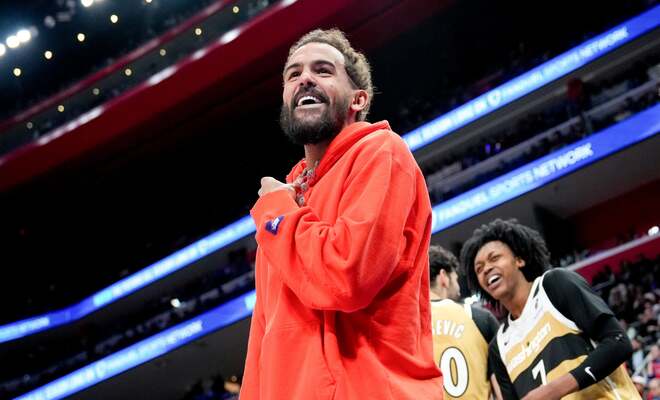
The Wizards managed to add established talent via the trade market — Trae Young and Anthony Davis — who could aid the development of the young core further in 2026-27 — assuming they keep both players through the offseason — but it also did not disrupt their race to the bottom with the worst record in the NBA, 17-65. That gives them the joint-best odds at the No. 1 pick with three other teams, but more importantly, it gives them the highest floor, since their worst lottery result would be No. 5 if four teams jump them.
To backpedal quickly, you may ask why I think Young and Davis could help their young core. Won’t they take minutes and touches away? I have a few reasons for saying that. Young should get their young players better shots and ensure that guys like George, Johnson and company are not overtasked or establishing bad habits in offensive roles that don’t suit their strengths. Davis should help to establish a defensive culture — as he has already stated that his goal is to compete for a championship — and while I do not think the Wizards have a championship-level roster (maybe a top-3 draft pick changes that), establishing a winning culture and winning habits should help them. It might just be a one-year or two-year experiment with Young and Davis, which is not guaranteed to work out, but it might be helpful in the long run.
With all of that context, you can say that “it went well” for the Wizards despite being the worst team in the NBA, because this season could catapult them into a positive trajectory moving forward.
Success is relative, and good teams are not built overnight.
Coaching
Under the guidance of Brian Keefe in his second season as a full-time head coach (plus the half-season he served as the interim head coach in 2023-24), the Wizards had the worst record in the NBA, 17-65, which I had already mentioned before. Via NBA.com, the Wizards posted the No. 29 offensive rating (109.7) and No. 30 defensive rating (121.5), the latter of which is not shocking, considering the 83-point game they conceded to Bam Adebayo. Naturally, they had the No. 30 net rating (-11.8) as well. The Wizards have always played fast under Keefe and that did not change, as a pace of 102.49 was sixth-highest in the NBA.
Here is another interesting one: the Wizards had an assist ratio of 17.6 percent, which was 27th in the NBA. That indicates how many of their field goals were assisted. You would have to assume that improves with the potential of a full season of Trae Young in 2026-27, but that says less about Keefe as a coach.
While you can say that Keefe has not had much to work with, there may be some real questions about whether or not he can be a winning head coach. However, the Wizards have already indicated that Keefe will be returning in 2026-27.
Wizards general manager Will Dawkins said he’s expecting coach Brian Keefe to return next season after Washington finished with the NBA’s worst record. https://t.co/abEoFmoHoi
— Washington Times Sports (@WashTimesSports) April 17, 2026
Keefe will have a chance to prove his acumen next season with what should be the best roster he has had under his tenure.
The Players
 Alexandre SarrPF, Washington Wizards
Season Team GP GS MPG FGM FGA FG% FTM FTA FT% 3PTM 3PTA 3PT% PTS REB AST STL BLK TO 25-26 WAS 48 48 27.2 6.6 13.7 48.2 2.1 3.0 69.2 1.0 3.1 33.3 16.3 7.4 2.7 0.8 2.0 1.7 24-25 WAS 67 67 27.1 4.9 12.4 39.4 1.7 2.5 67.9 1.6 5.1 30.8 13.0 6.5 2.4 0.7 1.5 1.7 ADP: 83.8/85.8 (Yahoo/ESPN) | Total Value: 129/128 (8/9-cat) | Per-Game Value: 61/55 (8/9-cat)
The minutes per game were almost identical to his rookie season, but Sarr gained 3.3 points on 8.8 percent better shooting from the field, 0.9 rebounds and 0.5 more blocks. However, even if the late-season injuries were real, including his final 10 games seems disingenuous given the Wizards’ tanking tactics.
So in 38 games by the end of January, Sarr was putting up 17.6 points (.499 FG%, .709 FT%), 1.0 triples, 7.7 rebounds, 2.8 assists, 0.8 steals and 2.1 blocks across 28.6 MPG for No. 44/No. 33 (8-cat/9-cat) value per game. Sarr dropped from 5.1 3-point attempts per game as a rookie (hit 30.8 percent) to 3.1 attempts per game in his second year (hit 33.3 percent), which was a partial contribution to his massive improvement in efficiency.
If Anthony Davis sticks around, it will be interesting to see if it makes Sarr’s game more perimeter-oriented again and whether or not it impacts his block rate, so some of the improvements we saw this year might become muted, but he should comfortably stick as a player for standard formats.
Anthony DavisC, Washington WizardsSeason Team GP GS MPG FGM FGA FG% FTM FTA FT% 3PTM 3PTA 3PT% PTS REB AST STL BLK TO 25-26 WAS 20 20 31.3 8.5 16.7 50.6 3.0 4.1 72.8 0.5 1.9 27.0 20.4 11.1 2.8 1.1 1.7 2.1 24-25 DAL 51 51 33.5 9.2 17.8 51.6 5.6 7.2 77.5 0.7 2.4 28.2 24.7 11.6 3.5 1.2 2.2 2.2 23-24 LAL 76 76 35.5 9.4 16.9 55.6 5.5 6.8 81.6 0.4 1.4 27.1 24.7 12.6 3.5 1.2 2.3 2.1 ADP: 10.1/8.4 (Yahoo/ESPN) | Total Value: 297/289 (8/9-cat) | Per-Game Value: 23/22 (8/9-cat)
Ultimately, a left finger sprain (which was also just labeled as “left hand ligament damage” at times) ended Davis’ season on January 8. Davis, Jaden Hardy, Dante Exum and D’Angelo Russell went to Washington in a trade announced on February 4, while Khris Middleton, AJ Johnson, Malaki Branham, Marvin Bagley, a 2026 Thunder first, a top-20 protected 2030 Warriors first and three second-round picks went to the Mavs before the deal was expanded to three teams. That trade ended Davis’ stint with the Mavs after 29 total games across two halves of separate seasons.
Davis did not manage to suit up for Washington, and in his 20 appearances for the Mavs in 2025-26, he averaged the third-fewest points (20.4) of his career and dipped below 2.0 BPG – he averaged 1.7 blocks – for the first time in seven seasons. Most of his other numbers were fairly steady and Davis likely shouldn’t be valued as a first-round player anymore. However, his high-end double-double upside with steals and blocks still placed him in the top 20-to-25 range per game for both 8-cat and 9-cat in 2025-26. The main issue will be adjusting his valuation for potential games missed, which ideally means you might want to shave a round off his per-game upside in drafts, but you may not get that luxury.
Trae YoungPG, Washington WizardsSeason Team GP GS MPG FGM FGA FG% FTM FTA FT% 3PTM 3PTA 3PT% PTS REB AST STL BLK TO 25-26 WAS 15 15 25.6 5.4 11.8 45.8 5.3 6.5 82.5 1.8 5.3 33.8 17.9 2.0 8.0 0.9 0.1 2.6 24-25 ATL 76 76 36.0 7.4 18.1 41.1 6.5 7.4 87.5 2.9 8.4 34.0 24.2 3.1 11.6 1.2 0.2 4.7 23-24 ATL 54 54 36.0 8.0 18.7 43.0 6.4 7.5 85.5 3.2 8.7 37.3 25.7 2.8 10.8 1.3 0.2 4.4 ADP: 12.2/10.9 (Yahoo/ESPN) | Total Value: 373/381 (8/9-cat) | Per-Game Value: 85/126 (8/9-cat)
After playing five games with the Wizards, Young missed the final month of the regular season with low back pain and a right quad contusion. Young had never played fewer than 54 games before the career-low 15 games he played in 2025-26.
His season can be divided into two parts. For the Hawks, he played in 10 games as a right MCL sprain limited him early on, averaging 19.3 points (.415 FG%, .863 FT%), 1.8 triples, 1.5 rebounds, 8.9 assists, 0.9 steals and 0.2 blocks in 28.0 MPG for top-105 9-cat and top-80 8-cat value per game through the end of December. A right quad contusion was his next injury and Young was traded to the Wizards on the night of January 7 in exchange for CJ McCollum and Corey Kispert, ending his time in Atlanta after 493 games.
His new team cited that his right MCL sprain and right quad contusion as injuries that still needed time to rehab, so he made his Wizards debut on March 5, nearly two months after the trade. Young appeared in five games as a Wizard, averaging 15.2 points (.595 FG%, .708 FT%), 1.8 triples, 3.0 rebounds, 6.2 assists, 0.6 steals and 0.2 blocks in 20.7 MPG for top-160 9-cat and top-115 8-cat value per game in the 11-day span that he played.
His 25.6 MPG across all 15 games were well below his career average of 34.1 MPG, resulting in lows across points, rebounds, assists and threes. Perhaps Young is past his days of being a potential first-round producer in a FG%-and-turnover punt, but it would be shocking if he doesn’t have some type of rejuvenation in 2026-27, presumably in Washington.
Kyshawn GeorgeSF, Washington WizardsSeason Team GP GS MPG FGM FGA FG% FTM FTA FT% 3PTM 3PTA 3PT% PTS REB AST STL BLK TO 25-26 WAS 48 48 29.0 5.3 12.0 43.8 2.2 2.7 80.2 2.1 5.4 38.1 14.8 5.1 4.5 1.0 0.9 2.6 24-25 WAS 68 38 26.5 3.0 8.0 37.2 1.0 1.4 75.3 1.7 5.2 32.2 8.7 4.2 2.5 1.0 0.7 1.4 ADP: None/None (Yahoo/ESPN) | Total Value: 147/180 (8/9-cat) | Per-Game Value: 77/112 (8/9-cat)
George showed improvements in all of his percentages and all of his counting stats aside from steals, where he remained fairly steady. However, George was a bit of a victim of tanking tactics before his season was over, as reduced minutes reduced some of his averages.
For a better picture, we should remove the last 10 games of his 48-game season. So in 38 games by the end of January, George averaged 15.7 points (.445 FG%, .779 FT%), 2.2 triples, 5.8 rebounds, 5.1 assists, 1.2 steals, 0.9 blocks and 2.9 turnovers in 31.3 MPG for top-55 8-cat and top-90 9-cat value. George should presumably slot into a lower-usage role for an improving Wizards team next season, but his ability to produce across the board and slot into on-ball and off-ball roles should comfortably keep him in the 12-team picture, without factoring in any further improvements during the offseason as well.
Tre JohnsonSG, Washington WizardsSeason Team GP GS MPG FGM FGA FG% FTM FTA FT% 3PTM 3PTA 3PT% PTS REB AST STL BLK TO 25-26 WAS 60 42 24.1 4.5 10.8 41.9 1.3 1.5 87.4 1.9 5.4 35.8 12.2 2.8 2.0 0.6 0.3 1.6 ADP: 142.6/140.9 (Yahoo/ESPN) | Total Value: 240/259 (8/9-cat) | Per-Game Value: 275/304 (8/9-cat)
In his 33 college games, Johnson shot 39.7 percent from three on 6.8 attempts per game, equating to 2.7 makes per contest; however, he shot 35.8 percent from deep as a rookie. It was a weird and chaotic season, but Johnson likely has room to improve significantly in his second season.
Johnson being an “average NBA shooter” percentage-wise is fine given the chaotic end to the season in Washington. He remains an elite shooting prospect and will likely benefit from the playmaking of Trae Young and having a functional roster around him to open 2026-27. Johnson averaged 12.2 points, 0.6 steals, 2.8 rebounds, 2.0 assists and hit 1.9 treys per contest in his 60 games (42 starts), playing 24.1 MPG. Johnson sinking 87.4 percent of his free throws should have dynasty managers feeling comfortable about his shooting touch and a possible uptick in his second season.
Bilal CoulibalySG, Washington WizardsSeason Team GP GS MPG FGM FGA FG% FTM FTA FT% 3PTM 3PTA 3PT% PTS REB AST STL BLK TO 25-26 WAS 56 55 26.2 4.1 9.7 42.5 2.4 3.2 74.6 1.2 3.6 31.9 11.7 4.3 2.6 1.3 1.0 1.4 24-25 WAS 59 59 33.0 4.5 10.6 42.1 2.3 3.1 74.6 1.1 3.8 28.1 12.3 5.0 3.4 1.3 0.7 2.1 23-24 WAS 63 15 27.2 3.0 6.9 43.5 1.5 2.1 70.2 1.0 2.9 34.6 8.4 4.1 1.7 0.9 0.8 1.4 ADP: 143.5/141.3 (Yahoo/ESPN) | Total Value: 169/163 (8/9-cat) | Per-Game Value: 149/142 (8/9-cat)
Coulibaly only appeared in 56 games, partially due to injuries and likely partially due to some tanking tactics. He started all 56 games, indicating that the Wizards still value him. He is the team’s best perimeter defender and as always, the issues are what he does offensively. Coulibaly shot 31.9 percent from three and that is an underwhelming clip.
After the All-Star break (23 games), Coulibaly averaged 14.6 points (.456 FG%, .718 FT%), 1.6 treys, 4.2 rebounds, 2.7 assists, 1.2 steals and 1.0 blocks to land at No. 102 9-cat and No. 111 8-cat per game. It is difficult to trust things happening when one third of the NBA was tanking, but Coulibaly’s flashes on offense were a little more positive at that stage of the season. This team has a lot of talent and will be adding another high draft pick, as well as two veterans, so Coulibaly will likely have to show some uptick to avoid losing minutes next season.
Justin ChampagnieSG, Washington WizardsSeason Team GP GS MPG FGM FGA FG% FTM FTA FT% 3PTM 3PTA 3PT% PTS REB AST STL BLK TO 25-26 WAS 69 19 20.0 3.4 6.7 50.2 1.2 1.5 78.4 0.8 2.4 31.9 8.7 5.6 1.2 0.9 0.6 0.7 24-25 WAS 62 31 21.6 3.4 6.6 51.1 0.8 1.2 68.5 1.2 3.1 38.3 8.8 5.7 1.0 1.0 0.6 0.9 23-24 WAS 15 1 15.7 2.1 5.2 41.0 0.8 1.0 80.0 0.9 3.0 28.9 5.9 3.5 1.3 0.7 0.6 0.7 ADP: None/None (Yahoo/ESPN) | Total Value: 140/116 (8/9-cat) | Per-Game Value: 206/172 (8/9-cat)
Champagnie played a career-high 69 games and started 19 times, down from his 31 starts in the 2024-25 season. Statistically, not much stood out for Champagnie based on prior norms, especially based on what he did in the previous season. The main point of interest was his 3-point percentage (.319), which was down from a career-high .383 in 2024-25. Champagnie’s hustle and defense are easy to acknowledge, but he has to remain useful on offense to stick as a rotation player.
Still, even the Wizards media acknowledged his quality and addressed some of the random DNP-CDs Champagnie received (usually in tank-offs) throughout the season. I do not view Champagnie as a starting-caliber player, but he is a name to monitor who might be able to nail down a bench role in a crowded rotation as the Wizards become more interested in winning, because his archetype is a useful one. You need the guys who make the “energy plays” to succeed.
Bub CarringtonPG, Washington WizardsSeason Team GP GS MPG FGM FGA FG% FTM FTA FT% 3PTM 3PTA 3PT% PTS REB AST STL BLK TO 25-26 WAS 82 49 27.7 3.8 9.0 42.4 1.0 1.4 73.0 2.1 5.0 40.8 10.7 3.4 4.6 0.6 0.2 2.3 24-25 WAS 82 57 30.0 3.7 9.1 40.1 0.8 1.0 81.2 1.7 5.0 33.9 9.8 4.2 4.4 0.7 0.3 1.7 ADP: 143.3/138.1 (Yahoo/ESPN) | Total Value: 110/178 (8/9-cat) | Per-Game Value: 221/301 (8/9-cat)
Carrington has one thing going for him: health. He has played in every game throughout his first two seasons so far. However, unfortunately for Carrington, he has not proven that he can be a consistent creator of quality shots for himself and others, starting fewer games (49 as a sophomore) than he did as a rookie (57).
One major positive was his jump from 33.9 percent from deep as a rookie to 40.8 percent from three in his second season. Carrington was behind CJ McCollum and Tre Johnson at times, but even when he got chances to start, he might have put together short positive runs but was never consistent. Carrington projects to be behind Trae Young next season as a solid bench guard.
Will RileySF, Washington WizardsSeason Team GP GS MPG FGM FGA FG% FTM FTA FT% 3PTM 3PTA 3PT% PTS REB AST STL BLK TO 25-26 WAS 74 19 22.1 3.7 8.4 43.9 1.9 2.4 80.0 1.1 3.3 31.6 10.3 2.9 2.0 0.7 0.1 1.3 ADP: None/None (Yahoo/ESPN) | Total Value: 210/236 (8/9-cat) | Per-Game Value: 318/338 (8/9-cat)
Riley averaged 10.3 points, 2.9 rebounds, 2.0 assists, 0.7 steals and 1.1 triples (.316 3P%) in 22.1 MPG across 74 games (18 starts) and I would say he was better than expected as a rookie. Why was he better than expected? The fact that Riley had any real impact at all, often being in the 12-team streaming picture after the All-Star break, was surprising. In the final 29 games of the season, Riley averaged 15.6 points (.459 FG%, .816 FT%), 1.4 triples, 3.8 rebounds, 2.8 assists, 0.9 steals and 1.9 turnovers in 30.5 MPG for No. 180/No. 215 (8-cat/9-cat) value per game. While that still isn’t superbly impressive, if you caught Riley during a hot week, you may have gotten 12-team value when his shots were falling and other areas of his game were humming. The floor was pretty bad at times, but as stated already, getting anything from Riley — who had a very poor statistical profile in college — was a major plus for fantasy. He also ended up being one of the only reliable Wizards down the stretch as everyone else was either missing games regularly or seeing limited minutes. Obviously, his role at the beginning of next season will certainly be much smaller, but the Wizards may want to see if they can develop their 6-foot-10, 20-year-old wing after he showed some positive flashes.
Tristan VukcevicPF, Washington WizardsSeason Team GP GS MPG FGM FGA FG% FTM FTA FT% 3PTM 3PTA 3PT% PTS REB AST STL BLK TO 25-26 WAS 49 12 13.7 3.1 6.5 47.9 1.8 2.3 78.4 1.0 2.9 34.7 9.0 3.0 1.1 0.5 0.7 1.3 24-25 WAS 35 1 14.7 3.4 6.9 49.6 1.5 1.9 77.6 1.1 2.9 37.3 9.4 3.7 1.1 0.3 0.7 1.2 23-24 WAS 10 4 15.3 2.9 6.7 43.3 1.7 2.2 77.3 1.0 3.6 27.8 8.5 3.6 1.3 0.5 0.7 1.0 ADP: None/None (Yahoo/ESPN) | Total Value: 291/297 (8/9-cat) | Per-Game Value: 314/329 (8/9-cat)
Tristan Vukcevic got part of the Non-Taxpayer MLE in his new three-year deal with the Washington Wizards, a league source told @spotrac.
2025-26: $2.8M
2026-27: $3.0M
2027-28: $3.0MFinal season is a team option for the Wizards.
— Keith Smith (@KeithSmithNBA) February 26, 2026
Tristan Vukcevic made a career-high 49 appearances with 12 starts across 2025-26 and was promoted from a two-way deal to a multi-year standard contract for his efforts.
The issue for Vukcevic is that even when he started, he was not guaranteed to play big minutes, since a lot of his opportunities came during the “tanking hours” or “silly season.” Post-All-Star break, Vukcevic averaged 12.0 points (.496 FG%, .811 FT%), 1.9 treys, 4.1 rebounds, 1.2 assists, 0.8 steals and 0.6 blocks in 17.3 MPG across 16 appearances for No. 160/168 (8-cat/9-cat) value per game. Great per-minute production, but not worth significant attention in standard leagues given that he also missed games frequently.
With the Wizards pivoting to potentially “trying to win” in 2026-27, it will be interesting to see if Vukcevic has a consistent bench role behind Alex Sarr and Anthony Davis, as he can certainly also log minutes next to either player if needed; however, maybe his .347 3P% (career .348 3P%) still needs a little work. Vukcevic does seem like a good offensive big in general, but even if he gets defensive stats, the defense may need some polishing. Given that he seemed to get a real standard contract and not the typical “silly-season contract” which is a two-year deal with the second year non-guaranteed, it seems like the Wizards value him as a real player.
 Cam WhitmoreSF, Denver Nuggets
Season Team GP GS MPG FGM FGA FG% FTM FTA FT% 3PTM 3PTA 3PT% PTS REB AST STL BLK TO 25-26 WAS 21 0 16.9 3.7 8.0 45.6 1.1 1.5 74.2 0.8 2.7 28.6 9.2 2.8 0.7 0.7 0.4 0.9 24-25 HOU 51 3 16.2 3.5 7.9 44.4 1.1 1.4 75.0 1.3 3.6 35.5 9.4 3.0 1.0 0.6 0.3 0.9 23-24 HOU 47 2 18.7 4.5 9.9 45.4 1.6 2.4 67.9 1.7 4.7 35.9 12.3 3.8 0.7 0.6 0.4 1.0 ADP: 142.0/133.3 (Yahoo/ESPN) | Total Value: 414/418 (8/9-cat) | Per-Game Value: 348/348 (8/9-cat)
Cam Whitmore played 21 games this season, initially being diagnosed with a right shoulder deep vein thrombosis on December 23, 2025 and officially ruled out for the season on January 15, 2026. The fact that he had a real ADP is surprising to me after the fact, but “microwave scorers” are players that people can get a bit overhyped about, so I suppose that does make sense since he’s a talented guy on a rebuilding team.
Whitmore was not exactly setting the world on fire prior to the diagnosis of blood clots, averaging 16.9 MPG and sometimes being on the fringes of the rotation. Of course, the health issues may have been a contributing factor to the muted minutes and production, but he was an inconsistent sparkplug bench scorer from opening night. He reached double-digit points nine times, including two 20-point games before his campaign was over. Aside from his 3-point percentage dropping off from .357 during his two years in Houston to .286 in his brief Washington stint, Whitmore’s numbers were generally in line with his prior norms.
He lost out on a chance for extended opportunities at the end of the season when the Wizards leaned into tanking and development, and the path to big minutes with more touches could be a lot more difficult to attain next season. The hope for a Whitmore breakout as a young, score-first player on a bad team went unfulfilled, and Whitmore’s limited playing time even before the injury is not a good sign. All of that said, he does have legitimate talent if he can figure out how to play a role rather than forcing the issue, assuming he returns healthy next season.
Jamir WatkinsSG, Washington WizardsSeason Team GP GS MPG FGM FGA FG% FTM FTA FT% 3PTM 3PTA 3PT% PTS REB AST STL BLK TO 25-26 WAS 50 6 20.6 2.6 5.9 44.6 1.1 1.6 69.5 0.9 3.2 29.7 7.4 3.9 1.3 1.1 0.5 0.8 ADP: None/None (Yahoo/ESPN) | Total Value: 271/265 (8/9-cat) | Per-Game Value: 279/263 (8/9-cat)
Watkins was the No. 43 pick in the 2025 NBA Draft, and to summarize the pre-draft profile, he projected as a wing with the potential to guard all non-center positions due to his plus wingspan (6’11.25″), while being physical at the point of attack and an active, disruptive off-ball defender who was a deflection machine. Even in Summer League, that was on display with an eight-steal, three-block game. The issues for Watkins coming into the NBA were fouling and his mediocre 32.1 percent clip from three in his last year of college.
In the NBA, everything played out as described, as Watkins flashed intriguing defensive upside, racking up steals and blocks whenever his minutes rose. He shot 29.7 percent from three as a rookie, so that remains an area that needs improvement. He was initially on a two-way contract, but was rewarded with a standard two-year deal on February 26 that kept him eligible to play during “silly season.” Typically, the second year of such contracts are non-guaranteed or partially guaranteed, but Watkins should be back in Washington next season. He is not guaranteed to win a rotation role, but if the team is trying to win, his defensive promise could be valuable and if his 3-point shot improves, it could be difficult to keep him off the floor.
Jamir Watkins has hit five three pointers tonight and matched his career high with 20 points. His defense I believe is already good enough to be part of the rotation in some fashion next season. If he can find a consistent outside shot, he’ll be crucial.
— Ben Strober (@strobersports) April 12, 2026
Anthony GillPF, Washington WizardsSeason Team GP GS MPG FGM FGA FG% FTM FTA FT% 3PTM 3PTA 3PT% PTS REB AST STL BLK TO 25-26 WAS 55 8 17.3 2.5 3.9 62.8 0.6 0.8 73.9 0.3 0.9 35.4 5.8 2.9 1.3 0.6 0.4 0.7 24-25 WAS 50 0 7.9 0.9 1.8 48.9 0.7 1.0 66.0 0.2 0.6 32.3 2.6 1.3 0.3 0.2 0.0 0.2 23-24 WAS 50 3 9.3 1.5 3.2 46.9 0.6 0.7 80.6 0.2 0.8 24.4 3.8 1.9 0.7 0.3 0.2 0.5 ADP: None/None (Yahoo/ESPN) | Total Value: 287/277 (8/9-cat) | Per-Game Value: 341/323 (8/9-cat)
By the end of January, Gill had only played double-digit minutes three times throughout the season, essentially just being a good vet in the locker room who could fill minutes in garbage time at the end of games. After January, Gill logged double-digit minutes 30 times, often playing legitimate rotation minutes. His 55 games were actually the second-most of his career and eight total starts were the joint-most of his career. His field-goal percentage was actually a new personal best across an entire season, as were his MPG and all of his counting stats. His 3P% was also the second-best of his career.
Assuming the Wizards are trying to compete in 2026-27, if Gill doesn’t retire, his age-34 season should be as a depth piece and “locker-room guy” who doesn’t have an impact on fantasy. Think of Garrett Temple in Toronto, and if you did not know the Raptors have a player named Temple on their roster, that proves my point.
 Jaden HardySG, Los Angeles Lakers
Season Team GP GS MPG FGM FGA FG% FTM FTA FT% 3PTM 3PTA 3PT% PTS REB AST STL BLK TO 25-26 WAS 57 4 15.8 3.2 7.5 42.4 1.0 1.3 73.3 1.8 4.6 39.7 9.2 1.5 1.0 0.3 0.1 1.1 24-25 DAL 57 3 15.9 3.2 7.3 43.5 1.1 1.5 69.8 1.3 3.5 38.6 8.7 1.6 1.4 0.5 0.1 1.4 23-24 DAL 73 7 13.5 2.7 6.6 40.7 0.8 1.0 77.6 1.1 3.1 36.2 7.3 1.8 1.5 0.3 0.1 0.8 ADP: None/None (Yahoo/ESPN) | Total Value: 332/349 (8/9-cat) | Per-Game Value: 411/444 (8/9-cat)
Hardy played in 34 games for the Mavs, including four starts, then after the Anthony Davis trade to Washington, he played 23 games (no starts) for the Wizards. While he averaged a career-best in points, none of his stats really stood out compared to the rest of his career. Hardy had a good handful of games near the end of the season but even that relied on major absences and some hot shooting. Hardy has pretty much established himself as a depth guard, that is, the 11th or 12th man who enters the rotation when there are injuries or as a safe option during garbage time. That seems unlikely to change next season.
 Leaky BlackSF, Sacramento Kings
Season Team GP GS MPG FGM FGA FG% FTM FTA FT% 3PTM 3PTA 3PT% PTS REB AST STL BLK TO 25-26 WAS 15 9 28.9 2.7 6.9 38.8 0.5 0.5 87.5 1.3 3.7 34.5 7.1 5.0 1.5 1.2 0.5 0.9 23-24 CHA 26 3 10.9 1.0 2.0 48.1 0.4 0.6 66.7 0.3 0.8 45.0 2.7 1.8 0.9 0.3 0.4 0.2 ADP: None/None (Yahoo/ESPN) | Total Value: 408/402 (8/9-cat) | Per-Game Value: 216/196 (8/9-cat)
Black went undrafted in 2023, previously making 26 appearances (three starts) with the Hornets in 2023-24. Black started in nine of his 15 appearances after the Wizards brought him in on a two-way contract after the All-Star break. He was pretty much an inefficient source of 3-and-D stats and rebounds for managers in deeper leagues when he played. In 24 G League games, Black hit 1.8 triples (.443 3P%), while averaging 8.1 rebounds, 3.4 dimes, 2.0 steals and 0.8 blocks. His .588 FT% in the G League does not lead to confidence in his shooting touch, so everything we saw was likely just due to antics in “silly season” and Black probably isn’t an NBA-caliber player.
 D'Angelo RussellPG, Memphis Grizzlies
Season Team GP GS MPG FGM FGA FG% FTM FTA FT% 3PTM 3PTA 3PT% PTS REB AST STL BLK TO 25-26 WAS 26 3 19.0 3.6 8.9 40.5 1.7 2.3 71.7 1.3 4.3 29.5 10.2 2.3 4.0 0.5 0.1 1.9 24-25 BKN 58 36 25.5 4.3 11.0 39.0 2.1 2.5 83.4 1.9 6.2 31.4 12.6 2.8 5.1 1.0 0.4 1.9 23-24 LAL 76 69 32.7 6.5 14.2 45.6 2.1 2.5 82.8 3.0 7.2 41.5 18.0 3.1 6.3 0.9 0.5 2.1 ADP: 116.0/107.7 (Yahoo/ESPN) | Total Value: 401/435 (8/9-cat) | Per-Game Value: 360/435 (8/9-cat)
It seems like such a long time since Russell was actually being drafted as the potential “fill-in PG in Dallas until Kyrie Irving’s return from an ACL tear.” Irving never returning was irrelevant because while Russell did start some games at PG in preseason, by the end of it, PJ Washington was starting in a no-PG lineup. Russell came off the bench for the first seven games of the regular season in Dallas, with only one standout performance. He then started three games in a row, but quickly returned to the bench. Russell’s role varied until his first DNP-CD on November 28 and while he briefly re-entered the rotation for one week in December, Russell was pretty much out of the rotation by the end of the month, only playing when the Mavs’ hand was forced. His last appearance came on January 10, before he was traded to the Wizards as extra baggage in the Anthony Davis deal.
In Washington, Russell was reportedly “not required to report to the Wizards,” and he was also unable to reach a buyout agreement to find a new home. Russell, therefore, did not suit up in Washington. Russell’s 26 games, three starts and 19.0 MPG were all career lows with his joint-second-worst FG%, worst 3P% and worst FT% accompanied by career-low counting stats in every area aside from assists (second-worst) that naturally were accompanied by the minutes and percentages.
Currently, Russell’s status as an NBA rotation player appears to be in danger at 30 years old after 11 seasons of service.
 Julian ReesePF, New Orleans Pelicans
Season Team GP GS MPG FGM FGA FG% FTM FTA FT% 3PTM 3PTA 3PT% PTS REB AST STL BLK TO 25-26 WAS 13 10 30.9 4.8 9.2 52.9 2.2 3.4 63.6 0.0 0.0 0.0 11.8 10.5 1.8 1.4 0.6 2.5 ADP: None/None (Yahoo/ESPN) | Total Value: 399/407 (8/9-cat) | Per-Game Value: 119/167 (8/9-cat)
Julian or “Juju” Reese was undrafted in the 2025 NBA Draft and is the brother of Angel Reese. Julian signed a two-way contract with the Wizards on February 28, which limited how many NBA games he could appear in since that is a development-focused contract, requiring him to serve time in the G League. Reese made 27 appearances in the 2025-26 G League regular season (24 for the Raptors 905 and three for the Capital City Go-Go), averaging 9.6 points (.604 FG%, .630 FT%), 8.0 rebounds, 1.3 assists, 0.7 steals and 1.0 blocks in 19.1 MPG. Reese may be listed as a PF, but the 6-foot-9, 250-pound rookie was basically a center with a high motor. He popped off a few times in his audition, especially when the Wizards were missing Alex Sarr and Tristan Vukcevic (and sometimes Anthony Gill too). That includes an 18-point, 20-rebound game vs. Utah, a 26-point, 17-rebound game in the rematch, and then a three-game stretch vs. the Nets and Bulls (twice) that resulted in 17 & 16 with three steals, 17 & 11 with four assists, three steals and two blocks, and 16 & 15 with two blocks.
He turns 23 years old in June and while his production in “silly season” was intriguing, Reese is likely far from being a rotation player. Still, his flashes will likely warrant him being kept around in Washington or elsewhere on a two-way contract moving forward. His penchant for rebounds, steals and blocks would make him a useful fantasy asset if he could ever carve out real minutes, but again, that doesn’t seem like a reality to expect just yet.
Sharife CooperPG, Washington WizardsSeason Team GP GS MPG FGM FGA FG% FTM FTA FT% 3PTM 3PTA 3PT% PTS REB AST STL BLK TO 25-26 WAS 41 1 17.1 3.1 6.0 51.4 1.2 1.5 83.3 0.7 1.9 38.2 8.1 2.1 3.0 0.4 0.1 1.5 23-24 CLE 0 0 0.0 0.0 0.0 0.0 0.0 0.0 0.0 0.0 0.0 0.0 0.0 0.0 0.0 0.0 0.0 0.0 21-22 ATL 13 3.0 0.2 1.1 21.4 0.0 0.0 0.0 0.1 0.5 16.7 0.5 0.4 0.4 0.0 0.0 0.4 ADP: None/None (Yahoo/ESPN) | Total Value: 333/366 (8/9-cat) | Per-Game Value: 324/344 (8/9-cat)
Cooper was the No. 48 pick for the Hawks in the 2021 NBA Draft, but quickly found himself struggling to stay in the NBA after his rookie season. He had a couple of short stints with the Cavs on two-way contracts, but pretty much hadn’t played NBA basketball since 2021-22. He signed a two-way contract with the Wizards in September 2025, making 41 appearances, many of which came in “silly season.” This was Cooper’s first substantial run of NBA minutes and he shot 38.2 percent from three, which was previously a problem area. In fact, he was pretty efficient across the board. Cooper was always a great passer and 3.0 assists to 1.5 turnovers shows that is still the case. Maybe this stint will keep him around and get him further NBA chances, but Cooper still has a long way to go to get any consistent minutes.
In the 2025-26 G League regular season, Cooper played eight games, shooting 34.8 percent from three and 65.4 percent from the free-throw line, but to be fair to him, that is a smaller sample than his NBA stint this past season.
Fantasy Star
I have to give it to Alex Sarr. I know the end of the regular season was frustrating, but hitting on a pick like Sarr so resoundingly well in the first half of the season likely propelled many managers high in their fantasy standings. So basically, if Sarr helped you secure a first-round playoff bye (or got you off to a strong start in roto settings), and if you cut ties at an appropriate time, you likely had a strong foundation to eventually win your league. I am speaking from personal experience here, as that is what Sarr offered me: strong starts in multiple leagues, where I later replaced him with one of the plethora of league-altering post-All-Star break pickups.
To recap what I said earlier, Sarr did end up playing 48 games, but in 38 games by the end of January, Sarr was averaging 17.6 points (.499 FG%, .709 FT%), 1.0 triples, 7.7 rebounds, 2.8 assists, 0.8 steals and 2.1 blocks across 28.6 MPG for No. 44/No. 33 (8-cat/9-cat) value per game after you likely picked him in the 80-to-90 range of drafts.
Replacing a top-100 pick off the waiver wire isn’t fun at the end of the day, but if you were able to grab a Maxime Raynaud (like I did), you could’ve replaced part of his production, only really losing out on blocks and maybe some threes, but gaining rebounds as Raynaud was a double-double machine. Precious Achiuwa, Brook Lopez, Gui Santos (yes, I know, not a big) and Kyle Filipowski are all potential pickups that could have helped you replace Sarr on some level after he catapulted you to a strong start, or maybe you could have just rolled through hot options off the waiver wire every week.
Assuming Anthony Davis is present in Washington and relatively healthy (let us say, he plays around 60 games), Sarr will play a lot more minutes at PF and that should slow down his block rate and rebounding a bit, but maybe things balance out if Sarr can be healthy enough (which, is a bit of a question, tanking absences aside) to get his own minutes at center. Overall, I think Sarr may not be the top-45 player he was pre-January, but he might still be a real top-80 big man as a floor.
Fantasy Letdown
Obviously, this had to be one of the newcomers, Trae Young or Anthony Davis. Despite us actually seeing Young suit up for the Wizards, I actually have to label Young as the letdown, not Davis. Davis would have been a player fantasy managers were more comfortable dropping given the nature of the news surrounding a potential return being more negative. Young was a drain on fantasy rosters after the trade to Washington, stringing us along just to play limited minutes in an 11-day span before being done for the season.
Even if we disregard his Washington stint, Young — who had a first-round ADP due to past proof of first-round upside in a FG%-and-turnover-punt build — was already headed toward a down season in Atlanta.
To recap what I said earlier in the article: for the Hawks, he played in 10 games as a right MCL sprain limited him early on, averaging 19.3 points (.415 FG%, .863 FT%), 1.8 triples, 1.5 rebounds, 8.9 assists, 0.9 steals and 0.2 blocks in 28.0 MPG for top-105 9-cat and top-80 8-cat value per game.
Young was always a very healthy player in the past, and while some tanking stuff is mixed into his career-low games played, remember, Young did miss a chunk of the season with Atlanta due to the MCL sprain, and despite playing 76 games in 2024-25, he was battling Achilles tendinopathy throughout the campaign. Before that, he had a hand injury in 2023-24 that cost him a lot of time as well.
Young could certainly have a renaissance of sorts in Washington, but I think it would be a mistake for us to continue expecting the first-round-level upside in a punt build moving forward, especially if his body also begins breaking down. I was actually an advocate for drafting Young highly last season and I am not the type of fantasy manager who overreacts and says “I will never draft X player again,” but I think expectations for Young need to be tempered a bit, even if he “runs the show” in Washington.
One to Watch
We already saw breakouts from Alex Sarr and Kyshawn George despite the end of their regular seasons being muted. For me, there are several players to consider here: Bilal Coulibaly, Justin Champagnie or Tre Johnson. Coulibaly has shown spurts of fantasy appeal before and you could argue that an elite playmaker could be what unlocks his ability to be a passable player on offense, which is all he needs to be since he is the team’s best perimeter defender. For Champagnie, his promise is linked to maybe becoming a consistent rotation player, but the roster is crowded with talent and that is not a guarantee for him.
The clearest “one to watch” is Tre Johnson, the No. 6 pick of the 2025 NBA Draft. The 6-foot-5 wing will not turn 21 years old until March of 2027. As I stated earlier, Johnson converted 2.7 triples per game at a 39.7 percent clip across 33 college games, and even without knowing that statistical positive, you can see the scoring upside (aside from 3-point shooting) that he oozes if you look at him play. During his draft process, I saw many stories about how much of a perfectionist Johnson is during his workouts.
With an elite playmaker like Trae Young around to feed him and another offseason of work, I think Johnson could make a splash. Fantasy-wise, there is a bit of a question about whether he does enough outside of points and threes, but he did flash some decent low-end steals over a short stretch and maybe he rounds out more of his game in the offseason as well.
One Burning Question
Can the Wizards make a Play-In/playoff push in 2026-27?
Honestly, I have questions about whether or not Brian Keefe is the head coach to lead a winning charge, but I think Anthony Davis, when healthy, is a winning player and Trae Young’s creation should also help the young players a lot. I don’t expect this to be a high-level playoff team, but I can see them “maybe” challenging for the Play-In. It is tricky, because the Pacers should be back in the playoff mix, and depending on how the lottery and offseason goes for the Nets, that might also be a franchise that begins pivoting toward the goal of winning. That is of course, in addition to the Play-In teams in 2025-26, as the Wizards would have to overtake a couple of those squads as well.
Still, let’s say you get 60-plus games from Young and Davis while Alex Sarr, Kyshawn George and Tre Johnson show growth (alongside other key players), and the Wizards should be adding a top-5 pick at minimum to their crew. At the very least, they should not be the worst team in the NBA, even if they ultimately fall short as the No. 11 seed or something like that. I think many fantasy managers will be put off by their assets after the horrendous finish to the season, but if the ADPs fall considerably, the risk-to-upside ratio could be worth it, especially noting the potential for a strong start even if you have to move on from their players later.
📢 Want More? 📢
📡 Download the SportsEthos App to get real-time alerts and updates:
Get the SportsEthos App (iOS App Store) Get the SportsEthos App (Google Play)
 Follow us on Twitter: @EthosFantasyNBA
Follow us on Bluesky: @ethosfantasynba.bsky.social🏆 Join our premium community built on integrity, competition, and winning. Let’s crush this season together.
Get the NBA FantasyPass!Join the SportsEthos team! Fill out an application by clicking here!
- About the Author
- Latest Posts

Keston majored in Biology and minored in Literatures in English at the University of the West Indies (U.W.I.), St. Augustine. Hailing from Trinidad & Tobago, Kes grew up loving cricket, then football (soccer, not NFL) & never missed a Barça game in the 2010s. Later on, he grew obsessed with basketball/fantasy basketball & unfortunately claims to be a Sixers fan for some reason.
 NBA FantasyPass HomePage
 Go to 2025 NBA Draft Guide
 Go To NFL FantasyPass
 Go To MLB FantasyPass
 Go To WagerPass
 Go To DFS Pass
 In-season Bruski 150
Blurb Feed
Live Injury Report
Discord
ROS Projections/Rankings
The Layup Line
Pickups of the Night
Daily Projections
Working The Wire
The Week Ahead
Buy Low/Sell High
H2H Matchup Breakdown
Trade Analyzer
My Team Breakdown
Weekly Projections
Depth Charts
Streaming Schedule
Schedule Grid
Dynasty Rankings
Dynasty Check-In
In-season Bruski 150
Blurb Feed
Live Injury Report
Discord
ROS Projections/Rankings
The Layup Line
Pickups of the Night
Daily Projections
Working The Wire
The Week Ahead
Buy Low/Sell High
H2H Matchup Breakdown
Trade Analyzer
My Team Breakdown
Weekly Projections
Depth Charts
Streaming Schedule
Schedule Grid
Dynasty Rankings
Dynasty Check-In
