
Last Updated on October 12, 2026 11:00 pm by André Lemos | Published: October 12, 2026
EuroLeague Women 2026-27 Group Previews
The auditions are over. The final four teams earned their parts, joining the 12 already qualified to complete the cast for the 2026-27 EuroLeague Women season.
Kibirkstis-TOKS went through Poznan and Sopron to return to the competition for the first time since 2014. KKZ Crvena Zvezda survived two difficult road games. Emlak Konut announced itself by beating Panathinaikos and Girona away from home. Flammes Carolo saved perhaps the biggest statement for last, overwhelming a Reyer Venezia team that reached last season’s Final Six.
Now the show actually starts.
Sixteen teams are divided into four groups of four, with everyone playing six games home and away. The top three from each group advance and carry their First Round results with them. Groups A and B then merge into Group E, while C and D become Group F, with each team playing only the three opponents it has not already faced.
The top four from each Second Round group move into the Play-Ins. First and second are already guaranteed Final Six places and play for direct semifinal berths, while third and fourth fight for the remaining two tickets to Zaragoza. The Final Six will be played from April 14-18, 2027.
That structure makes the First Round about more than simply finishing in the top three. Results against the other teams that advance follow you into the next phase, meaning a loss in October can still be sitting in the standings in January.
With that in mind, here is how all four groups shape up and what we will be watching on Gameday One.
Group A
Group A may be the most balanced quartet in the competition.
Casademont Zaragoza and Basket Landes are coming off the best EuroLeague Women seasons in their respective histories. Athinaikos Qualco has built an experienced roster for its EuroLeague debut. Kibirkstis-TOKS arrives with two qualifier wins already behind it and an offense that looked far more mature than a newcomer normally does.
There is a realistic path for every team to finish first, and also one for every team to finish fourth.
Casademont Zaragoza
Head Coach: Carlos Cantero
Zaragoza enters a fascinating season because almost everything around the club points toward ambition.
They reached the Final Six last year for the first time, and the deciding event returns to Zaragoza again in April. Getting there twice in a row would turn last season from a historic breakthrough into the beginning of something more sustainable.
The roster responsible for that run, however, did not remain intact. Carla Leite, Helena Pueyo and Aminata Gueye are among the important pieces no longer there, leaving Carlos Cantero to preserve the identity while redistributing responsibility.
The offense should still look familiar. Zaragoza wants the ball moving, good spacing around multiple decision-makers and enough skill at the frontcourt positions to avoid becoming guard-dependent. Merritt Hempe remains central to that. She can punish smaller players around the basket, while her ability to step outside prevents opposing centers from simply living near the rim.
Aisha Sheppard and Yarden Garzon add badly needed perimeter scoring. Garzon, at 1.91 meters, also gives Zaragoza another big wing capable of attacking mismatches rather than only finishing possessions. Both are new to this level of European competition, so how quickly their scoring translates against EuroLeague defenses matters.
Astou Ndour will eventually change the frontcourt significantly, but she is expected to join Zaragoza in January, meaning the team has to navigate the entire First Round and at least part of the Second Round before receiving one of its biggest additions.
There is another transition coming at point guard. Mariona Ortiz is expected to leave around the turn of the year, so Zaragoza knows this is not simply a hypothetical future issue. The offense has to begin developing its post-Ortiz hierarchy before she actually goes.
That makes these opening months unusually important. Zaragoza has enough talent to win Group A, but it is effectively building one version of itself now while preparing for another one later.
Kibirkstis-TOKS
Head Coach: Vilius Stanišauskas
Kibirkstis had to earn its place here, and the way it did so should make the rest of Group A pay attention.
The Lithuanian champions beat Poznan 91-69 before going to Sopron and winning 81-62, ending a 12-year absence from the EuroLeague Women Regular Season.
More important than the results was how quickly the new pieces appeared to understand one another.
Nausia Woolfolk showed two versions of herself during the qualifiers. Against Poznan, her playmaking was the story as she finished with 11 assists and consistently manipulated the first line of defense. Against Sopron, the game asked for more scoring and she responded with 18 points. That ability to read what the possession needs rather than arriving with one predetermined role may be the most important quality in Kibirkstis’ backcourt.
Niyah Becker gives them similar versatility in a different body. Her 18-point, nine-rebound, five-assist performance against Poznan showed how much she can influence without needing to dominate the ball.
Then there is Zoe Wadoux.
Her shooting was one of the defining features of the qualifiers, but Vilius Stanišauskas has found ways to turn her gravity into much more than three-point attempts. Kibirkstis can use Wadoux as a screener, forcing defenders into an uncomfortable choice. Switch and a mismatch may appear elsewhere. Lock and trail her too aggressively and the screener defender can be manipulated into giving up a paint touch. Lose contact for a moment and Wadoux needs very little space to shoot.
That is a sophisticated way to use an elite shooter because the value is not limited to whether she actually takes the shot.
Kibirkstis will run whenever possible, but the qualifiers also showed that it can execute in the half court through ball screens, off-ball actions and good spacing. Woolfolk, Becker and Wadoux joined a returning Lithuanian core that gives the roster more continuity than the number of EuroLeague newcomers might suggest.
Experience is the obvious question. Most of this group has not played meaningful EuroLeague minutes, but the basketball itself does not look inexperienced.
Athinaikos Qualco
Head Coach: Ilias Zouros
Athinaikos is making its EuroLeague Women debut, but very little about the roster feels like that of a traditional newcomer.
This is an experienced group built to compete immediately.
Julie Vanloo gives Athinaikos a genuine lead guard capable of organizing pick-and-roll, creating her own shot and forcing defenses to extend much farther from the basket than they would like. Her shooting range changes where a ball-screen defense has to begin working, and once the big steps higher, the space behind the coverage becomes available.
The frontcourt gives Athinaikos several ways to use that pressure. Mariella Fasoula offers size and touch around the basket, Victoria Macaulay provides another experienced interior option, while Alexis Prince and Robyn Parks add scoring and positional versatility around them.
The double-big possibilities are particularly interesting. Fasoula and Macaulay can share the floor when the matchup calls for size, but neither has to be permanently attached to the other. Athinaikos can play one center and open more space around Vanloo, or use both to punish smaller lineups inside and on the glass.
That adaptability should extend to defense. We expect Athinaikos to be heavily opponent-specific rather than married to one coverage, with preparation playing a major role in how they try to remove an opponent’s best actions.
For a debutant, the ambition is obvious. This team was not assembled simply to participate.
Basket Landes
Head Coach: Julie Barennes
Basket Landes was one of the best stories in Europe last season, reaching the Final Six for the first time.
Repeating that run will require doing it with a very different backcourt.
Leila Lacan’s departure is particularly significant. She gave Landes downhill pressure, defensive disruption and a creator capable of changing the game without needing the offense to stop around her.
Trinity San Antonio is not the same player, but she replaces some of the same functions. We saw at the World Cup how destructive her hands can be defensively and how quickly she can turn a disrupted possession into pressure at the other end. She also gives Landes another guard willing to get into the paint rather than allowing the offense to become purely perimeter-based.
The wing rotation has been rebuilt around players such as Mariama Daramy, Sophie Elenga and Emma Peytour, with Becky Massey returning to provide continuity.
The most important piece never left.
Murjanatu Musa averaged 13.4 points and 8.3 rebounds in EuroLeague Women last season and was the interior foundation of Landes’ historic run. Her mobility makes her more than a traditional post target. She can run, screen, attack the offensive glass and punish defenses that lose her while dealing with movement elsewhere.
We expect Julie Barennes to preserve the principles that made Landes successful: ball and player movement, several decision-makers sharing responsibility, aggressive ball pressure and collective help defensively.
Rebounding remains central to everything. Landes does not possess overwhelming size at every position, so the five players on the floor have to finish possessions together. If they do, this is absolutely a team capable of returning to the Final Six.
Gameday One:
Kibirkstis-TOKS vs. Athinaikos Qualco
The first game of the EuroLeague Women Regular Season gives us one of Group A’s most interesting stylistic questions.
There should be plenty of pick-and-roll, with Woolfolk responsible for creating many of Kibirkstis’ first advantages and Vanloo at the center of Athinaikos’ half-court offense. The difference may come from everything happening away from those two guards.
Wadoux has started the season shooting at an absurd level, and simply chasing her around the floor may not be enough. Athinaikos has to communicate perfectly through her screening actions. Switching can remove an immediate shot but may give Kibirkstis the mismatch it wants elsewhere. Locking and trailing keeps a defender attached, but losing one step can be enough for the possession to collapse.
Athinaikos has its own way of forcing difficult choices through Fasoula and Macaulay. Kibirkstis can handle one big; the more interesting question is what happens if Athinaikos uses both and begins generating deep seals, offensive rebounds or high-low opportunities. Does Stanišauskas match the size or force Athinaikos’ bigger units to defend in space?
This profiles as extremely close. Kibirkstis has home court and already looks cohesive. Athinaikos has more top-level experience and potentially more ways to change the physical profile of the game.
Gameday One:
Casademont Zaragoza vs. Basket Landes
Last season’s Final Six quarterfinal becomes this season’s opening game, which tells us plenty about the depth of Group A.
Zaragoza and Landes both want to create through collective execution rather than endless isolation. The ball moves, players relocate and the offense continues after the first action, which should make defensive discipline decisive.
The frontcourt matchup deserves particular attention. Musa can control stretches of a game through her activity inside, while Hempe creates a very different problem because Zaragoza can use her both around the rim and away from it.
If Hempe pulls Musa farther from the basket, Zaragoza may create driving space behind her. If Landes keeps Musa closer to the paint, Zaragoza has to punish that decision with shooting and movement.
Late possessions may shift more responsibility toward the guards. San Antonio has already shown she can create under pressure at international level. Sheppard gives Zaragoza scoring but is still learning this level, while Ortiz’s experience remains enormously valuable.
Neither team should expect an easy opening. That may become the story of this entire group.
Group B
Group B has a clearer hierarchy.
Galatasaray and Beretta Famila Schio enter as legitimate Final Six contenders and should be expected to advance. Behind them, KKZ Crvena Zvezda and Kangoeroes Basket Mechelen appear to be fighting for the final Second Round place.
That does not make the top two untouchable. Zvezda has already won two qualifier games on the road through its defense, while Mechelen’s preferred tempo can make a game uncomfortable very quickly. Over six games, however, Galatasaray and Schio have significantly more margin for error.
Galatasaray Çağdaş Faktoring
Head Coach: Frédéric Dusart
Galatasaray came within one game of becoming European champion last season.
Fenerbahçe stopped them in the Final, and Galatasaray responded by building another roster capable of getting back there.
Marine Johannès is a major loss because very few players can create something from a possession that appears to have nothing. The most important individual piece, however, remained in Istanbul.
Dorka Juhász was named EuroLeague Women MVP after averaging 13.4 points and 8.1 rebounds last season. Her value extends far beyond the numbers. She can score inside, step away from the basket, facilitate and defend multiple frontcourt actions without forcing Galatasaray into one specific coverage.
Awak Kuier also returns, preserving one of the team’s most useful defensive pieces.
Janelle Salaün adds another enormous two-way weapon. She can play as a big wing or slide to the four, defend across positions and create value without the ball through cutting, transition running and spacing. Sevgi Uzun, Sydney Taylor and Marine Fauthoux provide different perimeter creation profiles around that frontcourt.
Under Frédéric Dusart, we expect a collective offense capable of attacking from inside or outside depending on the matchup, with Juhász frequently functioning as the player connecting those two worlds.
The defensive ceiling may be even more interesting. Galatasaray has enough length and mobility to change pick-and-roll coverages without having to substitute into specialist lineups, something that should become increasingly valuable later in the competition.
The immediate challenge is availability. Salaün is still with the Golden State Valkyries in the WNBA Finals, while Fauthoux’s WNBA season with New York ended only recently, leaving a short turnaround before the European campaign.
The finished version of Galatasaray may be better than the one we see in Week 1. That finished version is good enough to win the competition.
KKZ Crvena Zvezda
Head Coach: Marina Maljković
Crvena Zvezda arrives with perhaps the clearest identity of any team that came through qualifying.
Defense first.
Marina Maljković has built a long, athletic roster designed to make simple passes difficult. Zvezda pressures the ball, closes passing lanes and gets hands into possessions even when the play does not end with a steal.
A deflection that sends the offense eight meters away from the basket or forces a team to restart with 10 seconds left does not appear as a turnover, but it still destroys offensive rhythm. That pressure carried Zvezda through two road qualifier wins against Žabiny Brno and DVTK.
The best offensive version usually begins from that defense.
Destanni Henderson is at her most dangerous attacking before the opposition can establish its coverages, and she carries the largest burden as the primary advantage creator.
When the game slows, Artemis Spanou becomes crucial. She can score, rebound and facilitate from the frontcourt, giving Zvezda a player who can stabilize possessions rather than requiring a guard to manufacture everything. Aliyah Collier, Savannah Wilkinson, Lauren Scherf and Sofia da Silva add further size around her, while Romi Levy gives Maljković the possibility of playing extremely large perimeter lineups.
The tradeoff is spacing. Some of Zvezda’s biggest groups can make life difficult defensively but may also allow an opponent to shrink the floor. Against Galatasaray and Schio, that becomes much harder to survive.
For Zvezda, qualification to the Second Round probably comes down to whether the defense can consistently create enough offense to avoid having every close game decided by half-court shot-making.
Kangoeroes Basket Mechelen
Head Coach: Arvid Diels
Mechelen returns to EuroLeague Women with a very different roster from its last appearance.
Only Laure Resimont and Heleen Nauwelaers remain from last season’s core, while Hind Ben Abdelkader brings the most meaningful top-level European experience among the additions.
This is a development-oriented club, and that should remain visible in how it plays.
Mechelen wants speed. Early ball screens and dribble handoffs are designed to create the first small defensive mistake, after which the offense has to keep playing rather than allowing the advantage to disappear.
Nauwelaers is particularly valuable because she can fill several jobs. Resimont provides a large scoring wing capable of punishing smaller defenders, while Ben Abdelkader gives the team something a young roster badly needs: a veteran who can still create her own shot when the structure fails.
Grace Sullivan brings genuine size inside, but this is also her first professional season. That transition matters at EuroLeague level, where every mistake in positioning can immediately become a layup, an offensive rebound or a foul.
Defensively, expect Mechelen to be aggressive. Similar-sized players can switch actions, and everyone has to participate on the defensive glass because the roster does not have enough size to survive poor rebounding habits.
The ceiling comes from pace and unpredictability. The floor comes from inexperience.
Beretta Famila Schio
Head Coach: Georgios Dikaioulakos
Schio’s 2025-26 season never quite became what the roster suggested it could be.
The coaching change came during the campaign, Georgios Dikaioulakos returned to the club and Schio ultimately missed the Final Six. This time he gets the preseason, and the roster may be even better.
There is a reasonable argument that Cecilia Zandalasini and María Conde form the best wing pairing in EuroLeague Women. Both can score, pass and punish mismatches inside or outside. Conde led Schio in assists last season at 5.9 per game, while Zandalasini remains one of the best late-game shot-makers in Europe.
Mariam Coulibaly gives them a completely different source of pressure. She averaged 17.2 points and 7.4 rebounds for Girona last season and was one of the most physically dominant interior scorers in the competition. Her ability to establish position and finish gives Schio the kind of paint reference that can force defenses to collapse before the wing creation even begins.
The supporting cast has continuity too. Kitija Laksa, Jasmine Keys, Kim Mestdagh, Costanza Verona and Olbis André all return, with Morgan Bertsch another major addition.
We expect Dikaioulakos to increase the tempo, move the ball from side to side and mix on-ball screening with off-ball actions rather than allowing every possession to become static wing isolation. Defensively, Schio has enough size and intelligence to change pick-and-roll coverages according to the matchup.
The early complication is Zandalasini. Like Salaün, she is still playing for Golden State and will be in the WNBA Finals, so Schio opens its EuroLeague season without one of its most important players.
That weakens Schio in October without changing what this team can become later.
Gameday One:
KKZ Crvena Zvezda vs. Kangoeroes Basket Mechelen
This game could become enormously important by December.
With Galatasaray and Schio entering as the two strongest teams in the group, every result between Zvezda and Mechelen carries obvious qualification weight.
The stylistic contrast is clean. Mechelen wants to play before the defense is organized, using early ball screens and handoffs to keep the possession moving. Zvezda wants to make those very first actions uncomfortable through ball pressure, length and deflections.
If Mechelen protects the ball and forces Zvezda’s bigger players to repeatedly defend in motion, the Belgians can create the high-possession game they want. If Zvezda disrupts entries and turns mistakes into transition, Henderson becomes far more dangerous.
In the half court, Spanou is a problem Mechelen has to solve collectively. She does not need to score 20 to control the game, with her screening, passing and rebounding capable of organizing Zvezda while Henderson attacks around her.
Mechelen wants speed. Zvezda wants physicality. The team that imposes its preferred environment may already have the biggest advantage in the race for third.
Gameday One:
Galatasaray Çağdaş Faktoring vs. Beretta Famila Schio
One of the best games of the opening week arrives with both teams missing an elite wing.
Salaün and Zandalasini are teammates with Golden State and remain in the United States for the WNBA Finals, taking away major two-way pieces from both rotations.
That may shift even more importance toward the frontcourt.
Schio can play through Coulibaly or use smaller, more mobile combinations that open the floor. Varying those looks should matter against a Galatasaray defense with enough intelligence and size to become comfortable if it sees the same action repeatedly.
At the other end, Galatasaray should put Schio’s centers into ball-screen decisions. Juhász is particularly difficult because she can punish the defense regardless of where the coverage sends her. Drop too far and she has touch away from the basket. Switch and she can punish size mismatches. Bring additional help and Galatasaray has enough passing to find the next player.
Jasmine Keys is one of Schio’s possible answers because of her mobility, but this cannot be one defender’s responsibility.
The absences take something away from the glamour of the matchup while making the tactical battle even more interesting.
Group C
Group C has the clearest favorite of any group.
Defending champion Fenerbahçe remains the team everyone else is trying to catch. Valencia should be the strongest challenger, while Flammes Carolo’s qualifying performances make it impossible to treat the French side as a comfortable third.
CS Rapid Bucuresti enters as the outsider, but the battle for second could become much more interesting than it appears.
Fenerbahçe Tarfin
Head Coach: Ahmet Çakı
Fenerbahçe won Europe last season and then changed a huge part of the team anyway.
That sounds risky until we look at what remained.
Emma Meesseman is back for a fifth season with the club after winning a modern-era record seventh EuroLeague Women title. Julie Allemand is also back, preserving one of the smartest two-player connections in the competition.
That matters because so much around them is new.
Leila Lacan brings another elite two-way guard who can play next to Allemand or organize possessions while she rests. Lauren Betts gives Fenerbahçe a 2.01-meter interior target with elite rim protection and offensive rebounding potential. Luisa Geiselsöder provides another frontcourt profile entirely, with the skill and basketball IQ to score both inside and outside.
The offense should be difficult to categorize. Pick-and-roll will be there, but so will post touches, elbow creation, split actions and off-ball screening. Meesseman can function as a scorer or as the player who simply makes the next decision, while Allemand can manipulate the defense without needing to dominate the ball.
Fenerbahçe already won the SuperCup Women despite the roster still coming together. Meesseman finished that game with 14 points, eight rebounds and seven assists, a useful reminder that the returning core gives Ahmet Çakı something stable while the new pieces are integrated.
The defensive possibilities may be even more impressive once everyone is available. Lacan can pressure the point of attack, Betts gives them an enormous drop-coverage and rim-protection option, while Meesseman and Geiselsöder can defend more fluid schemes.
The champion has changed. The standard has not.
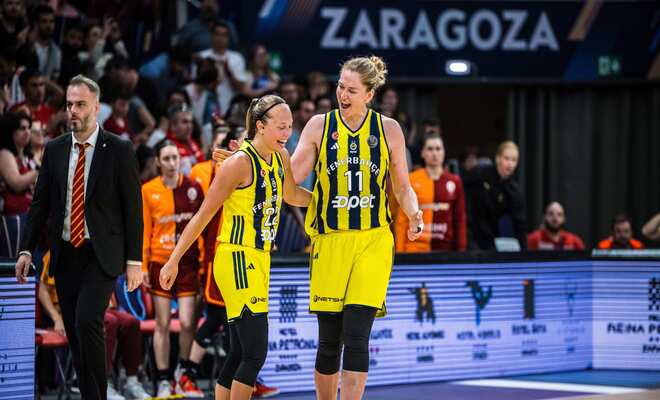
Fenerbahçe enters the season as our favorite to be holding the trophy again in Zaragoza.
Flammes Carolo Basket
Head Coach: Romuald Yernaux
Flammes did not sneak through qualifying.
It kicked the door open.
After scoring 101 points against KP Brno in the semifinal, the French side went to Venice and beat Reyer 81-55, eliminating a team that had reached the previous season’s Final Six.
Those two games showed why Flammes can become more than a team happy to have reached the Regular Season.
The offense is genuinely varied. Ball screens matter, but Flammes does not need to run the same pick-and-roll repeatedly to create offense. It can enter through post touches, off-ball screening or movement before eventually flowing into the action it wants.
The first advantage is only the beginning.
Koi Love and Julie Pospíšilová give the wing rotation more size and secondary creation, while Tiffany Clarke remains the reliable interior reference. Against KP Brno, Pospíšilová and Coline Franchelin each had eight assists, reflecting how willingly the ball moves once the defense has been shifted.
The defense follows a similarly aggressive idea. Flammes pressures the ball, tries to push handlers away from preferred spots and wants mistakes to become transition opportunities.
The swing skill is rebounding.
That was a concern last season and appeared again at times against KP Brno. Against Venezia, Flammes did a much better job finishing possessions and the entire defense became more effective because of it.
That has to become the norm. Fenerbahçe, Valencia and Rapid all have physical frontcourts capable of punishing second chances.
Flammes has already shown it can beat a Final Six-level opponent. Whether it can rebound well enough to reproduce that quality over six games may decide how far this run goes.
CS Rapid Bucuresti
Head Coach: Alexandru Olteanu
Rapid enters EuroLeague Women as Romanian champion and with the most difficult projection in this group.
Fenerbahçe is the defending European champion. Valencia has Final Six ambitions. Flammes has already eliminated Reyer Venezia.
Rapid cannot afford many empty possessions.
The offense should lean heavily on pick-and-roll, with the bigs primarily creating value as screeners and roll threats. Claudia Cuic becomes important because she gives the offense something different. She can punish mismatches, connect possessions and prevent every action from becoming guard-and-center basketball.
Ziomara Morrison provides veteran size at center, while Maxuella Lisowa-Mbaka adds athleticism and defensive activity across the forward positions.
Defensively, physicality has to become Rapid’s equalizer. Expect ball pressure, early help and a major collective emphasis on the defensive glass. They cannot allow EuroLeague offenses to create the first advantage easily and then spend the rest of the possession scrambling.
The concern is what happens when opponents remove the first pick-and-roll action.
The best teams in this group have multiple ways to continue a possession. Rapid needs Cuic and its secondary handlers to make quick enough decisions that the offense does not become predictable.
The path to the Second Round is narrow, but in a six-game group one upset can change the table very quickly.
Valencia Basket Club
Head Coach: Javier Torralba
Valencia enters a new coaching era without changing its ambition.
Javier Torralba takes over a roster that still expects to be playing meaningful basketball in Zaragoza in April.
The offensive identity should suit the personnel. Torralba wants pace, quick decisions and possessions where the ball does not become attached to one player. Alexis Peterson-Smalls gives Valencia a guard capable of getting downhill and operating out of pick-and-roll, while Helena Pueyo adds length, defensive intelligence and secondary decision-making on the wing.
The frontcourt is particularly interesting.
Raquel Carrera remains the centerpiece, but Virág Takács-Kiss gives Valencia another skilled interior option who can play alongside her. That creates the possibility of double-big combinations without necessarily destroying the offense because both understand spacing, screening angles and quick passing.
The major loss defensively is Awa Fam. Valencia still has plenty of versatile defenders, but Fam’s combination of size, movement and ability to affect possessions without needing help was difficult to replace directly.
The early-season version may also look different from the one we see later. Carrera’s WNBA season with New York ended only recently, leaving very little turnaround before the EuroLeague opener. How quickly she is reintroduced into Valencia’s rotation is worth monitoring rather than assuming she will immediately carry her normal workload.
Even without perfect continuity to begin the year, Valencia has one of the deeper rosters in the competition.
Fenerbahçe may be the favorite, but Valencia belongs in the group of teams with a legitimate path to Zaragoza.
Gameday One:
Flammes Carolo Basket vs. CS Rapid Bucuresti
This is a dangerous opener for both teams for very different reasons.
Flammes is expected to win at home against the theoretical fourth team in Group C, exactly the type of game a Final Six hopeful cannot afford to give away. For Rapid, stealing it would immediately change the qualification race.
The tactical battle begins with Flammes’ ability to keep an advantage alive. The French side can create through pick-and-roll, a post entry or an off-ball action, and the next player is usually ready to attack the rotation rather than reset.
Rapid’s physicality has to interrupt that chain. It is not enough to stop the first drive if Flammes immediately finds the second side. The Romanian defense needs to shrink space without overhelping itself into open threes.
At the other end, Rapid’s more direct pick-and-roll offense runs into a Flammes defense that wants to pressure handlers and turn mistakes into easy points. Rapid had turnover issues in European competition last season, and Flammes is exactly the kind of opponent that can make one bad stretch become an 8-0 run before the offense has recovered.
Then there is the glass. Flammes improved dramatically there in the qualifier final against Venezia but had more problems against KP Brno. Rapid has to test whether that improvement is permanent.
Flammes is the favorite, but Rapid’s best path is clear: make the game physical, control the glass and prevent French defensive pressure from deciding the pace.
Gameday One:
Valencia Basket vs. Fenerbahçe Tarfin
The defending champion begins on the road against one of the teams best equipped to make its life difficult.
Valencia should use pick-and-roll extensively, with Peterson-Smalls responsible for generating many of the first advantages. The question is which version of Fenerbahçe’s frontcourt she sees.
Geiselsöder offers one defensive profile. Betts gives Fenerbahçe an enormous drop-coverage anchor capable of taking away access to the rim. Valencia needs to create decisions before Fenerbahçe can settle into the coverage it wants.
At the other end, the difficulty is almost the opposite because there are too many possible sources of creation.
Allemand can organize the initial action. Meesseman can catch at the elbow and turn the possession into something entirely different. Off-ball movement can shift the help before the screen even arrives.
Valencia has enough length and defensive versatility to survive individual matchups. The test is surviving the next decision.
Meesseman’s SuperCup performance showed how little she needs to force in order to control a game. Fourteen points, eight rebounds and seven assists came within the flow of the offense rather than through endless isolations.
Carrera’s short turnaround from the WNBA adds another variable.
Fenerbahçe is the favorite, but this may still be one of the toughest road games the champion gets all season.
Group D
Group D has two teams we see as the strongest candidates to advance comfortably, but the order underneath them is less certain.
USK Praha has Final Six talent despite a significant summer transformation. Emlak Konut has already shown what it can do by winning consecutive qualifier games in Athens and Girona.
Behind them, Bourges should probably begin with a slight edge over a rebuilt Lublin side, but neither has enough margin to treat their head-to-head meetings casually.
ZVVZ USK Praha
Head Coach: Martin Bašta
USK Praha looks different, but that does not make it less interesting.
The roster has lost some of the elite experience that defined previous versions, but Martin Bašta still has size, athleticism and high-level decision-makers across almost every position.
Pauline Astier and Maite Cazorla should handle much of the initial organization, particularly through pick-and-roll. Both can create without needing to monopolize possessions, which fits the read-and-react style this roster seems built to play.
The frontcourt is unusually mobile.
Frieda Bühner and Brianna Fraser both possess size but are comfortable facing the basket and operating after pick-and-pop actions. Aminata Gueye provides the more traditional interior presence, while Cassandre Prosper and Migna Touré add another layer of athleticism on the wings.
The offense should not end when the first ball screen ends. Expect handoffs, re-screens and quick attacks against a defense that has already shifted, with multiple players capable of maintaining the advantage.
Defensively, USK has the personnel to switch across the two through four positions and apply pressure without immediately needing to send help.
Availability complicates the opening game. Gueye remains with Golden State in the WNBA Finals, while Astier’s New York season ended only recently, leaving little turnaround before the opener against Bourges.
That could force USK toward an even more mobile early-season identity. Without Gueye, there are lineups where virtually every frontcourt player is comfortable operating away from the rim.
That creates offensive possibilities while placing even more responsibility on the collective rebounding.
Emlak Konut
Head Coach: Murat Alkaş
No team did more to improve its reputation during the qualifiers than Emlak Konut.
Going into Athens and beating Panathinaikos 91-68 was impressive. Going to Girona a week later and winning 81-69 removed any possibility of dismissing the first performance as one great night.
The offense already looks remarkably clear for a new group.
Lindsay Allen is usually responsible for creating the first advantage. Réka Lelik is devastating attacking the second side once the defense has already been shifted. Stephanie Mavunga and Pallas Kunaiyi-Akpanah provide the screens and interior pressure that make those perimeter reads possible.
One sequence appeared repeatedly through qualifying: an empty-side pick-and-roll flowing directly into a middle pick-and-roll.
The difficulty is not the concept itself but the number of ways Emlak can enter it. By the time Lelik attacks the second action, the weak-side defenders may already have changed responsibilities once.
Her qualifier numbers show how comfortable she was in that structure. Lelik averaged 19.5 points, seven assists and 5.5 rebounds, including 29 points in the road win at Girona.
Defensively, Emlak is physical and heavily prepared. The coverage can change by opponent because Murat Alkaş has enough size to build different game plans around Mavunga, Kunaiyi-Akpanah and Elisa Penna.
The qualifiers already showed that this preparation travels. Emlak did not win two comfortable home games. It eliminated two strong teams on their own floors.
Calling them a surprise now almost feels unfair. They have already shown they belong.
AZS UMCS Lublin
Head Coach: Marek Lebiedziński
Lublin has essentially built a new team.
Only three players remain from last season’s roster, with Matea Tadić, Catherine Reese, Kourtney Treffers and Shyanne Sellers among the important additions.
Marek Lebiedziński moves into the head-coaching role with a group that should try to establish offense from the inside out.
Reese and Treffers give Lublin two players capable of creating genuine interior pressure, while Tadić provides a pick-and-roll organizer who can keep the ball moving around those post threats. Sellers may become particularly important because her size gives the perimeter another way to create without forcing everything through Tadić.
That balance matters.
If Lublin becomes too post-dependent, EuroLeague defenses will dig down, load the paint and force the guards to prove they can make enough perimeter shots. If the guards establish penetration first, the bigs become much harder to help against.
Defense may require even more collective work.
This is not a roster built around one elite rim protector cleaning up mistakes. The point-of-attack defense has to hold, help has to arrive on time and everyone has to rebound.
Lublin does not need to be spectacular to reach the Second Round. It needs to be consistently connected.
Tango Bourges Basket
Head Coach: Olivier Lafargue
Bourges remains one of the great names of European women’s basketball.
This roster simply asks different questions than many previous versions.
The frontcourt is smaller and more mobile, which should push Olivier Lafargue toward a style built around speed and collective decision-making rather than overwhelming opponents through size.
Expect plenty of drag screens before the defense gets established, spread pick-and-roll in the half court and a healthy mix of off-ball actions and post touches.
The important phrase is quick decisions.
Bourges does not want to survive through multi-dribble isolation. Alix Duchet needs to create the first shift, while Marie-Paule Dally, Shakayla Thomas and Sydney Wallace can attack once the defense has moved. Maëva Djaldi-Tabdi becomes central to how the frontcourt connects those possessions.
Defensively, the smaller construction has an obvious purpose. Bourges wants to pressure the ball and switch actions both on and away from it.
The concern comes when the ball reaches a genuine low-post center.
Without the traditional oversized interior anchor of previous Bourges teams, preventing those catches becomes as important as defending them. Guards have to make entry passes difficult, weak-side help has to arrive early and the entire lineup must rebound.
For now, the priority is simple.
Get through the group first.
Gameday One:
Emlak Konut vs. AZS UMCS Lublin
Emlak finally gets to play a EuroLeague game at home after qualifying through Athens and Girona.
Its connected pick-and-roll offense is the first problem Lublin has to solve.
The Polish defense should try to sit in the gaps and shrink driving lanes, but that is exactly where the second action becomes dangerous. If too much attention goes toward Allen on the first ball screen, Lelik can attack a defense that is already recovering.
Lublin cannot defend the possession as one action at a time.
At the other end, the Polish side should test Emlak inside. Reese and Treffers can both create physical advantages, but Emlak has enough frontcourt size to avoid automatically sending help. That forces Lublin’s guards to create something of their own rather than simply feeding the post and waiting.
Sellers could become an important connector if Emlak pressures Tadić.
Emlak enters as the favorite, and its qualifier run gave us enough evidence to say that confidently.
Gameday One:
ZVVZ USK Praha vs. Tango Bourges Basket
USK opens at home with an incomplete version of the roster it expects to have later in the season.
Aminata Gueye remains with Golden State for the WNBA Finals, while Pauline Astier only recently finished her season with New York. How quickly Astier can transition back into USK basketball is worth monitoring.
Without Gueye, USK should become even more mobile.
Bühner and Fraser allow Bašta to build groups where the frontcourt can shoot, handle and move the defense away from the basket. That may be particularly useful against a Bourges team already leaning toward switching.
The question is whether switching actually prevents USK from establishing the first advantage.
Bourges will try to play faster than some previous versions of the team, using drag screens and early actions before USK’s defense can organize. Praha’s ability to switch across multiple perimeter positions should help take some of those quick advantages away.
Then comes the glass.
Both teams can use mobility as a strength, but neither can allow it to become an excuse for failing to rebound.
USK has the higher ceiling and should be favored even with the early availability questions. Bourges has enough defensive organization to make the opener uncomfortable if Praha’s new combinations are not yet synchronized.
The season starts now
The qualifiers already gave us useful evidence.
Kibirkstis showed that its shooting is attached to real offensive structure. Crvena Zvezda showed that its defensive identity travels. Emlak Konut showed it can execute under pressure in hostile arenas. Flammes Carolo showed that last year’s hierarchy means very little once a new season begins.
Now those four teams enter a competition with almost no safe group.
Group A may have four teams separated by very little. Group B has two Final Six-level favorites and a potentially decisive battle underneath them. Group C begins with the defending champion and two teams with legitimate Zaragoza ambitions. Group D has a transformed USK Praha, a qualifier-tested Emlak Konut and two clubs that know one or two wins could completely change their season.
The format makes every one of those battles matter beyond December because the results against fellow qualifiers follow each team into the next stage.
The auditions are over.
Now we find out who deserves the biggest roles.
This article was co-written by the European Hoops Podcast team, André Lemos and João Caeiro. Follow us at @EthosEuroLeague and subscribe to the European Hoops Podcast wherever you listen to your favorite podcasts.
- About the Author
- Latest Posts

From the cliffs of Porto Moniz to the forests of Latvia. With a degree in business and a background in finance, I traded balance sheets for projection models, following a lifelong love of the game. I’ve played it, I’ve lived it and I’ve had the privilege of working inside team front offices at both the club and national level.
For over 20 years, I’ve also been immersed in the world of Fantasy Basketball, studying trends, finding edges and living the grind season after season. That passion has brought me here, to SportsEthos, where I’m honored to be part of our management team alongside the great Aaron Bruski. My mission is simple: help SportsEthos thrive as the premier home for Fantasy Sports and sports coverage. A place where users get real value and where every member of the team can sharpen their craft, find joy in the work and build something special that feels like home.