
Last Updated on September 6, 2026 6:02 pm by André Lemos | Published: September 5, 2026
Day 2 of the FIBA Women’s World Cup delivered the tournament’s first truly historic result, a major response from one of the favorites and another reminder of how quickly these games can turn.
Mali produced the moment of the day by defeating Spain for its first Women’s World Cup victory, Hungary survived a furious Nigerian comeback, Germany rediscovered its strengths after allowing Japan back into the game, and France answered Korea’s brilliant first half with a devastating third-quarter response that secured the first quarterfinal berth of the tournament.
We break down how each game was won, the adjustments that changed them, and then look ahead to a Day 3 slate where Türkiye will test Australia, China’s size meets Czechia’s perimeter creation, Belgium faces Puerto Rico and Italy tries to drag the United States into the kind of game it would rather avoid.
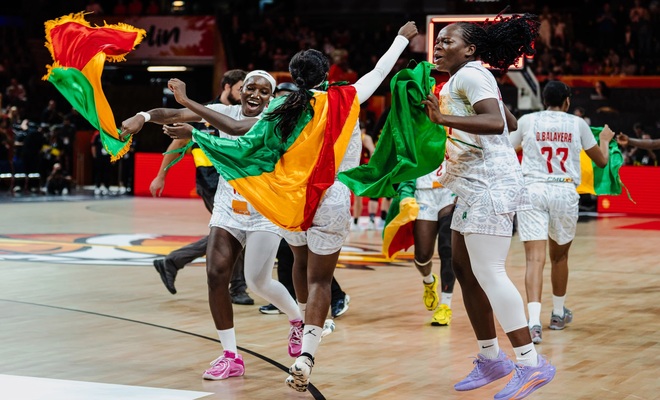
For years, Mali had come to the Women’s World Cup searching for this moment: a first victory and, with it, a first win over European opposition. When the opportunity finally arrived, it did not come through chaos or desperation, but through composure.
Mali defeated Spain 82-73 by doing what young, physical teams are so often accused of being unable to do: recognizing when the game belonged to them and refusing to give it back. The first half was ugly, physical and almost entirely played around the rim, with Spain struggling to create its usual advantages and Mali producing very little in the half court. Then the third quarter changed the equation. Mali found its range from three, its guards began touching the paint with ease, and Spain’s defensive rotations could not contain the advantages that followed.
By the fourth quarter, Mali was no longer simply threatening an upset; they were managing one. Sika Koné embodied that maturity, finishing with 19 points and 10 rebounds while affecting the game at both ends, while Djeneba N’Diaye added 19 more in the most significant victory in Mali’s Women’s basketball history.
Mali drags Spain away from comfort
The opening minutes offered very little indication that history was coming. Almost two minutes passed before either team scored, with Spain struggling to manufacture clean looks against Mali’s physicality and Mali making poor decisions of its own.
Spain scored the first three points before Mali answered with eight straight, with transition quickly emerging as one of the clearest early differences. Mali was excellent at getting the ball forward through long outlet passes, allowing its athletes to attack before Spain could organize defensively.
That mattered because Mali was much less comfortable once the game slowed down.
Spain had problems of its own. Their usual sets were not creating consistent advantages, and Mali’s physicality made every cut, screen and interior touch feel more difficult than normal.
Mali briefly showed a 2-3 zone after a timeout, but Spain found its way through it quickly enough that the look was abandoned. The more important defensive success came simply from making Spain work.
Megan Gustafson changed the tone off the bench. Her six first-quarter points helped drive an 8-2 Spanish run that erased much of Mali’s early advantage and brought Spain back within 19-17 after one.
Neither team made a three, combining to go 0-of-10, and at that stage this did not look like a game that would be decided from the perimeter.
Spain finds the paint, but never finds complete control
Spain opened the second quarter with one of its staples: a staggered cross-screen designed to create a deep post touch.
They would return to the action several times, and it reflected where the game was being played. With six minutes remaining in the half, 40 of the game’s 45 points had come in the paint.
For Mali, much of that production came through transition. For Spain, offensive rebounding became increasingly important.
Spain grabbed nine offensive boards in the first half, repeatedly giving itself another chance when the initial offense failed to create enough separation. Mali also contributed with some defensive and rebounding breakdowns of its own, while becoming too handsy and reaching four team fouls early in the quarter.
Still, Spain never looked entirely comfortable.
Iyana Martín was the exception. She consistently created advantages and injected pace into an offense that otherwise felt labored, giving Spain something its structure alone was not producing often enough.
Spain eventually built a seven-point lead, but even that never felt secure. N’Diaye hit the first three-pointer of the game from the corner with 38 seconds left in the half, cutting the gap to four and forcing Spain into a timeout.
Spain then committed turnovers on consecutive possessions, leaving the halftime margin at just 34-32 despite all of its extra work on the offensive glass and in the paint.
Mali changes the math
Mali opened the second half with a three, and it proved to be a preview of what was coming.
The third quarter moved at a completely different speed from the first two, and Mali suddenly found something Spain could not contain from the perimeter.
They went 6-of-7 from deep in the quarter, but the shooting did not happen in isolation. Spain’s first line of defense was being beaten too easily, and the help behind it was not arriving with enough clarity.
Mali’s guards kept getting into the paint, forcing backside rotations and creating difficult choices for the defense. Too often, Spain was caught between helping on the drive and staying attached to shooters.
Spain still found ways to punish Mali’s own weak-side rotations, particularly when its guards got downhill, and continued attacking the offensive glass with six more offensive rebounds in the quarter. But the momentum had shifted.
A five-point lead forced Spain into a timeout with 3:14 remaining, yet the stoppage did not alter the rhythm. Mali kept making threes, its guards kept reaching the paint, and the offense was now playing from advantage instead of searching for one.
By the end of the quarter, Mali had won it 31-19 and led 63-53, transforming a scoreless first half from beyond the arc into the stretch that ultimately decided the game.
The most impressive part came after the run
Plenty of teams can produce a hot quarter. What Mali did next was more meaningful: they managed the lead with maturity.
Spain began using zone after dead balls in an attempt to change the rhythm and stayed with the look until roughly the middle of the fourth quarter, but Mali never appeared rushed by it.
Koné became particularly important during that stretch. Offensively, she could punish Spain inside and step outside when the opportunity appeared. Defensively, she moved her feet, walled up around the rim and completed possessions with rebounds, giving Mali exactly the kind of stability the situation required.
The contrast between the teams became increasingly clear. Mali looked free and confident, while Spain appeared unsure of where its next reliable advantage would come from.
When transition was available, Mali ran. When there was no clear advantage, they slowed down, used clock and still found good shots.
Spain, by contrast, needed quick scores but never found enough support around Martín to generate them consistently. The decision to stay with a double-big configuration while chasing the game was also questionable, especially given the need for more pace, spacing and rapid advantage creation.
Awa Fam’s struggles captured Spain’s afternoon. After such an impressive opening performance against Germany, she missed several opportunities around the rim and never found a comfortable rhythm.
Martín and Gustafson were the two players who consistently looked capable of changing the game, but they did not receive enough help.
History, earned the hard way
The final numbers make the upset even more remarkable.
Spain grabbed 20 offensive rebounds to Mali’s eight, a disparity that would normally be enough to swing a game in Spain’s favor. It was not enough here because Mali won too many other areas.
The three-point line became decisive: Mali finished 9-of-22 from deep, while Spain went just 4-of-22. Mali also produced five more assists, reflecting how well the offense began functioning once its guards started collapsing the defense in the second half.
Koné finished with 19 points and 10 rebounds, while N’Diaye scored 19. Martín led Spain with 20 points, five rebounds and four assists, and Gustafson added 16.
The larger difference, though, was in how the teams handled the final stretch. Spain spent too much of the night looking like a team waiting for control to return, while Mali increasingly played like a team that understood it did not have to give it back.
That maturity turned an upset bid into history: Mali’s first Women’s World Cup victory and first win over European opposition, against one of the competition’s traditional powers.
Mali did not steal this game. They earned it, then managed it like a team that knew exactly what was at stake.
Hungary spent most of the night proving why it should win this game, then spent the final four minutes making the result far more uncomfortable than it needed to be.
The 71-67 victory over Nigeria was built around a clear interior advantage. Dorka Juhász and Virág Takács-Kiss combined for 36 points and 30 rebounds, Hungary finished 24-of-41 from two-point range, and its move to zone in the second half helped stabilize a defense that had struggled to contain Nigeria off the dribble. The problem was ball security: 26 turnovers kept Nigeria alive long enough to turn a 14-point fourth-quarter deficit into a one-possession finish.
Hungary establishes the interior edge
The plan was obvious from the opening possessions. Hungary wanted the ball inside, repeatedly looking for Juhász and Takács-Kiss while using good cutting around those touches to create additional pressure on Nigeria’s defense.
Juhász in particular kept finding advantageous positions, and whenever Hungary involved her consistently, the offense looked organized and purposeful. The issue was getting to those possessions without giving the ball away. Hungary committed three turnovers in the opening five minutes, an early warning of what would become its biggest problem later in the game.
Nigeria had a clear offensive approach of its own, leaning heavily on pick-and-roll and pick-and-pop actions. Its ball-handlers were getting past Hungary’s point-of-attack defense too easily and touching the paint without needing much complexity to create advantages.
The difference was finishing.
Nigeria shot just 3-of-10 from two, 2-of-7 from three and 1-of-6 from the free-throw line in the first quarter. Hungary took advantage late in the period, turning what had mostly been a one-possession game into a 21-13 lead.
Nigeria’s problems then deepened. From the final 2:02 of the first quarter until 5:41 remained in the second, D’Tigress did not score. Hungary produced 12 points during the same stretch, attacking the offensive glass and repeatedly returning to its interior advantage.
By halftime, Hungary led 36-26 despite already committing 14 turnovers.
That statistic was alarming, but the efficiency elsewhere was covering it up.
Juhász had already secured a double-double with 13 points and 11 rebounds, and Hungary’s offense was at its best whenever possessions flowed through her. Nigeria, meanwhile, struggled with spacing and could not consistently turn its penetration into clean finishes.
The zone gives Hungary needed stability
Nigeria came out of halftime determined to involve Murjanatu Musa more directly, and the adjustment worked immediately. Musa scored six points across Nigeria’s first three possessions, while Hungary’s man-to-man defense continued to show the same weakness that had appeared earlier: the point of attack was being beaten too easily.
Hungary responded by going to zone.
The change reduced the amount of direct containment required from the guards and allowed Hungary to protect the paint more collectively. The impact was positive, with the lead returning to double digits and staying there through the end of the third quarter.
Nigeria still created problems with physical drives and occasional backside-help breakdowns, but Hungary now had a structure that prevented those advantages from becoming a sustained run.
The same logic carried into the fourth, where Hungary again trusted the zone because its man-to-man defense had struggled to keep Nigeria in front.
For most of the quarter, it worked.
Hungary nearly gives it away
Nigeria eventually turned to a 1-2-2 press, trying to speed the game up and create extra possessions.
Hungary initially handled it well enough and even used Nigerian turnovers to rebuild the lead to 14 with 4:43 remaining.
At that point, the game should have been finished.
Instead, Hungary unraveled.
Nigeria closed the final 3:38 on a 15-5 run while Hungary committed six turnovers. There was no complicated tactical explanation for the collapse; it was mostly poor decision-making under pressure. Hungary rushed passes, mishandled the press and repeatedly gave Nigeria chances to attack before the defense could get organized.
Amy Okonkwo helped drive the comeback, and Nigeria finally found the urgency that had been missing during its long scoreless stretches earlier in the game.
A comfortable win became a possession game.
Hungary eventually escaped 71-67, but the closing minutes transformed what should have been a controlled finish into a warning.
Interior efficiency carries Hungary through the mistakes
The final numbers explain both sides of the result.
Hungary committed 26 turnovers and still won because when it completed possessions, it was far more efficient around the basket. Hungary shot 24-of-41 from two-point range compared to Nigeria’s 17-of-44.
Juhász finished with 19 points and 16 rebounds, while Takács-Kiss added 17 points and 14 boards. Together, they gave Hungary the reliable interior production that Nigeria never fully solved.
Okonkwo led Nigeria with 17 points, and four other Nigerian players reached double figures, but D’Tigress could not overcome its poor finishing and the damage Hungary created inside.
For Hungary, the win could matter significantly in the qualification picture, but the takeaway is clear: the frontcourt is strong enough to control games, while the turnovers are dangerous enough to undo that control against better opposition.
This time, Juhász and Takács-Kiss were good enough to carry Hungary through the mistakes.
They should not expect 26 turnovers to be survivable again.
Germany did not need an elaborate solution against Japan. It needed the discipline to keep returning to the obvious one.
From the opening possession, Germany created high-percentage looks, forced help and opened passing lanes, while its length and mobility made Japan’s perimeter game uncomfortable. The formula produced a 28-11 first-quarter lead and 10 assists on 10 made field goals.
Then Germany drifted.
The shot profile flattened, the offense became more perimeter-heavy and Japan’s defensive pressure dragged the game into a much less comfortable place. A 17-point lead was cut to five by halftime.
The most revealing part of Germany’s 74-58 win was how clearly the game changed depending on whether Germany stayed connected to its core advantages. Once it did again after halftime, control returned quickly.
Germany starts with purpose
Nyara Sabally established a physical tone early, Frieda Bühner punished Japan when the defense collapsed, and Leonie Fiebich became the connective piece that kept the offense flowing.
Fiebich did not score in the opening quarter, yet she already had five assists because Germany was consistently moving from one advantage to the next instead of letting possessions die in isolation.
The execution was outstanding.
Germany shot 10-of-14 from the field, including 5-of-5 from two and 5-of-9 from three, with every made basket assisted.
The threes were not random. They were the byproduct of an offense that kept forcing Japan to make difficult choices.
At the other end, Germany could switch, recover and contest without losing shape, preventing Japan from generating the clean perimeter rhythm it normally relies on.
After one quarter, Germany led 28-11.
Japan changes the rhythm
Germany continued to play well early in the second quarter, but gradually moved away from what had made the opening period so effective.
The possessions became less purposeful and the perimeter attempts increased.
Japan took advantage.
Its defensive activity rose sharply, disrupting Germany’s initiation and turning previously comfortable possessions into rushed ones. Japan still struggled to score consistently itself, but it no longer had to keep pace with the same version of Germany that had dominated the opening 10 minutes.
A 32-15 game became 32-21.
By halftime, the margin was only 34-29.
Six first-half steals helped disturb Germany’s flow, while only four Japanese turnovers prevented Germany from generating many easy transition chances in return.
Germany still held a 24-17 rebounding advantage, but its own shot selection had helped make the game far more competitive.
Japan was hardly thriving offensively, shooting just 31 percent from the field and 1-of-13 from three, yet the game had become messy enough for those limitations to matter less.
Germany entered halftime with a simple correction available: play with the same purpose it had shown early.
Germany reasserts control
The first possession of the second half showed that message had landed.
Sabally attacked immediately and drew a foul, while Japan tried to vary the defensive picture with a brief zone look before returning to man-to-man.
Germany was not distracted for long.
The offense became more deliberate again, and the possession quality improved with it.
Sabally was central to that shift. Her physicality set the tone in the second half, while Germany’s work on the glass kept extending possessions and preventing Japan from ever building sustained momentum.
By the end of the third quarter, Germany had a 40-25 rebounding advantage and 11 offensive boards.
Defensively, the Germans remained just as disruptive.
Japan’s three-point shooting never recovered. Through three quarters, it was 1-of-21 from deep, a devastating number for an offense that depends so heavily on perimeter volume and efficiency.
Germany won the quarter 24-10 and restored the lead to 58-39.
Japan could not change the math
Bühner opened the fourth with another three, pushing Germany’s lead to 61-39, and from there the result was effectively settled.
Japan closed the game on a 12-3 run over the final 1:38, trimming a deficit that had reached 25 points and making the final margin look more respectable.
It did not change the larger picture.
Germany won the rebounding battle 51-35 and finished with 21 assists compared to Japan’s seven. Japan ended just 3-of-27 from three.
Some of that was simply missed shooting, but Germany deserves significant credit for how uncomfortable those attempts became. Its defenders consistently recovered to shooters, challenged releases and disrupted the timing of Japan’s movement.
Bühner finished with 19 points on 8-of-12 shooting and made three of her four threes. Sabally added 18 points and nine rebounds, with much of her most important work coming after halftime.
Fiebich’s shooting line, 1-of-9 from the field and 0-of-7 from three, barely reflected her impact. She finished with five points, nine rebounds, seven assists and three steals, contributing as a rebounder, defender and connective passer even on a poor shooting night.
Marie Gülich added 11 points and four rebounds, while Emma Eichmeyer scored 10.
Kokoro Tanaka led Japan with 15 points, while Maki Takada finished with nine.
Germany’s game plan was not complicated, and that was part of its strength. The problem came only when it stopped playing with the same clarity.
Japan’s pressure exposed that lapse in the second quarter, but once Germany recovered its discipline, the game settled back into Germany’s control.
Now Spain, Germany, Mali and Japan all sit at 1-1, leaving qualification to be decided on the final day.
Germany enters that round with a useful lesson already learned: sometimes the most important adjustment is not finding something new, but returning to what already works.
For 20 minutes, Korea made one of the most imposing teams at this World Cup look uncertain.
They ran France through handoffs, cuts and constant off-ball movement, kept the tempo high without losing structure, and attacked France’s pick-and-rolls with aggressive doubles that disrupted the usual flow of the offense.
Then France came out of halftime with better reads, more defensive pressure and a level of physicality Korea could not match for another 20 minutes. The third quarter became decisive: France won it 33-15, Dominique Malonga took over inside, and a six-point halftime margin became 24 in 10 minutes.
The final score was 95-69.
Korea plays without fear
Korea opened the game 5-0 and held France scoreless for more than two minutes.
France normally makes opponents feel its length almost immediately. Passing windows disappear, actions are pushed farther from the basket and possessions become harder to organize.
Korea refused to let the game become static enough for that to happen.
Handoffs flowed into cuts, the ball moved quickly, and France was constantly being asked to track another action rather than load up against one creator.
Yeeun Heo came off the bench and immediately amplified that rhythm, hitting her first three attempts from beyond the arc. With roughly three minutes remaining in the opening quarter, Korea led 21-19 and Heo already had nine points without a miss.
France was not inefficient offensively. It shot 54 percent from the field and made four threes in the quarter.
Korea was simply sharper.
They finished the period with nine assists, shot 11-of-17 from the field and made six of nine threes, while also limiting France’s transition opportunities.
After 10 minutes, Korea led 31-24.
Johannès changes the temperature
France’s response began with Marine Johannès.
A one-legged three helped ignite the comeback. Migna Touré followed with another from deep, and suddenly France had an 11-2 run and a 35-31 lead.
Then Johannès hit again.
With 6:21 remaining in the half, she already had 14 points and France was ahead 38-31.
Her shot-making changed the scoreboard, while France’s defense began making Korea work harder at the other end. The clean rhythm of the opening quarter became less available, and the shooting cooled with it.
Korea had opened 6-of-9 from three.
By halftime, it was 6-of-16.
France still had its own problems. Korea’s aggressive pick-and-roll coverage continued to force difficult decisions, contributing to 12 French turnovers in the half.
France led 43-37 at the break, but the game was still fully alive.
France finds the cracks
The third quarter changed everything.
France began identifying the openings in Korea’s coverages more quickly, making cleaner decisions and getting into advantageous areas before the defense could recover.
Malonga became central to that shift. She scored efficiently, punished the space Korea conceded and gave France a physical presence that became increasingly difficult to contain.
The same change appeared defensively.
Passing windows narrowed. Delayed reads became deflections. Loose handles became steals. Korea’s possessions started ending before they could develop, and France turned those mistakes into transition.
By the end of the third quarter, France had forced 15 turnovers, recorded 11 steals and scored 28 points off giveaways.
That was the separation.
France won the quarter 33-15 and led 76-52.
France turns control into qualification
The fourth quarter required no further transformation. France had already solved the game.
The final numbers were overwhelming: 61 percent from the field, 23-of-31 from two, 12 made threes and 26 assists. France also won the rebounding battle 38-21 and finished with 13 steals and 32 points off turnovers.
Johannès led the scoring with 17 points and four made threes. Malonga added 14 points on 7-of-9 shooting, five rebounds, three assists, three steals and a block. Gabby Williams finished with 14 points, four rebounds, three assists, three steals and a block, while Carla Leite scored 11 without missing a field goal.
For Korea, Heo finished with 12 points and five assists while making four of her five threes. Haeran Lee added 12 points and Sohee Lee scored 10.
France had been made uncomfortable, forced to adjust and asked real questions for a half.
Their answer was a devastating third quarter and, by the final buzzer, something even more important:
France became the first team to officially book its place in the quarterfinals.
This article was co-written by the European Hoops Podcast team, André Lemos and João Caeiro. Follow us at @EthosEuroLeague and subscribe to the European Hoops Podcast wherever you listen to your favorite podcasts.
- About the Author
- Latest Posts

From the cliffs of Porto Moniz to the forests of Latvia. With a degree in business and a background in finance, I traded balance sheets for projection models, following a lifelong love of the game. I’ve played it, I’ve lived it and I’ve had the privilege of working inside team front offices at both the club and national level.
For over 20 years, I’ve also been immersed in the world of Fantasy Basketball, studying trends, finding edges and living the grind season after season. That passion has brought me here, to SportsEthos, where I’m honored to be part of our management team alongside the great Aaron Bruski. My mission is simple: help SportsEthos thrive as the premier home for Fantasy Sports and sports coverage. A place where users get real value and where every member of the team can sharpen their craft, find joy in the work and build something special that feels like home.