
Last Updated on November 2, 2026 2:48 pm by André Lemos | Published: November 2, 2026
EuroLeague Women Week Three: Four Unbeaten, Galatasaray in Trouble and Zaragoza’s Defensive Statement
Three weeks into the EuroLeague Women season, the standings have developed a curious symmetry. Four groups, four undefeated teams and four still searching for their first victory.
Fenerbahçe, Casademont Zaragoza, Beretta Famila Schio and ZVVZ USK Praha have taken control of their respective groups, each finding different ways to remain perfect. Valencia and Basket Landes finally got off the mark, Tango Bourges continued its recovery, and Crvena Zvezda delivered the biggest upset of the week in Istanbul.
That last result leaves Galatasaray at 1-2, a record few would have predicted for a team assembled with championship ambitions.
There’s plenty to unpack beyond the results. Zaragoza’s defense gave one of the competition’s most exciting offenses a harsh lesson, Fenerbahçe showed some vulnerabilities late against Flammes Carolo, and Praha offered another example of how difficult it can be to guard an offense that keeps moving after the initial action.
The first half of the opening round is complete. We’re beginning to see which teams can impose their style against quality opposition, which rely too heavily on individual talent and which have adjustments to make before the rematches begin.
Week Three Review
What is a loss?
That’s a question four teams haven’t had to answer yet.
Fenerbahçe, Zaragoza, Schio and Praha are all 3-0, although their routes through Week Three couldn’t have been much more different.
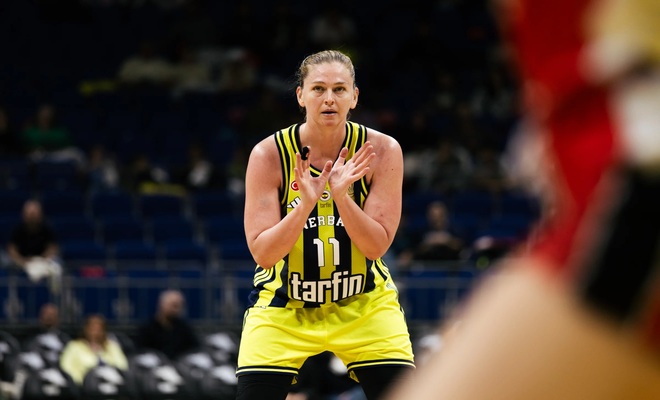
Of the four, it was the defending champions who had the least comfortable evening. Fenerbahçe beat Flammes Carolo 81-71, a result that appears considerably closer than the game felt for most of the night.
Ahmet Çakı’s team opened with a 28-13 first quarter that was close to a clinic in recognizing and exploiting defensive advantages.
Fenerbahçe identified mismatches early, moved the ball before Flammes could recover and consistently found the next option when the first action created an advantage. Their offensive possessions had a natural flow: force a rotation, make the extra pass, attack the space that opened up.
The defensive pressure was equally impressive. Fenerbahçe pushed Flammes’ ball-handlers away from their preferred spots, extended pressure beyond the three-point line and made it difficult to initiate actions with any rhythm.
For three quarters, the game was comfortably in the Turkish side’s control.
The fourth provided something worth studying.
Flammes began dealing much better with Fenerbahçe’s consecutive actions, disrupting the rhythm of an offense that had looked nearly impossible to slow earlier. The French side even forced two shot-clock violations in the final period.
At the other end, Flammes found answers to the aggressive ball-screen defense. Rescreens and screen rejections allowed their guards to change the point of attack, catching defenders leaning toward an expected action and creating openings that hadn’t been available earlier.
The adjustments worked well enough for Flammes to win the final quarter and cut the margin to ten.
Fenerbahçe were never in serious danger of losing, and Lauren Betts delivered another productive outing with 13 points and ten rebounds. Tima Pouye added 14 points and five assists.
Still, Flammes deserve credit for finding ways to compete after being thoroughly outplayed early. Their fourth-quarter execution offered a useful blueprint for opponents trying to handle Fenerbahçe’s pressure.
The defending champions remain the standard. The final ten minutes showed that even they can be made uncomfortable.
Zaragoza turns defense into a weapon
Kibirkstis-TOKS entered Week Three with one of the competition’s most intriguing offenses.
The Lithuanian newcomers had already demonstrated they could win through perimeter shooting, ball movement and offensive rebounding. Their victories over Athinaikos and Basket Landes suggested a team with several ways to generate points.
Then they encountered Zaragoza.
The 77-55 final score was convincing enough. The more remarkable figure was what happened during the middle 20 minutes.
Kibirkstis scored nine points in the second quarter and six in the third. Fifteen points across two quarters for a team that had been consistently finding good looks throughout qualifying and the opening weeks of the regular season.
Carlos Cantero’s defensive game plan deserves considerable credit.
Zaragoza made the court feel smaller. Their positioning restricted driving lanes, their help defenders arrived on time, and their ball-screen coverage gave Kibirkstis very little room to create advantages.
The decisions in pick-and-roll were particularly sharp. Zaragoza knew when to stay in a drop, when to execute a late switch and how to keep their defenders connected without opening unnecessary space behind the play.
Away from the ball, the Spanish side was physical and disruptive. Kibirkstis rely heavily on screening actions to free shooters and create movement before the ball reaches its final destination. Zaragoza attacked those actions before they could develop.
The result was an offense increasingly forced to operate outside its comfort zone.
Zaragoza also turned stops into points. Active hands and good anticipation generated transition opportunities, allowing them to extend the lead without needing to manufacture everything in the half court.
By the time Kibirkstis found some offensive rhythm in the fourth quarter, the game was effectively decided.
For the Lithuanians, this was a valuable lesson. Their movement offense remains dangerous, and two strong victories shouldn’t be forgotten because of one difficult night. The next challenge is developing counters when an opponent takes away the initial screening actions and limits the space available to their guards.
For Zaragoza, it was further evidence of a team that can win in different ways.
Mariona Ortiz and the offense have attracted plenty of attention, particularly after Merritt Hempe and Ornella Bankole combined for 55 points against Athinaikos in Week Two.
This time, the defense did the heavy lifting.
That’s an encouraging development for a team with ambitions extending well beyond the opening round.
Praha’s movement exposes Emlak’s missing piece
Emlak Konut arrived in Prague without Lindsay Allen, and her absence was immediately noticeable.
The Turkish side managed just nine points in the opening quarter of an eventual 80-65 defeat. Without its primary initiator, Emlak struggled to organize possessions, create penetration and consistently move the ball into advantageous positions.
Praha made those problems worse.
Martin Bašta’s team pressured the ball early, challenging Emlak’s guards throughout the court and disrupting the timing of their offensive entries. Instead of beginning possessions with a clear advantage or a favorable matchup, Emlak frequently found itself trying to establish structure against a defense that was already set.
Allen’s value extends beyond her own scoring and assists. She’s a player who helps determine where the defense has to move. Without that initial creation, Emlak’s talented frontcourt was left with fewer opportunities to receive the ball in favorable positions.
Praha had no such problems organizing its offense.
The Czech side used continuous movement and consecutive actions to keep Emlak’s defenders working. Defending the first screen wasn’t enough. Players had to recover, communicate and immediately prepare for the next action.
Emlak was often a step behind.
That movement created opportunities for Pauline Astier, who was excellent with 18 points, seven assists and five rebounds. Astier controlled the tempo, found teammates when defenders committed to her and recognized when the advantage was hers to attack.
Migna Touré also scored 18, with Frieda Bühner contributing 15.
Emlak eventually settled into the game and received another productive interior performance from Pallas Kunaiyi-Akpanah and Stephanie Mavunga. The early deficit, however, never truly looked in danger of disappearing.
Praha have now won three games with a roster still developing its identity. Their defensive activity and movement-heavy offense have established a strong foundation.
For Emlak, the game reinforced just how important Allen is to connecting the individual talent on this roster.
Schio doesn’t waste any time
The final undefeated team had the simplest evening.
Beretta Famila Schio traveled to Belgium and overwhelmed Kangoeroes Basket Mechelen 83-47, controlling the game from the opening minutes.
The Italians led by double digits after the first quarter, and the gap continued to grow.
There wasn’t one particular adjustment or individual matchup that decided the contest. Schio simply had too much quality, too much depth and too many players capable of contributing.
Eleven Schio players scored, with nine reaching at least five points. Mechelen, meanwhile, had only five players get on the scoreboard.
That distribution captures the difference between the teams.
Schio can generate offense through several different combinations without becoming dependent on one player to rescue possessions. The supporting cast understands how to move around the team’s primary creators, and the quality doesn’t disappear when substitutions arrive.
Against Galatasaray, Schio showed it could beat a contender with its execution and shot-making. Against Crvena Zvezda, it survived a difficult defensive matchup. Mechelen was a different kind of assignment, and one Schio handled without allowing the game to become complicated.
The Italian champions have arguably put together the most convincing opening three rounds outside Fenerbahçe.
Bourges finds more than one answer in pick-and-roll
Tango Bourges Basket have recovered nicely from their opening defeat against Praha.
After beating Emlak Konut in Week Two, the French side traveled to Poland and defeated Lublin 88-69. The decisive stretch came in the second quarter, when Bourges erupted for 36 points while allowing 19.
The pick-and-roll was at the center of nearly everything that worked.
What’s worth highlighting isn’t simply how often Bourges used the action. It’s the variety they created from it.
They ran middle pick-and-roll with another big ducking in toward the basket, combined ball screens with corner exit screens and brought a third player into the action through Spain pick-and-roll concepts. They also used empty-corner looks to make defensive help more difficult.
These weren’t variations for the sake of being clever. Each look presented the defense with a different decision.
Against one alignment, the roll became available. Against another, the short roll created an opportunity to play four-on-three. When Lublin shifted help toward the paint, Bourges’ guards recognized the rotation and delivered skip passes to open shooters.
That last detail matters. Running multiple actions only becomes effective when the players understand what each one is supposed to create.
Bourges weren’t simply executing a collection of plays. They were reading what Lublin gave them.
The Polish side briefly experimented with a 3-2 zone, searching for a way to disrupt the rhythm, without much success.
Transition offense added another dimension. Bourges were aggressive after defensive rebounds, pushing the ball before Lublin could establish its preferred coverage and creating easy scoring opportunities.
Marie-Paule Foppossi finished with 16 points and six steals, making an impact at both ends.
The second-quarter explosion effectively settled the game.
Bourges are now 2-1 and sit second in Group D, behind Praha. Their offense has looked considerably more connected over the last two rounds, an encouraging sign ahead of a rematch with the Czech champions.
Valencia and Landes finally get their wins
Valencia Basket and Basket Landes both entered Week Three with 0-2 records and considerable expectations.
Both left with their first victories, although they took very different routes.
Valencia’s 105-47 destruction of Rapid București was as comprehensive as the score suggests.
The Spanish side hit 20 three-pointers on 40 attempts, becoming just the second club in the modern era of EuroLeague Women to reach that mark in a single game.
Chloe Bibby couldn’t have asked for a much better introduction to her European season. She scored 22 points, knocking down six of seven attempts from beyond the arc.
Maria Araujo added 15 points, six rebounds and five assists, giving Valencia another source of creation and versatility from the frontcourt.
Rapid offered limited resistance, so the performance shouldn’t suddenly erase Valencia’s opening defeats against Fenerbahçe and Flammes Carolo.
There were encouraging signs nonetheless.
Valencia played with greater freedom, moved the ball quickly and consistently generated open perimeter looks. The spacing was much cleaner, with Bibby’s shooting giving defenders another player they couldn’t comfortably leave alone.
The challenge is reproducing that offensive rhythm against a defense capable of applying real pressure. Valencia have already shown they can create promising possessions. Their first two games exposed problems with turnovers and finishing those opportunities.
Against Rapid, nearly everything clicked.
Basket Landes’ victory required considerably more work.
The French champions beat Athinaikos 78-65 in Greece, pulling away with an 18-10 fourth quarter after entering the final period only five points ahead.
Murjanatu Musa delivered one of the standout defensive performances of the season, recording nine steals alongside 12 points and seven rebounds. That’s an extraordinary number for any player, let alone a center.
Her activity disrupted Athinaikos’ attempts to establish offensive rhythm and created opportunities for Landes to attack before the Greek defense could settle.
Becky Massey led the scoring with 14 points, providing another important contribution for a team that has sometimes struggled to find offense beyond its primary options.
Landes still have work to do. The dependence on Musa and Trinity San Antonio to create advantages hasn’t disappeared, and the offense remains vulnerable when the game slows down.
Their defensive foundation, however, continues to give them opportunities to compete.
The victory was badly needed, and getting it away from home should provide some confidence heading into a difficult rematch with Zaragoza.
Galatasaray has a possession problem
Galatasaray’s 78-68 home defeat against Crvena Zvezda was the most significant result of Week Three.
The Turkish side entered the season with one of Europe’s most talented rosters and genuine championship ambitions. After three rounds, they sit at 1-2, with both defeats coming at home.
Crvena Zvezda deserve enormous credit for their performance.
Marina Maljković’s team played with its usual defensive aggression, disrupted passing lanes and repeatedly forced Galatasaray into uncomfortable decisions. They committed just ten turnovers while forcing 26 from the hosts.
Galatasaray also had problems keeping Zvezda away from the offensive glass. The Serbian side collected 20 offensive rebounds, compared with 15 for Galatasaray.
Those two numbers explain a substantial part of the result.
Zvezda didn’t need to shoot better from the field. They created more opportunities through offensive rebounding and ball security, allowing them to overcome less efficient shooting from both two-point and three-point range.
When one team is repeatedly ending possessions without a shot while the other is earning second and sometimes third chances, shooting percentages stop telling the full story.
Artemis Spanou led the visitors with 21 points and ten rebounds, while Awak Kuier was excellent for Galatasaray with 20 points, eight rebounds and five blocks.
The game also revealed an issue that extends beyond the possession battle.
Neither team found sustained success attacking a set half-court defense.
Zvezda’s physicality and pressure can generate offense through turnovers and broken possessions. When forced to execute against an organized defense, their creation becomes less reliable.
That’s a limitation they will need to address as the competition progresses.
For Galatasaray, the problem is considerably more urgent.
The return of Dorka Juhász and Marine Fauthoux was supposed to help the team establish a clearer offensive identity. Their presence gives Galatasaray more talent and more options, although the pieces are still struggling to function together consistently.
The offensive possessions too often become disconnected. The ball stops moving, players have to create against a set defense, and the advantage generated by the first action disappears before anyone can exploit it.
The start of the fourth quarter was especially revealing. Zvezda held Galatasaray to just five points over the opening seven minutes, a disastrous stretch for a team with so much individual offensive quality.
This isn’t a talent problem. It’s an execution problem, and one that’s becoming harder to ignore.
Frédéric Dusart has enough personnel to build an elite offense. The question is how quickly Galatasaray can establish the spacing, timing and decision-making needed to make their individual strengths complement one another.
Their next opponent?
Schio, the team that beat them by 18 points in the opening round.
The pressure is building.
Looking Ahead: Round Four
The opening three rounds have given us a first look at every matchup in the four groups.
Now the rematches begin, and the adjustments become part of the story.
Coaches have already seen what worked, what failed and which weaknesses opponents were able to exploit. The next question is whether they can find different answers.
Schio vs. Galatasaray: How much has changed?
Schio won the first meeting 84-66 in Istanbul, controlling long stretches through their offensive execution, depth and ability to attack different matchups.
Galatasaray will arrive in Italy under significantly more pressure.
There is a meaningful difference in their available personnel compared with the opening round, with Dorka Juhász and Marine Fauthoux now part of the equation. The additional creation should help, especially against a Schio defense that has been comfortable making opponents work deep into possessions.
The challenge is making those additions function within a more organized offensive structure.
Galatasaray can’t afford another evening in which turnovers prevent them from consistently getting shots at the basket. Schio have too much offensive quality to give them additional possessions.
This is a chance for Galatasaray to prove that its early struggles are part of the adjustment process rather than something more fundamental.
Schio, meanwhile, have the opportunity to take another major step toward winning Group B.
Basket Landes vs. Zaragoza: Can Landes change the terms?
The first meeting between these teams was decided by a single point, with Zaragoza winning 76-75 in overtime.
Now Landes have home-court advantage and some momentum after their first victory.
The French side will want to make this a physical, lower-scoring game, limiting Zaragoza’s ability to move the ball freely and generate advantages through consecutive actions.
Musa’s defensive activity could be important, and Landes need enough offensive production around her and San Antonio to avoid the extended scoring droughts that have hurt them early in the season.
Zaragoza arrive with a perfect record and a defensive performance against Kibirkstis that should give them considerable confidence.
The question is whether Landes can disrupt the Spanish side’s rhythm without sacrificing its own offensive execution.
The first matchup suggested these teams are capable of playing a very tight game. The rematch should be another useful test of Zaragoza’s credentials.
Fenerbahçe vs. Valencia: A different challenge this time?
Valencia have experienced just about every emotion available across their opening three EuroLeague games.
An emphatic defeat against Fenerbahçe, a frustrating loss to Flammes Carolo and then an extraordinary offensive performance against Rapid București.
Now they head to Istanbul looking for a very different result from their 88-69 opening-round defeat.
Fenerbahçe controlled the first meeting by punishing Valencia’s defensive rotations and consistently creating quality looks around the basket.
Valencia have the offensive personnel to make things more interesting, particularly with Bibby adding another perimeter threat.
Their priority has to be protecting the ball and sustaining their execution against pressure. Fenerbahçe are excellent at turning a small mistake into a major advantage, and Valencia can’t allow one difficult stretch to decide the game.
The fourth quarter against Flammes also showed that Fenerbahçe’s aggressive defense can be challenged through smart screening adjustments and good decision-making.
Valencia have the talent to test those ideas.
Whether they can execute them for 40 minutes is another matter.
Bourges vs. Praha: A rematch worth watching
Praha handled Bourges 76-55 in the opening round, a result that seemed to establish a clear gap between the teams.
Since then, Bourges have won twice and shown considerably more offensive versatility.
The French side’s pick-and-roll execution against Lublin was particularly encouraging, with a variety of screening actions and sharp decisions helping them generate quality shots throughout the second quarter.
Praha will offer a much tougher defensive challenge.
Their pressure, athleticism and ability to disrupt offensive timing have already caused problems for several opponents, including Emlak Konut in Week Three.
Bourges need to find ways to get into their actions without being pushed too far from the basket. The quality of their decisions after the first screen will be crucial.
For Praha, the opportunity is to maintain their perfect record and strengthen their position at the top of Group D.
A three-game winning streak doesn’t automatically make Bourges the equal of Praha, but the French side looks much better equipped for this matchup than it did two weeks ago.
And that should make this rematch a lot more competitive.
Three rounds down, three to go in the opening stage.
Fenerbahçe, Schio, Zaragoza and Praha have given themselves an excellent platform, while the battle behind them is becoming increasingly unpredictable.
Crvena Zvezda and Kibirkstis have shown they can compete with established names, Bourges are finding their rhythm, and Flammes Carolo continue to make life difficult for opponents with considerably bigger reputations.
For Galatasaray, Valencia, Emlak Konut and Basket Landes, the next few weeks will be about turning individual quality and promising stretches into consistent performances.
The rematches should tell us which teams have the answers.
This article was co-written by the European Hoops Podcast team, André Lemos and João Caeiro. Follow us at @EthosEuroLeague and subscribe to the European Hoops Podcast wherever you listen to your favorite podcasts.
- About the Author
- Latest Posts

From the cliffs of Porto Moniz to the forests of Latvia. With a degree in business and a background in finance, I traded balance sheets for projection models, following a lifelong love of the game. I’ve played it, I’ve lived it and I’ve had the privilege of working inside team front offices at both the club and national level.
For over 20 years, I’ve also been immersed in the world of Fantasy Basketball, studying trends, finding edges and living the grind season after season. That passion has brought me here, to SportsEthos, where I’m honored to be part of our management team alongside the great Aaron Bruski. My mission is simple: help SportsEthos thrive as the premier home for Fantasy Sports and sports coverage. A place where users get real value and where every member of the team can sharpen their craft, find joy in the work and build something special that feels like home.