-
 May 5, 2026, 5:54 am
Last Updated on July 16, 2026 9:18 am by André Lemos | Published: May 5, 2026
Real Madrid vs Hapoel
The series shifts to Bulgaria, acting as home court for Hapoel, with Real Madrid up 2-0.
Game 1 was defined by Real Madrid operating out of the post. They used multiple players and entry points to punish the defense. Hapoel’s plan was clear: attack through the PnR, but the lack of movement made things easier for Real Madrid’s defense. Scariolo’s playbook created consistent scoring opportunities, with the only real issues coming against the matchup zone. That same zone helped Hapoel get out in transition and find easier looks without facing a set defense. Real’s late-game execution issues appeared again, going scoreless in the final 2:40, but they held on.
In Game 2, Hapoel adjusted, zoning up when the ball went inside to limit post play. Real Madrid responded by shifting toward guard creation, with Campazzo and Theo Maledon leading the way and breaking down the defense. Once again, Scariolo’s team controlled the in-game adjustments. The matchup zone caused some problems early but was not used in the second half. Real Madrid’s team defense stood out and drove a 102-75 win.
Hapoel needs Game 3 to stay alive. Defensive rebounding is a priority after allowing 16 and 13 offensive rebounds in the first two games. Cutting that down would close the gap. Leaning more on the matchup zone could also help, as it has been the most effective way to slow Real Madrid’s offense.
For Real Madrid, the key question is whether their road struggles carry over or if they take a step forward in this stage.
Olympiacos vs AS Monaco
Before the series, this looked like one of the most exciting 1-8 matchups. Olympiacos has flipped that script.
The regular-season champs won the first two games by a combined 54 points. Their offense has been dominant, with precise movement and clear intent in who to attack and how. Defensively, they have also been superior, daring Blossomgame and Begarin to shoot while loading up on Monaco’s guards.
Monaco showed some offensive improvement early in Game 2, getting their guards off screens before flowing into the PnR. That helped put Olympiacos’ point-of-attack defenders a step behind and exposed Milutinov more, limiting his impact after a strong Game 1. But the defensive end remained the issue. Olympiacos’ movement continued to create problems, and even adjustments that made sense before the game did not hold up. Thomas Walkup, a 33.6% three-point shooter for his career on low volume, went 3/6 from deep, consistently punishing the under.
Now the series shifts to Monaco, with Olympiacos looking to close it in Game 3. Monaco, already limited in depth, will be without Alpha Diallo and Daniel Theis, which further impacts their chances. They will need a strong shooting night from three, after going 4/28 and 6/30 in Games 1 and 2, but even that may not be enough against an Olympiacos team playing at a high level.
Fenerbahçe vs Zalgiris
In the Master vs Apprentice series, it is the Master, Sarunas Jasikevicius and his squad, holding a 2-0 lead heading to Kaunas.
Fenerbahçe’s defense has made life difficult for Zalgiris. Coach Saras moved away from switching with the 5, while also shading Zalgiris guards to the left and loading the driving lanes. That put the focus on Moses Wright to beat them. He did his part, but it was not enough to steal a road win.
Fenerbahçe’s offense has reached a level not seen during the regular season. Players are being put in the right spots and are ready for what the defense presents.
Zalgiris has had positive stretches offensively in both games, generating good looks, but the shots have not fallen. Spain PnR actions, in particular, have given them a way to attack.
With the series shifting to Kaunas, Zalgiris will look for shooting regression toward their season level, 39.8% from three compared to 22.7% and 21.7% in Games 1 and 2. That alone could make things more competitive. To extend the series, they will need more from their guards. That should be a focus for coach Masiulis. Getting Francisco, NWG, and Lo into actions off DHOs or pin-downs before flowing into PnR is one approach. Having them set a backscreen before receiving the ball is another way to get the defense trailing.
For Fenerbahçe, the question is whether this level on both ends carries over on the road or if they struggle away from home.
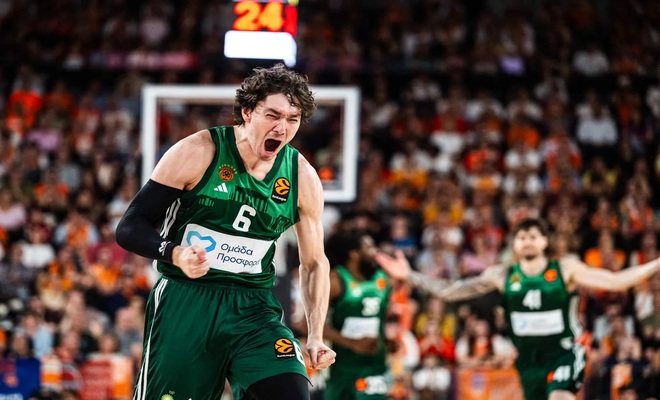
Valencia vs Panathinaikos
Another 2-0 series, this time with the road team, Panathinaikos, leading before heading home. It is as close as a 2-0 series can be, with Valencia at -3 over 85 minutes, but in the Playoffs, a loss is a loss.
Game 1 could not have gone better for Panathinaikos. They forced Valencia into their 2nd slowest-paced game of the season, and despite good looks from deep, Valencia made a season-low six threes. On offense, Panathinaikos was sharp. Coach Ataman prepared well to attack Valencia’s PnR coverage, using Double Drags, Ram Screens, and flipping screen angles to get the hedging big trailing the play. That carried into Game 2.
Valencia played faster in Game 2, though still not at their preferred pace, with Panathinaikos pushing them late into the shot clock. It turned into one of the best games of the Playoffs, with high scoring and both teams executing offensively. Panathinaikos matched Valencia’s three-point makes, which proved crucial. The game came down to details. Free-throw shooting stood out, with Panathinaikos going 15/15 and Valencia 13/23 in a two-point game. Nigel Hayes-Davis responded after a quiet Game 1, scoring 27, including the final eight points and the game-winning buzzer beater.
Valencia is not a team that folds. They head to OAKA ready to face a strong crowd, but with belief they can respond. Limiting Panathinaikos’ three-point volume will be key, along with pushing the tempo. In Game 1, they created good looks by setting flat screens near midcourt to speed things up. That could return in Game 3. Adjustments to their PnR coverage may also help.
Panathinaikos holds the edge, but Valencia will compete.
This article was written by the European Hoops team: Tiago Cordeiro, João Caeiro and André Lemos. Make sure you give us a follow on Twitter at @EthosEuroleague!
- About the Author
- Latest Posts

From the cliffs of Porto Moniz to the forests of Latvia. With a degree in business and a background in finance, I traded balance sheets for projection models, following a lifelong love of the game. I’ve played it, I’ve lived it and I’ve had the privilege of working inside team front offices at both the club and national level.
For over 20 years, I’ve also been immersed in the world of Fantasy Basketball, studying trends, finding edges and living the grind season after season. That passion has brought me here, to SportsEthos, where I’m honored to be part of our management team alongside the great Aaron Bruski. My mission is simple: help SportsEthos thrive as the premier home for Fantasy Sports and sports coverage. A place where users get real value and where every member of the team can sharpen their craft, find joy in the work and build something special that feels like home.

Worldwide Sports Coverage • Fantasy • DFS • Gaming
