
-
 February 18, 2026, 10:00 am
Last Updated on February 19, 2026 12:44 am by Anthony Kates | Published: February 18, 2026
Once again in 2025, the two best fantasy outfielders resided in New York City. Unlike in 2024, though, they wore different jerseys.
Aaron Judge again paced the position, producing his third season of 10-plus WAR, fourth 50-plus homer season and fourth season with at least 114 runs AND 122 RBI in the same season. He led all of baseball in batting average, was second in runs, fourth in home runs and fifth in RBI. The only reason he isn’t my number one overall dynasty outfielder, and fantasy player, is the fact he turns 34 in April and it is tough to predict how many more elite seasons he may have.
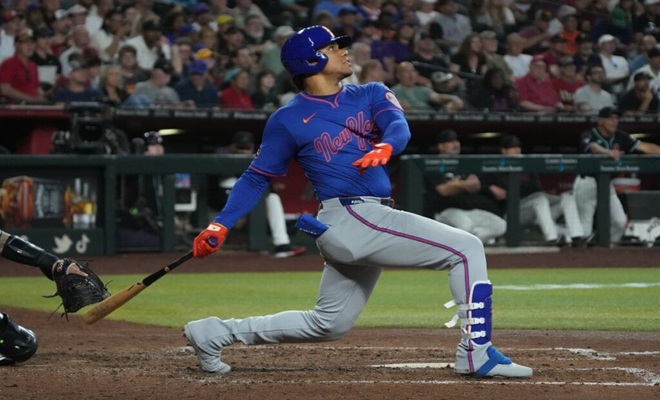
On the opposite side is Juan Soto, who just turned 27. He has hit 27 or more home runs in each of the last six full, non-Covid seasons, scoring at least 93 runs in all six and driving in at least 95 in five of the six. He set a career high in stolen bases last season and probably will not approach 38 again, but if he is a 35-40 homer, 20-plus stolen base batter with 210-plus combined runs and RBI with an above league average batting average for the next four to five seasons, he will be tough to top.
Aside from those two, there are multiple elite, under-26 year olds in the top 10, with Corbin Carroll and Julio Rodriguez again producing elite seasons, James Wood having an amazing sophomore season, Roman Anthony demonstrating his elite skills before suffering an injury and Jackson Chourio maintaining his consistent production. Add in Kyle Tucker trading the Cubs for the Dodgers, Ronald Acuna with a healthy off-season and the always productive Fernando Tatis and it is tough NOT to land a top outfielder for your dynasty teams.
There are some questions that need to be answered in 2026 though. Can Pete Crow-Armstrong repeat his elite first half or will he show he is more like his second half self? Can Wyatt Langford be an elite fantasy player or will he be better in real life than in fantasy? How will Jackson Merrill bounce back from an injury riddled sophomore season? Can Luis Robert rebuild his value as a Met? And many more involving veterans with consistency issues (Michael Harris III), top Rookie of the Year candidates (Jac Caglianone) and what prospect outfielders will make their MLB debut this season (Carson Benge? Walker Jenkins? Justin Crawford).
Stats are from 2025; Age is the player’s age on opening day
1. Juan Soto – 27 – New York (N) PA R HR RBI SB AVG K% BB% Barrel % HardHit % 715 120 43 105 38 .263 19.2 17.8 18.1 55.1 Soto had one of the best seasons of his career in his first year in Queens, producing career bests in home runs and stolen bases. He scored 100-plus runs for the fourth time in his career and drove in 100-plus runs for the third consecutive season and also the fourth time overall. He had the lowest swing rate among qualified hitters, 35.2%, but was still top 45 in total hits, thanks to his amazing eye at the plate and incredibly low swinging strike rate. Because he rarely swings and has that great eye, he annually has one of the best walk rates, finishing second to Aaron Judge with a 17.8% rate in 2025, while also maintaining a below league average strikeout rate, 19.2%. While his 38 stolen bases came almost out of nowhere (previous career high was 12; he had just 11 attempts in 2024), he is a smart and advantageous base runner, though I would not expect nearly as many in the upcoming season. Soto hit second or third for the entirety of the season, with the slugging Pete Alonso behind him, a nice place to be, especially on the basepaths, when pitchers have to worry about not making a mistake to one of the most powerful hitters in the league. That won’t be the case this year, as the Polar Bear has absconded for crab cakes in Baltimore. Bo Bichette and/or Jorge Polanco won’t have nearly the same affect on pitchers, so Soto won’t have nearly the same amount of base stealing opportunities. That being said, he has been one of the most consistently productive superstars in the league and should once again end the year as one of the most valuable fantasy producers.
2. Aaron Judge – 33 – New York (A) PA R HR RBI SB AVG K% BB% Barrel % HardHit % 679 137 53 114 12 .331 23.6 18.3 24.7 58.2 Judge is the only player over the age of 30 in the top 10 and one of three in the top 20, but the only player 33 years or older in the top 30. Others have him ranked two, three and even four spots lower, but I don’t see any reason that he cannot maintain his level of dominant production for at least the next two or three seasons. And if he can do that, then he needs to be ranked like one of the two or three best dynasty outfielders. Only two right-handed hitters in the history of baseball have more 10 fWAR seasons than Judge (Roger Hornsby & Willie Mays) and no hitters had a better run in their early 30’s (age 30-33) than Judge, whose wRC+ in that age range (204) is 11 points higher than the second best (Babe Ruth) and 27 points higher than third (Lou Gehrig). And though 2025 had the lowest fWAR of his 10-plus fWAR seasons, it also had the lowest strikeout rate of his career, the fourth best walk rate, highest batting average, third best wRC+, most runs, second most stolen bases and third most walks. Very rarely in our modern times do our power hitters also hit for average, but Judge does both, winning the batting title in 2025 and finishing third in 2024, finishing fourth in home runs last year and first in 2024. He is an elite producer in four of the five traditional stats and one of the best overall players in the league today.
3. Corbin Carroll – 25 – Arizona PA R HR RBI SB AVG K% BB% Barrel % HardHit % 642 107 31 84 32 .259 23.8 10.4 14.5 49.9 Carroll’s first three full seasons in the big leagues have been tremendous, generating the ninth most fWAR among hitters in that time. He has the second most stolen bases (121; only Elly De La Cruz has more), tied for 28th most home runs (28), third most runs (344; behind just Juan Soto and Shohei Ohtani), tied for 43rd in RBI (234) and tied for 33rd in wRC+ (126). He has been one of the best offensive creators over the past three seasons and there is no cause for concern with his production going forward. Even after the Diamondbacks traded away Eugenio Suarez and Josh Naylor last year, they still had one of the most productive offenses in baseball, as they were the seventh most productive (sixth most with Suarez and Naylor).They are a sure bet to again have one of the 10 or so most productive offenses in 2026, with Carroll being one of the handful of players who can comfortably produce a 30/30 season.
4. Ronald Acuna Jr. – 28 – Atlanta PA R HR RBI SB AVG K% BB% Barrel % HardHit % 412 74 21 42 9 .290 24.8 17.2 15.7 52.5 If Acuna had not torn his ACL for a second time in 2024 and we had gotten 600-plus plate appearances from him last season, he would probably be the number one ranked dynasty outfielder. Unfortunately, we cannot change that, so hopefully this year we get a full season out of Acuna. Of course, the last time we did, Acuna had one of the greatest offensive seasons of all time, becoming the first player to hit 40-plus home runs and steal 50-plus, 60-plus or 70-plus bases in the same season (Shohei Ohtani would one-up him in 2024, hitting 50-plus homers and stealing 50-plus bases), scoring 149 runs (tied for 47th most all time, most since 2000, one of just six plyers to score 145-plus runs in a season since 1938) and driving in 106. He also hit .337 that year, the best batting average of any 40-40 season. In 2024 and 2025, both before and after the ACL tear and recovery, he combined for 634 plate appearances, with 25 home runs, 25 stolen bases, 112 runs, 57 RBI and hit .271. Now, that includes his very slow start to 2024, post his MVP season, and then just 10 stolen base attempts in 2025, post recovery, so it’s tough to tell a complete story with those numbers. Acuna should be one of the most productive players in the league in 2026, especially since he will be entering the year completely healthy and ended 2025 on a high note, with six home runs, three stolen bases, a .294 batting average and a 167 wRC+ in September. The Braves lineup should be one of the best in all of baseball, with one of the best 1-5’s in the entire league, but they were just the 21st most productive offense with Acuna in the lineup last year, so there is no guarantee that the talent translates this season.
5. Julio Rodriguez – 25 – Seattle PA R HR RBI SB AVG K% BB% Barrel % HardHit % 710 106 32 95 30 .267 21.4 6.2 9.8 48 Rodriguez had his fourth straight 20-plus homer, 20-plus stolen base season in 2025 (his first four in the big leagues), producing his second 30-30 season, scoring the most runs in a season of his career. Like he has every season of his career so far, though, he had a better second half of the season than he did the first, hitting more home runs in fewer plate appearances, with a higher batting average, on-base percentage, slugging percentage and wRC+. Throughout his career, July, August and September have been his three most productive months, with a career wRC+ of 149 or higher in all three (compared to March/April, May and June, which run 90, 123 and 106, respectively). The last uber-productive player that I can remember who had a much better second half than first half throughout their career is Mark Teixeira, who had a 131 or higher wRC+ in July, august and September, 105, 128, 123 in Mar/Apr, May and June, though the difference in wRC+ is much smaller (133 second half, 121 first half) than in Rodriguez’s case. J-Rod is an incredibly frustrating player to roster in head to head leagues, since his first three or so months of the season tend to be far below the production of a first round pick, but roto players know that, at the end of the season, his numbers will be where they need to be (and his slow start hurts less, since the numbers show up in the end). If he ever starts the season as well as he ends and maintains it for six months, he could challenge Aaron Judge, Bobby Witt Jr., Jose Ramirez and Cal Raleigh for the American League MVP award. Until then, hold through the down months, because the high months are some of the best in the league.
6. Fernando Tatis Jr. – 27 – San Diego PA R HR RBI SB AVG K% BB% Barrel % HardHit % 594 111 25 71 32 .268 18.7 12.9 10.9 5.2 Tatis had his best season since 2021 last year, setting a career high in stolen bases and runs, hitting 20-plus home runs for the fifth straight full season and posting career bests in chase, contact and swinging strike rates. Tatis has been an incredibly productive player through the first six years of his career, hitting for power, stealing bases and scoring plenty of runs, but we haven’t really seen him produce the kind of elite seasons we expected after his huge 2021 season. He suffered a broken wrist in 2022 and then missed part of the season due to a PED suspension and since that season, he has struggled to show off the kind of power he did over his first three seasons, when he posted an ISO of .272 in each season. Since hitting 42 home runs over 546 plate appearances in 2021, he has averaged 23 home runs per year over the past three, even though he has elite, plus-plus power. The blame for this is probably two-fold: he is no longer on the PED’s that helped him reach 45 home runs and he struggles to life the ball, posting fly ball rates of 34% of lower in each of the past three seasons. It doesn’t matter how hard you hit a ball or how much quality contact you make, you cannot hit a ball out of the park if you don’t have the right kind of lift to make it happen. He has never hit more fly balls than ground balls, yet still produces great overall numbers. His numbers are good enough that he is regularly drafted among the top 15 to 18 players, but in order to make the leap back into the top six or so, he needs to prove that he can lift the ball more and deposit it withe the fans more often.
7. Roman Anthony – 21 – Boston PA R HR RBI SB AVG K% BB% Barrel % HardHit % 303 48 8 32 4 .292 27.7 13.2 15.5 60.3 Anthony is a left-handed wunderkid who had a pretty amazing half-season in the big leagues in 2025. The Red Sox didn’t call him up until the second week of June, even though everyone on the planet thought he had earned an opportunity to start the season with the big league club. And oblique strain cost him essentially the entire month of September (and the team’s postseason), but in-between his debut and then, he generated the tied for 20th most fWAR among hitters, and was Boston’s second best bat. He has plus-plus power, above average speed, great defense and an amazing eye at the plate. He had some contact issues last season, but is young enough and talented enough that he should be able to improve on his low contact rate (71.5%), especially since he has such a low chase rate. He had elite statcast data last year, with a 15.5% barrel rate, 60.3% hard hit rate and an average exit velocity of 94.5 MPH, but he struggled to hit home runs because of his poor fly ball rate. As he learns to lift the ball, his home run totals will rise, as will his status as an upper echelon, elite producer. At this time next year, he could be a top-4 dynasty outfielder if he stays healthy, improves his contact rate even a little bit and lifts the ball more.
8. James Wood – 23 – Washington PA R HR RBI SB AVG K% BB% Barrel % HardHit % 689 87 31 94 15 .256 32.1 12.3 16.3 56.3 Wood had a tremendous first full season in the big leagues, showing off his elite power-speed, posting an above league average walk rate and finishing tied for fourth in the National League in doubles (38). His season could have been even better, if not for a poor second half of the season. At the halfway mark of the season (end of June, not the All Star Break), Wood had hit 22 home runs, stolen 11 bases, had a 14.5% walk rate, 26.8% strikeout rate, a .283 batting average and a 155 wRC+. From July 1 until the end of the season, though, He hit just nine home runs, stole four bases, had a 9.8% walk rate, an absurd 38.3% strikeout rate, .226 batting average and a 95 wRC+. It was one of the largest fall offs in the entire league. His fly ball rate dropped all the way down to 19.1%, he had just a 64.9% contact rate and his swinging strike rate was 14.7%. There was some light in the darkness, however, as he did have a 31.5% line drive rate (more line drives usually means more hits), he still had great statcast numbers (13% barrel rate, 55.6% hard hit rate, 94.7 MPH avgEV) and he was incredibly unlucky with his contact (he had a .359 BABIP and a .226 batting average; there is rarely a difference that large in those two numbers – of the batters that had a BABIP of .320 or higher, among qualified hitters, the lowest batting average any one of them had was .256). Even with such a poor three months, he still finished as the 11th most valuable fantasy outfielder last year. There is plenty of upside here, with some inherent downside, but he is just 23 years old and when someone this young produces as well as Wood did overall, they rarely fall off.
9. Kyle Tucker – 29 – Los Angeles (N) PA R HR RBI SB AVG K% BB% Barrel % HardHit % 597 91 22 73 25 .266 14.7 14.6 10.8 40.4 Tucker has been one of the best hitters on the planet over the past five years, generating the 10th most fWAR (23.4) and tied for sixth best wRC+ (143; tied with Vlad Guerrero) among players with at least 2500 plate appearances, even though he is one of just two players in the top 10 that has fewer than 3000 plate appearances (he has 275 fewer plate appearances than Mookie Betts, who has the fewest plate appearances of players with 3000-plus that are also in the top 10 in fWAR). When Tucker is healthy, he produces. And he is now on his third team in three seasons, moving from the Astros to the Cubs to now the back-to-back defending World Champion Los Angeles Dodgers. He has the kind of easy power that not even Chavez Ravine should keep him inside the park, he is a threat to hit 30-plus home runs and steal 30-plus bases, he could have his first ever 100-100 season, scoring 100-plus runs and driving in 100-plus in a loaded Dodgers lineup and he will get on base plenty (.369 or higher OBP each of the last three seasons). He has the upside of the absolute elite producers at the position, but he hasn’t really hit his ceiling (he may have in 2024, if he hadn’t missed 84 games due to a shin injury) and he has struggled to stay healthy the past two seasons, the nominal first two years of his peak. He could easily move into the top five of this position by the end of the year, if he produces to the peak of his potential.
10. Jackson Chourio – 22 – Milwaukee PA R HR RBI SB AVG K% BB% Barrel % HardHit % 589 88 21 78 21 .270 20.5 5.1 9.7 42.3 Chourio has had a pretty successful first two seasons in the big leagues, producing the tied for 37th most fWAR before turning 22 in the history of the league (tied with Giancarlo Stanton), with nearly identical seasons (same amount of home runs, eight more runs in year two, one less RBI, nine less walks, same amount of strikeouts, one less stolen base, batting average just five points lower, etc.). In order for him to maintain his spot in the top 10 and even improve upon his status, he’ll need to start tapping more into his plus-power and plus-plus-speed, getting closer to 30 home runs and/or stolen bases, driving in more base runners and getting on base more often (.317 career OBP). The Brewers have had a top 10 offense in both of his seasons so far and 2026 should be no different, so now is the time for Chourio to start to produce more like the superstar his skills say he should be, than the kind-of-a-star like he has. The sky is the limit for Chourio, he just needs to tap into his tremendous talent to reach it.
Want to get access to the rest of this article? You’ll need to have an MLB FantasyPass membership. Click here to learn more and sign up!
Premium Access RequiredCome join us at SportsEthos by filling out an application by clicking here
Click here to join us on Discord!
Follow us on X by clicking here
Follow us on Bluesky by clicking here
Follow Anthony on X at @akfantasybb
Follow Anthony on Bluesky at @akfantasybb.bsky.social- About the Author
- Latest Posts

I’m a husband, father and fantasy sports fanatic. I’ve been playing some fantasy sport or other since the fall of 1996, thanks to one of my childhood best friends, Brent. I enjoy watching all major sports, reading fantasy novels, watching TV shows and movies, playing video games and writing about fantasy baseball. I started at Sports Ethos in 2023, just writing one article a week and cutting my teeth in fantasy sports writing and I am now a co-lead of the Fantasy Baseball department, co-host of the Fantasy MLB Today podcast and the author of two weekly articles, our dynasty baseball rankings and a handful of random articles a year. I support the Houston Astros, Dallas Mavericks, Tennessee Titans and all things Texas Longhorns.
 2025 MLB Draft Guide
 Go To NBA FantasyPass
 Go To NFL FantasyPass
 Go To MLB FantasyPass
 Go To WagerPass
 Go To DFS Pass
Blurb feed
Williamson 300
AK Dynasty 300
SE MLB Draft Tracker
Tools and Projections
Sleepers and Busts
ADP Reports
Rookies
Special Features
Catcher
Middle infield
Corner infield
Outfield
Utility
Starting pitcher
Relief pitcher
Head to Head
Roto
Points
Draft and Hold
Auction
Mock Drafts
Dynasty & Keeper
Season Preview
Beginner's Guide
Go To DFS Pass
Blurb feed
Williamson 300
AK Dynasty 300
SE MLB Draft Tracker
Tools and Projections
Sleepers and Busts
ADP Reports
Rookies
Special Features
Catcher
Middle infield
Corner infield
Outfield
Utility
Starting pitcher
Relief pitcher
Head to Head
Roto
Points
Draft and Hold
Auction
Mock Drafts
Dynasty & Keeper
Season Preview
Beginner's Guide