
-
 May 4, 2026, 2:34 pm
Last Updated on August 7, 2026 9:29 am by André Lemos | Published: May 4, 2026
The Grizzlies were hoping that a full season under a fresh coaching staff could reinvigorate the franchise. Ja Morant was back, Zach Edey was ready to take the next step and the team was armed with better depth and more future assets after trading Desmond Bane away. It was a talent downgrade but the Grizzlies freshened up by shaking up the core and had a few younger players ready to contribute. Things did not go to plan.
How’d It Go?
The Grizzlies were caught in a tough spot entering the season, with a roster core that may or may not have hit its ceiling and a superstar whose shine was waning significantly. They decided to rebalance the roster with an offseason trade, sending Desmond Bane to Orlando for Kentavious Caldwell-Pope and a handful of first-round picks. It restocked draft capital while “replacing” Bane with a veteran 3-and-D guy, leaving the door open for Memphis to remain competitive around Ja Morant, Jaren Jackson Jr., Zach Edey and a relatively deep wing group. Memphis spent up to get Ty Jerome after a great year in Cleveland and he would both run the second unit and provide cover if Morant got hurt again. The Grizzlies didn’t look like a title contender but you could see a way for them to be a playoff team if everything went right. It did not.
Edey and Jackson both dealt with offseason foot injuries, however, throwing some cold water on any visions of competing. Jackson was able to return for opening night but Edey was not and the Grizzlies crawled to a 4-11 start that basically put them in the dirt in a hyper-competitive Western Conference. Things were already bad by the end of October, when Morant basically answered every media question with some variation of “ask the coaches, not me” following a loss to the Lakers in which he shot 3-of-14 from the field. It set the table for a frustrating campaign in which Morant’s commitment to the franchise — and vice versa — was constantly under fire. Morant pouted his way through the season, missing time on a regular basis and displaying bad body language more often than not when he was available. He clearly was not on the same page as the coaching staff and was spotted bickering with teammates at practice in London. The Grizzlies entertained offers for Morant at the deadline but didn’t get any satisfactory packages, though the same was not true for Jackson. He was dealt to the Jazz for three first-round picks and the two teams basically swapped the ends of their benches as well, giving Memphis some new blood that could help in the future with Walter Clayton Jr. and Taylor Hendricks.
While Morant was causing headaches with his demeanor, he also missed more than his fair share of time yet again. To compound matters, Jerome and Scotty Pippen Jr. both missed the first half of the season due to offseason injuries. It put the Grizzlies in an unenviable position as their young group was forced to try and play without any real organization on the court. It wasn’t all bad, as rookie Cedric Coward played well more often than not, Jaylen Wells returned from a major injury at the end of last season to a full-time starting role, and players like Cam Spencer and Javon Small showed their mettle. Even in silly season, Olivier-Maxence Prosper and Rayan Rupert emerged as diamonds in the rough. Pippen and Jerome were both good when they were in uniform. Zach Edey was limited to 11 games by more foot troubles but he had some promising outings in his brief time on the floor. You could see bits and pieces of how this team will move forward, but Morant loomed over the entire campaign and it was the type of situation that seemed to weigh heavily on everyone.
Coaching
Iisalo was thrown into the lion’s den last season, getting hired just before the playoffs to replace longtime bench boss Taylor Jenkins. There wasn’t much time for him to implement anything new and the hope was that a full season would allow the coach to put his imprint on the team. It would be unfair to grade Iisalo based on this year’s results considering his starting PG didn’t want to be there, his starting center (and two best reserve PGs) barely played and his best player was traded in February. The tank makes it impossible to evaluate much and even before then, the two expected hubs of his offense weren’t around enough to give any real insight. The specific personnel that were missing meant the entire team was playing with an arm tied behind its back.
Iisalo often talks about playing with pace but that seems to be more indicative of how the team operates rather than simply running and gunning. He wants both players and the ball moving decisively. The Grizzlies were a fringe top-10 team in pace and top-5 in assist ratio, and one wonders how that would look if they had a real roster for the entire season — with all due respect to the skeleton crew that closed things out. The off-ball movement can work with a real point guard and would scale up quickly with an elite screen-setter (sound familiar?), and we did see guys like Vince Williams Jr., GG Jackson, Cam Spencer and Javon Small all pop up with surprising production at times. If you really want to get into it, the Grizzlies had a few non-guard players — Cedric Coward, Santi Aldama, Jock Landale, Jaylen Wells and Taylor Hendricks — all put up compelling numbers from time to time. The fact that Williams and Spencer both had good runs as miscast PGs, and that the rest of those guys all had their moments without the benefit of consistent PG play, should be taken as a point in favor of Iisalo’s systems working when there’s buy-in, which he did not get from Morant.
On that note, Iisalo also tried to instill some accountability with his star guard and gets some credit for not kowtowing to Morant along the way. While there will be some short-term pain, fans should take it as a positive that the organization is standing behind its coach rather than letting a player dictate the team’s systems. In general, Iisalo’s comments seem to show that he understands the problems at hand when it comes to game-to-game issues, and players are on record as appreciating the direct feedback they get from him.
Evaluating an injured, tanking team from a coaching perspective is a bit of an exercise in futility but there are some encouraging signs here, especially as the Grizzlies are positioned to reshape their roster entirely.
The Players
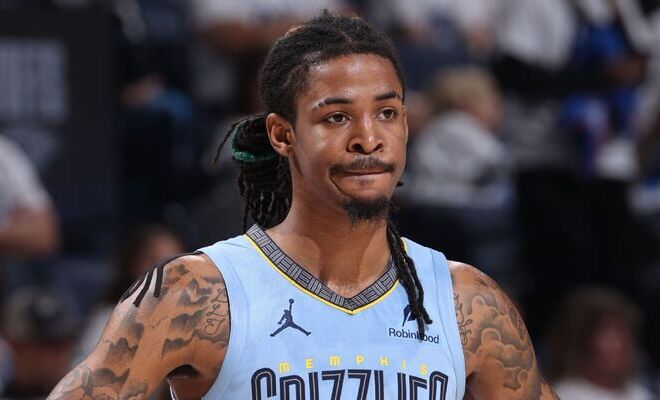
 Ja MorantPG, Portland Trail Blazers
Season Team GP GS MPG FGM FGA FG% FTM FTA FT% 3PTM 3PTA 3PT% PTS REB AST STL BLK TO 25-26 MEM 20 20 28.5 6.6 16.1 41.0 5.3 5.9 89.7 1.0 4.3 23.5 19.5 3.3 8.1 1.0 0.3 3.6 24-25 MEM 50 50 30.4 8.1 17.8 45.4 5.3 6.4 82.4 1.8 5.7 30.9 23.2 4.1 7.3 1.2 0.2 3.7 23-24 MEM 9 9 35.3 8.9 18.9 47.1 5.8 7.1 81.2 1.6 5.7 27.5 25.1 5.6 8.1 0.8 0.6 3.0 ADP: 46.1 / 33.8 (Yahoo/ESPN) | Total Value: 323/350 (8/9-cat) | Per-Game Value: 70/151 (8/9-cat)
Let’s stay on the court to start out. The points were the lowest since the 2020-21 season while the FG% was the lowest of his career, with a horrific effort behind the arc not only dragging down his numbers but making life harder for all of his teammates. Morant played the first six games of the season, which would go down as his longest run of consecutive appearances all year. He’s played in six consecutive games just two times since March 1, 2023. Injuries were a major factor yet again as Morant missed 10 games with a right calf strain, four with a left ankle sprain, another six for another right calf strain and the final 40 games for a left UCL sprain that eventually required a PRP injection. Even without the elbow problem it’s unlikely that Morant would’ve played much between the overall dysfunction with him around and the team’s tanking mission. Morant did tie a career-high in assists and posted a new best from the charity stripe, but in only 20 games that is not nearly enough.
Despite all of that, Morant’s season off the court was even worse. After a 3-of-14 shooting performance in a loss against the Lakers, Morant spent his postgame media availability shifting blame to the coaching staff and had an axe to grind about something with just about anyone he could find for most of the season. That “go ask the coach” media session earned him a one-game suspension from the team but that was just the beginning. Video surfaced of him getting into it with teammate Vince Williams at practice in London and any questions about his future in Memphis were basically met with a giant shrug. The Grizzlies entertained trade offers for him at the deadline but predictably found no team willing to view Morant as a positive asset — not shocking between his behavior, contract and declining athleticism as a result of injury troubles. The Jaren Jackson Jr. trade was the obvious pivot to a rebuilt and we can’t even say that Morant’s long-term future in Memphis is uncertain. It’s just a matter of time before the other shoe finally drops.
 Zach EdeyC, Memphis Grizzlies
Season Team GP GS MPG FGM FGA FG% FTM FTA FT% 3PTM 3PTA 3PT% PTS REB AST STL BLK TO 25-26 MEM 11 11 25.8 5.6 8.9 63.3 2.3 2.9 78.1 0.1 0.5 20.0 13.6 11.1 1.1 0.6 1.9 2.4 24-25 MEM 66 55 21.5 3.8 6.6 58.0 1.4 1.9 70.9 0.3 0.8 34.6 9.2 8.3 1.0 0.5 1.3 1.3 ADP: 118.0 / 139.1 (Yahoo/ESPN) | Total Value: 380/376 (8/9-cat) | Per-Game Value: 36/33 (8/9-cat)
Edey’s limitations were apparent in his rookie season but he caught a tailwind late in the year when Memphis changed its coaching staff, providing real optimism heading into his second season. Unfortunately, injuries limited him to just 11 games. If the ADP looks out of line to you it’s because of left ankle surgery in June that prevented him from being ready for the start of the season. While he debuted in mid November to mark a reasonable recovery, he made it about a month before hitting the sidelines with a left ankle stress reaction that resulted in another surgery in March. That ended his campaign and once it was clear that the Grizzlies would be tanking — some time around January, if we’re being honest — it was not hard to envision Edey missing the rest of the season.
That said, when Edey was on the floor he was impactful for fantasy. At his size he’s basically a sleepwalking double-double and gained four minutes per game even with the restrictions surrounding his foot/ankle issues. Edey displayed an improved ability to be the focal point of the offense while handling himself more than adequately on the defensive end. It wasn’t even a good environment either, and you can imagine the sort of looks that Edey might get in a functional offense where everyone is on the same page. The injury history is a serious concern just two years into his career but the flashes we have seen from Edey are just as encouraging.
Cedric CowardSG, Memphis GrizzliesSeason Team GP GS MPG FGM FGA FG% FTM FTA FT% 3PTM 3PTA 3PT% PTS REB AST STL BLK TO 25-26 MEM 62 47 25.8 4.9 10.5 47.1 2.3 2.7 84.3 1.5 4.4 33.8 13.6 5.9 2.8 0.6 0.4 1.7 ADP: N/A / N/A (Yahoo/ESPN) | Total Value: 126/134 (8/9-cat) | Per-Game Value: 142/157 (8/9-cat)
Coward was a name to monitor in a deep wing mix to enter the season and quickly made a name for himself with a hot start to his career. Looking back at the first month, on November 21 (16 games in), Coward was the No. 87/71 (8-cat/9-cat) performer per game with averages of 14.6 points (.481 FG%, .902 FT%), 2.0 triples, 6.3 rebounds, 2.9 assists, 0.8 steals and 0.4 blocks in only 26.5 mpg. He bumped Kentavious Caldwell-Pope from the starting lineup and was a young player on the rise. Unfortunately, any veteran fantasy GM could see that Coward’s early season run was buoyed by his efficiency, as a lack of defense built his production on a shaky foundation. That more or less played out as Coward shot .467 from the field and .815 at the line from that point to the end of the season, and his 3-pointers dipped to just 1.3 per contest as he went .310 from beyond the arc. It left Coward as an up-and-down performer whose role did more to establish late-round credentials than anything else.
Some of that isn’t Coward’s fault, as a 3-and-D rookie unsurprisingly fared better when he had other players create his shots for him. Coward couldn’t help that the Grizzlies offered no consistency with their rotation and at minimum he was able to provide reasonable scoring output even on his worst days. Tanking also got him as Coward missed 15 of 29 games after the All-Star break and topped 25 minutes just five times in his 14 appearances anyway. It’s a compliment that the Grizzlies didn’t push Coward during silly season but it was a missed chance for him to put up some big volume. All in all it was a successful rookie campaign, even if most managers missed out on Coward’s best run that happened to come right out of the starting blocks.
Ty JeromePG, Memphis GrizzliesSeason Team GP GS MPG FGM FGA FG% FTM FTA FT% 3PTM 3PTA 3PT% PTS REB AST STL BLK TO 25-26 MEM 15 15 22.6 6.8 14.3 47.7 3.3 3.7 87.5 2.9 6.7 43.0 19.7 2.8 5.7 1.1 0.3 1.8 24-25 CLE 70 3 19.9 4.6 8.8 51.6 1.8 2.1 87.2 1.6 3.6 43.9 12.5 2.5 3.4 1.1 0.0 1.3 23-24 CLE 2 0 7.5 1.0 2.0 50.0 0.0 0.0 0.0 0.0 0.5 0.0 2.0 0.5 1.5 0.0 0.0 0.5 ADP: 142.6 / 128.8 (Yahoo/ESPN) | Total Value: 350/343 (8/9-cat) | Per-Game Value: 51/38 (8/9-cat)
This is just a sneak peek of the Season Wrap. The entire roster is covered, as well as the Fantasy Star, Letdown, One to Watch and One Burning Question for this team. You’ll need to have an Ethos 360, All-Sport or NBA FantasyPass membership. Click here to learn more and sign up! Premium Access Required Error: Cannot find GG Jackson II in player database
📢 Want More? 📢
📡 Download the SportsEthos App to get real-time alerts and updates:
Get the SportsEthos App (iOS App Store) Get the SportsEthos App (Google Play)
 Follow us on Twitter: @EthosFantasyNBA
Follow us on Bluesky: @ethosfantasynba.bsky.social🏆 Join our premium community built on integrity, competition, and winning. Let’s crush this season together.
Get the NBA FantasyPass!Join the SportsEthos team! Fill out an application by clicking here!
- About the Author
- Latest Posts

Mike graduated from Boston University’s Dual Degree Program with a BA in Economics and a BS in Business with Concentrations in Marketing and Operations Management. He is a faithful supporter of Toronto sports and the Detroit Lions and is always ready to be let down. Tweet to him @Mike_Pandador, but if you badmouth Jose Calderon you might get blocked.
 NBA FantasyPass HomePage
 Go to 2025 NBA Draft Guide
 Go To NFL FantasyPass
 Go To MLB FantasyPass
 Go To WagerPass
 Go To DFS Pass
 In-season Bruski 150
Blurb Feed
Live Injury Report
Discord
ROS Projections/Rankings
The Layup Line
Pickups of the Night
Daily Projections
Working The Wire
The Week Ahead
Buy Low/Sell High
H2H Matchup Breakdown
Trade Analyzer
My Team Breakdown
Weekly Projections
Depth Charts
Streaming Schedule
Schedule Grid
Dynasty Rankings
Dynasty Check-In
In-season Bruski 150
Blurb Feed
Live Injury Report
Discord
ROS Projections/Rankings
The Layup Line
Pickups of the Night
Daily Projections
Working The Wire
The Week Ahead
Buy Low/Sell High
H2H Matchup Breakdown
Trade Analyzer
My Team Breakdown
Weekly Projections
Depth Charts
Streaming Schedule
Schedule Grid
Dynasty Rankings
Dynasty Check-In
