
Last Updated on November 23, 2026 9:24 am by André Lemos | Published: November 23, 2026
EuroLeague Women Week Five: Olivia Miles Is Coming, but Week Five Can’t Wait
EuroLeague Women disappeared for a couple of weeks and somehow managed to return with a bigger story than anything that happened on the court before the break.
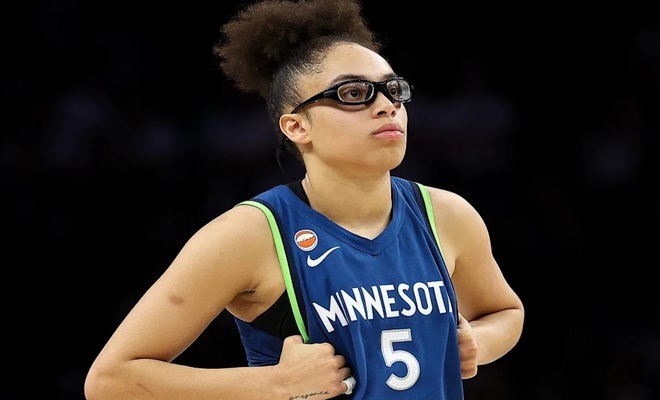
Galatasaray signed Olivia Miles.
Not a prospect who might become a star one day. Not an established veteran coming over for another European season. Miles just completed one of the best rookie seasons the WNBA has ever seen, winning Rookie of the Year unanimously, making the All-WNBA First Team and finishing second in MVP voting after averaging 19.8 points, 6.0 assists and 4.7 rebounds for Minnesota.
There is one catch, and it is a fairly large one. Miles will not join Galatasaray until March, after her Unrivaled season. The signing changes what this team could become at the business end of the year. It does absolutely nothing to solve the work still sitting in front of Galatasaray right now.
Five teams have already qualified for the Second Round. Seven places remain. Group D does not have a single team through yet, Valencia and Kibirkstis-TOKS can put themselves on the other side of the line, and several teams already assured of advancing still have results worth protecting.
After the international break, the First Round returns Wednesday with every team playing on the same night.
Olivia Miles changes Galatasaray’s ceiling, not its current problem
The first reaction to the Miles signing is obvious.
Good luck guarding that roster in April.
Miles is already an elite advantage creator. She can turn the corner, manipulate help, find the roller, punish defenders who duck under screens and create late-clock offense when the original structure has disappeared. Her rookie season also removed one of the few reasonable questions about her offensive profile. She shot 38.8 percent from three in the WNBA while carrying a significant creation load.
Those skills fit a Galatasaray roster that has sometimes lacked exactly that type of perimeter creation.
The talent has never been difficult to identify. Dorka Juhász can organize offense from the frontcourt. Awak Kuier has become one of the competition’s most destructive defenders. Marine Fauthoux gives them another high-level guard, while Janelle Salaün and Natasha Howard add enormous lineup flexibility.
The offense has still been uneven. Galatasaray entered the break at 2-2, shooting only 26 percent from three despite the amount of talent on the roster. The recent addition of Holly Winterburn gives Frédéric Dusart another backcourt option now, long before Miles arrives.
That distinction is important.
Miles is a March signing. The Second Round ends on February 2, and the Play-In phase begins later that month. Galatasaray has to earn its way into the part of the season Miles was signed to influence before she ever puts on the uniform.
That journey resumes against Kangoeroes Basket Mechelen.
Galatasaray won the first meeting 77-50, and the matchup remains favorable. Mechelen is 0-4 and has consistently struggled to generate quality offense against EuroLeague physicality. Gala should be able to pressure the Belgian guards, shrink the paint and force another game where Hind Ben Abdelkader has to create too much by herself.
A Galatasaray win would also guarantee progression. At 3-2, Mechelen could no longer catch them from 0-5. The Miles conversation can wait until spring. Wednesday is about making sure there is still a EuroLeague season waiting for her when she arrives.
Group D finally has to choose a direction
Group D managed to reach the international break without qualifying anyone.
Praha and Bourges sit at 3-1. Emlak Konut and Lublin are both 1-3. Two games separate the top from the bottom, and the schedule has conveniently paired a leader with a chasing team in both Week Five matchups.
Emlak Konut vs. Tango Bourges is the more interesting of the two.
Emlak’s European season began almost perfectly. The Turkish side won in Athens and Girona during qualifying, beat Lublin comfortably in the opener and looked like one of the competition’s early discoveries.
Since then, three straight EuroLeague losses.
The strange part is that the individual production has not disappeared. Stephanie Mavunga enters Week Five second in the competition in scoring at 19.2 points per game and leads everyone in efficiency. Adut Bulgak is the competition’s leading rebounder at 11.2 per game.
The problem is everything connecting those pieces.
During qualifying, Emlak’s offense seemed to flow naturally from Lindsay Allen’s initial creation into Réka Lelik attacking the second side, with the bigs giving the guards different screening angles and interior targets. Opponents are now doing a better job delaying those first advantages. Once the initial sequence stalls, Emlak can become dependent on the same small group solving the possession again.
Bourges already showed how to attack that weakness in the first meeting. The French side increased its defensive pressure after halftime, disrupted Emlak’s preferred rhythm and turned a six-point halftime deficit into a 79-74 win.
Since losing its opener, Bourges has won three straight.
Alix Duchet has increasingly taken control of the offense, and Bourges looks more comfortable mixing spread ball screens, quick post entries and off-ball movement instead of waiting for one creator to solve everything.
A win in Istanbul would send Bourges into the Second Round.
Emlak has had three weeks to figure out what its next offensive counter looks like. We should find out quickly whether the break helped.
Praha’s route looks simpler on paper, but Lublin has already warned them once.
USK escaped Poland 74-71 in Week Two after Lublin repeatedly attacked the interior and forced the Czech side into a game it never fully controlled. The talent gap remains significant, especially with Frieda Bühner and Brianna Fraser forming one of the competition’s better frontcourt pairings and Pauline Astier becoming more influential in the backcourt.
Lublin is also no longer the winless team Praha faced the first time.
Shyanne Sellers produced 24 points, 10 rebounds and five assists in the Week Four win over Emlak, while Kourtney Treffers gave the Polish side the interior scoring it had been searching for. If Lublin can again force Praha to defend through the post and keep the game in the half court, there is a route to another close finish.
Praha should still win.
The first meeting is enough reason not to assume it will be comfortable.
Valencia and Flammes meet again with more at stake
Valencia entered the international break with the best win of its season.
The Taronja went to Istanbul and ended Fenerbahçe’s 10-game EuroLeague winning streak, turning an 0-2 start into a far healthier 2-2 record. FIBA’s latest Power Rankings still have Valencia fifth overall, with Raquel Carrera, Helena Pueyo and late arrival Chloe Bibby singled out for their recent play.
Now comes Flammes Carolo again.
The first meeting was one of the strangest games of the season. Valencia grabbed 22 offensive rebounds and still lost 77-63 because the turnovers and poor shooting wiped away much of that advantage.
Wednesday should look different.
Valencia’s identity has become clearer with each week. They want to push after rebounds, enter offense before all five defenders are organized and create early pick-and-roll advantages. Even when they settle into the half court, the decisions are supposed to come quickly.
Flammes is happy living in more than one type of game.
The French side can attack in transition, but it does not need tempo to create offense. Coline Franchelin has been excellent controlling the half court, and Flammes is comfortable moving from a ball screen into an off-ball action or post touch without treating the first option as a failed possession.
That flexibility is why the pace battle is more interesting than simply asking which team runs faster.
Valencia wants to decide when the game speeds up.
Flammes wants to be comfortable regardless.
Valencia can clinch its Second Round place with a win. It would also qualify if Rapid loses to Fenerbahçe, because the Romanian side would fall to 0-5 and could no longer catch them. Flammes is already through at 3-1.
The result still matters beyond qualification. First Round results follow teams into the Second Round, so Valencia is playing for much more than the right to stop worrying about Rapid.
Kibirkstis gets a second chance to finish the job
Kibirkstis-TOKS had an opportunity to qualify before the break.
Athinaikos ruined it.
The Greek side held Kibirkstis to 33.9 percent shooting and won 77-64, exposing something that had become increasingly noticeable after the Lithuanians’ scorching start. When the perimeter shots stop falling, generating enough offense becomes harder.
That does not mean Kibirkstis has suddenly become dependent on making 15 threes. We already saw them beat Landes in France while shooting 3-of-23 from deep because Daugilė Ūsė dominated the offensive glass and the Lithuanians found other sources of scoring.
The difference is margin.
When Woolfolk gets downhill, Wadoux bends the defense with her movement and Becker is connecting actions, Kibirkstis can survive a poor shooting night. When those advantages become harder to create, they do not have as many individual scorers who can simply take over a dead possession.
Basket Landes needs to make this game feel like that.
The French side is 1-3, and another defeat would leave qualification dependent on the final round and other results. Trinity San Antonio and Murjanatu Musa remain the two players most capable of carrying the offense, but Kibirkstis has now had several weeks to prepare specifically for that pairing.
The first meeting also gave Landes one very obvious correction to make. Kibirkstis grabbed 19 offensive rebounds.
Landes cannot defend well for 20 seconds and then ask itself to do it again because nobody finished the possession.
A Kibirkstis win guarantees progression. For Landes, the game is much closer to survival mode.
Schio and Crvena Zvezda are already playing for December
Both teams are qualified.
That does not make Crvena Zvezda vs. Beretta Famila Schio meaningless. It may make it more interesting.
The Second Round format carries First Round results forward, so both teams are already collecting points that can matter when Groups A and B merge.
Schio won the first meeting 84-72, but the final score hid how uncomfortable the game became.
Crvena Zvezda forced 24 turnovers with its pressure, physicality and activity away from the ball. Marina Maljković’s team disrupted passing lanes, denied clean entries and repeatedly made Schio start its offense farther from the basket than intended.
The Serbian problem was converting that disruption into enough offense.
Zvezda committed 22 turnovers of its own and shot 4-of-20 from three. Schio survived the chaos because Kitija Laksa made shots, Mariam Coulibaly controlled the interior and the Italians had several different players capable of rescuing a possession.
The rematch is about whether Zvezda can complete the equation.
Making Schio uncomfortable is not enough anymore. They have already proved they can do that.
The turnovers need to become points.
If Crvena can create transition before Schio’s half-court defense gets organized, this becomes one of the best games of the round. If the Serbian offense again has to manufacture everything against a set defense, Schio owns the more reliable collection of answers.
Zaragoza and Fenerbahçe protect their position
Casademont Zaragoza and Fenerbahçe already know they will be in the Second Round. Both should also be favored heavily on Wednesday.
Fenerbahçe hosts an 0-4 Rapid Bucuresti team it beat 101-51 in Romania.
There is not much tactical mystery here. The defending champions have far more size, creation and depth. Rapid’s best hope is to slow the game, protect the ball and avoid allowing Fenerbahçe’s defense to turn mistakes into another avalanche of transition points.
For Fener, this is more about response than qualification.
Valencia just handed them their first EuroLeague loss of the season. Ahmet Çakı now gets three weeks of film, practice and national-team disruption before seeing how his group responds.
The expectation is straightforward: the champion should look like the champion again.
Zaragoza faces a more interesting opponent.
Athinaikos finally won before the break, and the offensive hierarchy looked far healthier with Julie Vanloo leaning into her playmaking. Vanloo enters Week Five averaging 9.3 assists, second only to Mariona Ortiz’s league-leading 10.0. Merritt Hempe also leads the competition in scoring at 21.0 points per game.
That gives us one of the best guard contrasts of the round.
Vanloo can manipulate a defense from well beyond the three-point line and use that attention to create for Mariella Fasoula, Alexis Prince and Robyn Parks. Ortiz is much less interested in dominating the ball as a scorer. She keeps Zaragoza organized until the defense identifies which player it is willing to leave.
Athinaikos’ problem is at the other end.
The defense has been inconsistent all season, and Zaragoza is exactly the wrong team to lose concentration against. One missed rotation does not merely create one shot. Ortiz will keep the ball moving until the mistake becomes the cleanest possible shot.
Zaragoza is 4-0 and already qualified.
Athinaikos is 1-3 and still fighting for its season.
The difference in desperation should help the Greeks. The difference in execution may still favor Zaragoza.
Coach’s Corner: Controlling pace is not the same as playing fast
Valencia-Flammes is a useful game for a basketball phrase that gets thrown around too casually.
We usually treat pace as a synonym for running.
It is not.
Valencia wants to play fast, but the important part is not simply sprinting down the floor and taking an early shot. The goal is to begin the useful part of the possession before the defense has completed its work.
That might mean Alexis Peterson turning the corner on an early ball screen before the opposing big has found the correct depth. It might mean a wing attacking a closeout before the weak side is loaded. It might simply mean moving the ball to the second side while one defender is still communicating a matchup.
A possession can last 18 seconds and still have been created by early offense.
Flammes offers the opposite lesson.
They are perfectly willing to attack quickly when the opportunity appears, but their offense does not become impatient when it does not. Franchelin can pull the ball out, organize the half court and wait for a better advantage. Flammes can spend several seconds on one side, move into a second action and still get the defense chasing late in the possession.
That is control too.
The real pace battle on Wednesday is therefore not about which team finishes with more possessions.
It is about who gets to decide when the defense has to make its first difficult decision.
Valencia wants that decision almost immediately.
Flammes is comfortable making it come later.
If Valencia consistently gets into the teeth of the defense before Flammes is organized, the game should feel fast even when the possession count says otherwise. If Flammes takes away those first eight seconds and forces Valencia into longer half-court sequences, the French side will have moved the game toward the environment it prefers.
That is why coaches obsess over tempo without necessarily telling their teams to run faster.
Speed is how quickly you move. Pace is when you choose to attack.
This article was co-written by the European Hoops Podcast team, André Lemos and João Caeiro. Follow us at @EthosEuroLeague and subscribe to the European Hoops Podcast wherever you listen to your favorite podcasts.
- About the Author
- Latest Posts

From the cliffs of Porto Moniz to the forests of Latvia. With a degree in business and a background in finance, I traded balance sheets for projection models, following a lifelong love of the game. I’ve played it, I’ve lived it and I’ve had the privilege of working inside team front offices at both the club and national level.
For over 20 years, I’ve also been immersed in the world of Fantasy Basketball, studying trends, finding edges and living the grind season after season. That passion has brought me here, to SportsEthos, where I’m honored to be part of our management team alongside the great Aaron Bruski. My mission is simple: help SportsEthos thrive as the premier home for Fantasy Sports and sports coverage. A place where users get real value and where every member of the team can sharpen their craft, find joy in the work and build something special that feels like home.