-
 December 29, 2025, 8:11 am
Last Updated on July 16, 2026 9:19 am by André Lemos | Published: December 29, 2025
The Games of week 13:
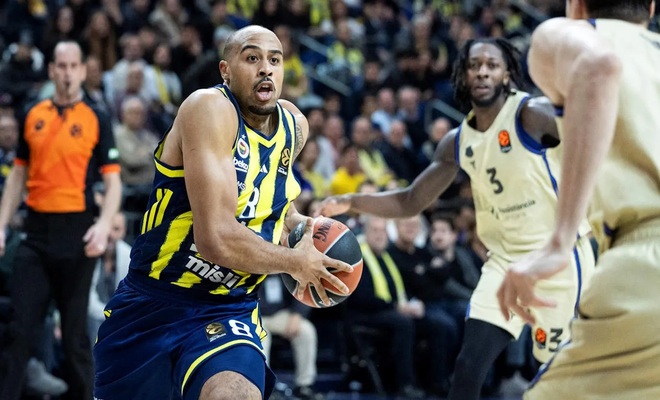
Fenerbahçe vs Barcelona
On Christmas Eve eve, Barcelona walked into Istanbul for what felt less like a regular-season game and more like a quiet, tense chess match against the defending champions. Every possession had intent. Every adjustment had a counter.
The game announced itself immediately. On the very first possession, Barcelona switched every single action Fenerbahçe ran, a look they never went back to for the rest of the night. It was a message as much as a tactic. The Turks struck first with the opening four points, but Barcelona answered with a 9-0 run that forced an early Saras timeout. Coming out of it, Xavi Pascual went to a 2-3 zone for just one possession, a deliberate nod to Fenerbahçe’s strength in ATO situations.
All of that early maneuvering produced a grinding first quarter. Defenses dictated terms, possessions stalled into 1×1 basketball, and the only things that cracked the stalemate were Fenerbahçe’s six offensive rebounds and two late Laprovittola turnovers. The locals edged it 17-13 after ten minutes.
The second quarter was about simplification. Fenerbahçe went straight at Willy Hernangomez. The Spanish big held up reasonably well, but Tarik Biberovic did the real damage. Run off the line, he punished Barcelona inside with eight straight points, pushing the lead to nine. For Barcelona, there was only one steady source of offense. Kevin Punter carried everything. Midway through the quarter he had 10 of the team’s 20 points, with Barcelona unable to find their bigs against the switching defense and forced into outside isolations.
Punter made it work. Almost by himself, he dragged Barcelona back with an 8-0 run to close the half. At the break, Fenerbahçe led by two, and the math told the story. Punter had 16 of Barcelona’s 33 points. No one else had more than four. For the defending champions, it was a two-headed offense, with Biberovic and Talen Horton-Tucker combining for 24 of their 35.
The third quarter belonged to adjustments. Jasikevicius made the clearest one of the night, doubling Punter in isolation and daring anyone else to beat them. Shooting from deep ticked up on both sides, but turnovers strangled the flow. After more than six minutes, the score sat at 11-9 for the quarter.
Barcelona briefly found daylight. A sharp ATO freed Dario Brizuela, and moments later his three put the Blaugrana back in front, forcing another Fenerbahçe timeout with 1:20 left. Saras got exactly what he wanted. A 5-2 close to the quarter ensured Fenerbahçe entered the fourth still ahead, 53-52.
Brizuela had been warming up, and he came out blazing. The Basque Mamba poured in 10 points in four minutes, pushing Barcelona to their largest lead of the night and forcing yet another stoppage. Fenerbahçe responded in familiar fashion, with Baldwin scoring out of a crisp ATO. The lead only flipped for good after back-to-back threes just outside the two-minute mark, a sequence that sent Pascual to the sideline for one last timeout.
Crunch time narrowed the game to its stars. Punter struck first, burying a corner three to put Barcelona up two. Wade Baldwin answered by forcing a switch onto Vesely and finishing at the rim. Punter drove again, collapsing the defense and dropping a perfect pass to Vesely, who was fouled but steady at the line. Barcelona back in front.
Baldwin wasn’t done. Fouled on a three-point attempt, he calmly knocked down all three free throws, giving Fenerbahçe a 72-71 lead. One possession left. The night distilled into its final matchup. Punter with the ball. Baldwin in front of him. Punter got into the paint, but when the shot went up, Baldwin was there to block it and seal the win.
The decisive margin came at the line. Barcelona attempted just four free throws all game. Fenerbahçe took 24. In a game defined by small edges, that was the biggest one of all.
Zalgiris vs Panathinaikos
Zalgiris and Panathinaikos turned their meeting into a game about pressure points, and for long stretches Zalgiris knew exactly where to press. From the opening minutes they switched every screen, daring Panathinaikos to adapt on the fly, and PAO never quite found a clean answer early. Kendrick Nunn and TJ Shorts were consistently pushed away from their left hand, funneled right into traffic, and Zalgiris made them uncomfortable possession after possession. The shooting told part of the story right away, with Zalgiris hitting three of five from deep in the first quarter, but the real damage came inside. Moses Wright controlled the glass, scored six points in the opening period, and made life difficult for Kenneth Faried, who simply could not match his presence.
Panathinaikos briefly found oxygen when Sylvain Francisco went to the bench, trimming the deficit to one possession, but Nigel Williams Goss and Maodo Lo answered immediately, steadying Zalgiris before any real momentum swing could take hold. PAO eventually raised its defensive intensity, and Omar Yurtseven became the lifeline. Six straight points from him sparked a run, and after a timeout from Ergin Ataman the Greeks adjusted by playing high low actions from the free throw line, punishing the switching defense with Yurtseven mismatches inside. That stretch helped them climb back after Zalgiris had built a double digit lead.
Still, Zalgiris responded like a team in control. With 3:40 left in the second quarter they were back up 14, outsmarting PAO offensively by consistently hunting the right shots and pounding the ball inside. On the other end Panathinaikos unraveled into poor decision after poor decision. Yurtseven’s perfect quarter, eight points without a miss, acted as a band aid more than a cure, masking deeper issues as Zalgiris’ backcourt carved them up. One on one defense failed, pick and roll coverage collapsed, and the roller was constantly free. Four lob finishes in the first half by Wright and Birutis underlined how easily Zalgiris guards were getting into the paint and delivering the ball. The halftime score sat at 50-40, and Yurtseven admitted afterward that the help side simply was not there, leading to too many uncontested dunks.
The second half initially followed the same script. Zalgiris continued to contain Nunn and kept slicing through PAO’s coverage, with Ataman openly pointing out the same issues during timeouts that never fully went away. Then Panathinaikos changed the tempo. Playing both top guards together sped everything up, and TJ Shorts in particular added a new dimension, pushing the pace, creating angles, and even impacting the game defensively. Coincidentally or not, the run came with Francisco on the bench, where despite scoring only three points he had been disruptive defensively earlier. Without a defensive specialist to slow Nunn, Panathinaikos surged. Three point shooting flipped the math, finishing the third quarter eight of fifteen from deep, and suddenly they were down just one with a minute left in the period.
The fourth quarter belonged to stars and lapses. Cedi Osman opened it with intent, scoring Panathinaikos’ first eight points and giving them their largest lead of the night at three. After an early timeout, Nunn took over, capitalizing on Zalgiris pick and roll mistakes that left him shooting in space. Two straight Zalgiris turnovers extended the lead to nine. From there the Lithuanian defense unraveled. Assignments were missed, rotations were late, and Panathinaikos’ best players walked into production. Zalgiris kept attacking inside but turnovers piled up, mistakes that had not been there in the first half, and the game slipped away.
Monaco vs Real Madrid
In Monaco, the story unfolded differently but ended with a similar theme of structure versus spurts. Walter Tavares opened the night with a chip on his shoulder, and for a moment it felt like a mismatch masquerading as a game. At one point in the first quarter he had nearly as many points as Monaco, finishing the period with 13 on six of seven shooting while grabbing six rebounds, four of them offensive. Monaco tried to push the pace, but offensively they were hanging on rather than dictating, and by the end of the first quarter they had already committed six turnovers.
Monaco steadied itself by leaning fully into defense. Hayes and Tarpey entered and immediately mattered, freeing Nedovic and Mirotic to focus on scoring while also holding their own defensively. With Walter and Campazzo on the bench, Monaco ripped off a 10-2 run. Madrid answered as soon as Walter returned, but still went into the break trailing by four. The underlying issue was clear. Against a good defense, Madrid’s lack of a system showed. They relied on isolations and mismatch hunting, often rushing into advantages and then settling. Monaco did some of the same, but with multiple ball handlers and real playmaking beyond one Campazzo, they could sustain it.
The third quarter tilted toward Monaco as Madrid allowed their scorers too much comfort. Okobo walked into back to back mid range shots with clean spacing, and Mike James followed from the same spot to push the lead to six. Monaco opened the fourth with an 11-5 run, and the difference was clear. Kevarrius Hayes mattered everywhere, switching onto guards, defending Walter, and adding pressure to every Madrid ball handler. Offensively, Mirotic arrived with force, scoring eight points by the middle of the quarter and igniting a 14-2 run.
Campazzo made it interesting late, drilling three after three and adding a layup scoring 14 consecutive fourth quarter points, but it came too late. Madrid simply did not have enough creation beyond him, and without a system to cover those gaps, the comeback stalled. When Monaco needed it, their defense was gold. Their ball handlers delivered, Okobo stepped up, and Mirotic and Nedovic closed the door in the fourth, sealing a win built on structure, balance, and timely execution.
Key Performances of the Past Week:
It is not often the best performance of the week comes wrapped in a loss, but this one demanded the exception. In a game loaded with backcourt talent, Facundo Campazzo still managed to shine the brightest in a 95-100 defeat to Monaco. The line alone pops, 28 points, 10 assists, five rebounds, three steals, a clean double double. Then you look closer and it gets louder. Only three missed shots all night. Brutal efficiency paired with total control.
Campazzo punished every switch Monaco offered and ran the pick and roll with absolute mastery, bending the defense until it cracked. This was not scoring for the sake of scoring. This was orchestration. His feel for space, timing, and angles evoked another small Argentinian wearing a rival shirt in a different sport. There was something Lionel Messi like in the way he sliced through the defense, scissor through wrapping paper clean and precise. The 10 assists were not simple reads. Several of those passes live only in the hands of players born with a special gift. It was a masterclass, even if the scoreboard did not cooperate. Maybe the recognition softens that blow.
McKinley Wright IV deserves his own paragraph for a different reason. He has been on a run, and this round was another data point. On a Dubai team navigating injuries, Wright has been the steady hand, the consistent leader. Against Milano he delivered 19 points, nine assists, four rebounds, and once again looked like the player keeping everything together. No fireworks, just reliability, possession after possession, and over this stretch that consistency matters.
Then there is Okobo against Madrid, a performance that did not need the loudest stat line to register. He scored from everywhere he wanted, and more importantly, when it mattered. When Mike James could not find his shot, Okobo stepped in, contributing on both ends and closing the door late. He ended the last scoring run, then hit the dagger with a floater that felt inevitable. Efficient from two at seven of eleven, one of three from deep, perfect from the line, finishing with 22 points. Sometimes the value is not in the volume but in the timing, and Okobo nailed the timing.
Standings Watch:
Four straight defeats have dropped Crvena Zvezda into the most uncomfortable real estate on the EuroLeague table, the middle of the Play In traffic jam where every result feels heavier than the last. The Serbians now sit at 10 and 8, tied with three other teams and clinging to a one win cushion over Milano and Dubai. That margin is thin enough to disappear in a single round. A trip to Istanbul to face Efes can be read two ways. It can be the game that resets their season and stops the slide, or it can be the kind of loss that nudges them to the outside looking in and turns urgency into pressure.
While that race tightens, Maccabi is quietly moving in the opposite direction. Sitting 14th does not usually raise eyebrows, but the context matters. Five straight wins have pushed them to an 8 and 10 record, and the arrow is pointing up. You can argue the schedule helped, with Valencia the only top tier opponent in that stretch. You can point out the comfort of playing at Maccabi. All fair. What is not debatable is the result. They are winning games, stacking confidence, and climbing the standings, which in this part of the season is the only currency that really counts.
Week 14 Games to Watch:
FC Barcelona vs AS Monaco
Another round brings another heavyweight meeting between a Spanish giant and AS Monaco, and this one checks every box before the ball is even tipped. When Kevin Punter, Elie Okobo, Darius Brizuela and Mike James share the same floor, you are guaranteed long stretches where defense becomes optional and self creation takes over. That is the kind of talent density that can flip a game in two possessions. On the sidelines it gets just as interesting, with Xavi Pascual and Vassilis Spanoulis treating every timeout like a problem to be solved. Expect counters, re counters and subtle tweaks that only show up if you are really watching. With both teams sitting in Playoff positions, this is not just about style points. It is about staying where you are as the year closes, and there is hardly a better way to do it.
Panathinaikos vs Olympiacos
Then there is Panathinaikos against Olympiacos, a fixture that barely needs an introduction. Passionate fans, elite talent, oversized personalities and two teams built to win now all collide in one of the loudest environments European basketball can offer. The guard matchup tilts the conversation early. Can Panathinaikos guards tilt the game with pace and shot making, or will Olympiacos find ways to slow them down and impose order. Inside, the question flips. Can Panathinaikos limit a frontcourt that has been dominant and physical all season. Every possession feels personal in this one, and that is exactly why it is unmissable.
Virtus vs Milano
Virtus against Milano does not carry the same headline weight, but it is a classic that rewards anyone who sticks around. Playing it in Bologna adds a layer that simply does not exist in Milano, giving the home side a little extra edge. Virtus will need their defense to travel if they want to compete properly, because offensively the numbers are close. Both teams are similarly rated in points per game and three point percentage, but Milano has more weapons at its disposal. Since Ettore Messina stepped aside, Milano’s offense has loosened up, less stagnant and more willing to flow. Add the fact that Milano leads the head to head 2 and 0 this season, and you get a matchup that quietly carries real weight beneath the surface.
What’s at Stake:
Cameron Payne showed up in the EuroLeague like someone who had been waiting for this moment. His debut had rhythm and confidence written all over it. Fifteen points, six assists, only three missed shots and all of it packed into just twenty four minutes. The reads were quick, the pace made sense and for long stretches he looked exactly like what Partizan has been missing at the point guard spot.
And yet, the losing streak stayed intact. That is the tension point here. Partizan desperately needed a true point guard and Payne clearly fills that void, bringing structure and creation to a team that has often looked disjointed. The question now is whether one steady hand can pull a group back into the Play In conversation or if the problems run deeper than lineup fixes. Belgrade has its answer at the one, but the standings do not care about potential. Either Payne’s impact starts translating into wins fast, or Partizan risks being defined by the bottom half of the table for the rest of the season.
Biggest News Around EuroLeague
Every EuroLeague season has that moment where a name drops and everyone pauses. This week, that name is Isaiah Thomas.
The former NBA All Star has not been quiet about still wanting to play at a high level. His last stop was the 24 25 G League season, where he did exactly what elite scorers do when given the ball and space. Twenty nine point one points per game, five point five assists, and a clear reminder that, at least offensively, he can absolutely still hoop.
Then came the tweet. On the morning of the 26th, Thomas floated the idea of hopping into the EuroLeague, and suddenly the questions started stacking up. Can a five foot eight point guard survive defensively in this competition. Can his scoring gravity bend games enough to justify the matchup hunting that would inevitably follow. Or is this more about visibility, a marketing signing designed to move jerseys and headlines rather than rotations and standings.
The truth probably lives somewhere in between. EuroLeague teams do not hand out minutes lightly, but they also do not ignore shot creation, especially from a player who has been vocal about wanting this challenge. Whether this turns into a real signing or just another Isaiah Thomas moment designed to stay in the conversation, we should not have to wait long to find out.
This article was written by the European Hoops team: Tiago Cordeiro, João Caeiro and André Lemos. Make sure you give us a follow on Twitter at @EthosEuroleague!
- About the Author
- Latest Posts

From the cliffs of Porto Moniz to the forests of Latvia. With a degree in business and a background in finance, I traded balance sheets for projection models, following a lifelong love of the game. I’ve played it, I’ve lived it and I’ve had the privilege of working inside team front offices at both the club and national level.
For over 20 years, I’ve also been immersed in the world of Fantasy Basketball, studying trends, finding edges and living the grind season after season. That passion has brought me here, to SportsEthos, where I’m honored to be part of our management team alongside the great Aaron Bruski. My mission is simple: help SportsEthos thrive as the premier home for Fantasy Sports and sports coverage. A place where users get real value and where every member of the team can sharpen their craft, find joy in the work and build something special that feels like home.

Worldwide Sports Coverage • Fantasy • DFS • Gaming
